
AI news ·
Man uses vibe coding to build AI tool that catches errors in his mother's cancer treatment
A New Jersey man built a custom AI platform to track his mother's stage 4 cancer treatment and catch errors in her care plan. He wrote plain-English prompts to ChatGPT and Claude instead of code.
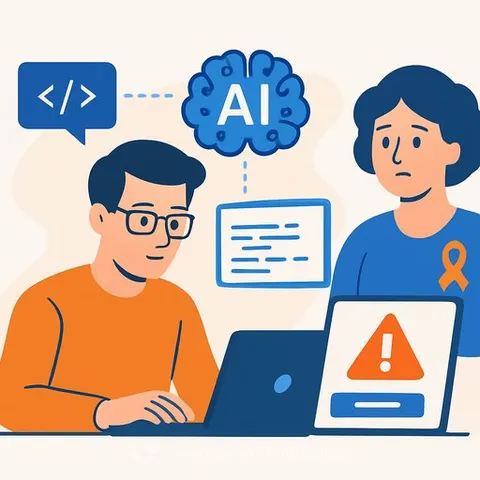
Man Builds AI Tool to Catch Errors in Mother's Cancer Care
Pratik Desai, a 34-year-old from New Jersey with no formal software engineering background, created a custom AI platform to track his mother's cancer treatment, analyse her medical records, and identify errors in her care plan. His mother had been diagnosed with stage 4 duodenal adenocarcinoma, an aggressive cancer affecting the small intestine.
Desai used a method called "vibe coding" - writing simple natural language prompts to ChatGPT and Claude instead of writing complex code from scratch. He described what he needed in plain English, and the AI tools built the functionality he required.
What the platform did
- Tracked daily symptoms and side effects in real time
- Organised and analysed complex medical records and test results
- Generated summaries and alerts for potential issues
- Cross-checked treatment plans against standard protocols
The system helped Desai's family identify discrepancies in the prescribed care plan. They were able to correct errors and ensure his mother received more accurate treatment during her final months.
Practical support, not replacement
Desai acknowledged the tool was imperfect but said it gave his mother greater dignity and control over her care. He later refined the workflow using more advanced AI coding assistants, turning his initial prototype into a functional caregiving companion.
His experience reflects a broader trend: patients and caregivers are turning to AI for Healthcare applications to catch details that healthcare systems may miss. Desai has expressed interest in refining the tool further to help other families facing similar challenges.
The case demonstrates both the potential and limits of such tools. While they can provide valuable support during critical moments, they cannot replace professional medical advice or clinical judgment.