
AI news ·
Marketers grapple with rising bot and AI web traffic as retargeting performance declines
Bots now make up over half of all web requests, and some e-commerce clients saw bot traffic jump 80% year-on-year, poisoning retargeting campaigns.
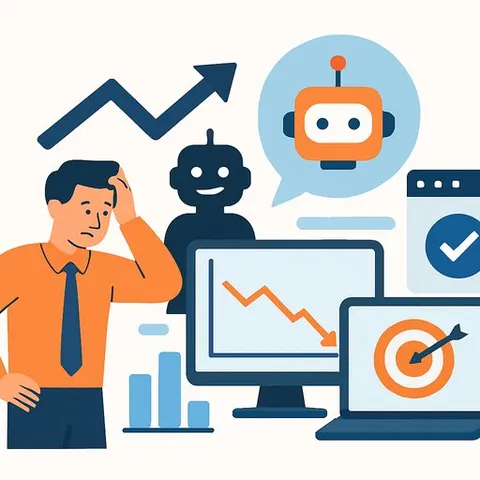
Automated agents and bots now account for more than half of all web requests, according to Cloudflare. For media companies, that surge is a problem with little upside. For marketers, it's forcing a split: some brands see AI-driven traffic as a conversion channel worth cultivating, while others are dismantling retargeting programs that bots have made unreliable.
A tale of two strategies
Direct-to-consumer pillow brand Mellow Sleep has embraced the influx. "We're less interested in blocking automated traffic than in classifying it," said Chad Keller, co-founder. "AI assistants are already sending us traffic that converts several times better than our site average. The blunt instrument of blocking every non-human agent would cost us more than it saves." British retailer John Lewis has watched AI agentic searches rise from 0.3% to 2.5% of all web visits in a year and is positioning its properties to attract more, Reuters reported.
For other advertisers, the rising tide is a threat. "Bot activity can inflate impressions and conversions, make campaigns look like they're performing better than they are, muddy lookalike audiences and eat into frequency caps," said Mallory Beck, vp of client services at Lighthouse Creative.
Retargeting programs take the hit
David Dweck, president at media agency GoFish, said the agency's e-commerce clients saw bot traffic increase by 80% year-on-year. The damage concentrated in retargeting campaigns, where tools inadvertently funneled spend toward "users" that were bots. "Those actions got muddied, or poisoned, with a lot of bot traffic," Dweck said. Costs-per-acquisition spiked. "We saw a degradation in performance starting in Q4 last year and dragging into this year."
AI agents made filtering harder because they add items to carts or sign up for newsletters, tricking defenses designed to catch bots that merely visit and bounce. GoFish's clients responded by narrowing retargeting parameters, which pushed average CPMs up by 20%. Others abandoned programmatic retargeting entirely. "Since 2023… we've seen a big shift out of programmatic and back into places where people are more comfortable like Google, Amazon, Meta," Dweck said.
Megan Herling, executive director of media at LERMA/, said agency clients had cut retargeting use as performance declined. "Bots are part of the problem, but also privacy updates and data opt outs have reduced scale significantly." Nola Ladd, brand media supervisor at Collective Measures, said three clients were affected, and for one, bot traffic provided "the final nail in the coffin" for retargeting. That brand shifted spend to retail media and social platforms.
New filters and first-party pivots
Tim Lathrop, vp of platform digital at Mediassociates, pointed to pre-bid verification and inclusion lists as remedies for programmatic campaigns affected by bot traffic to publisher sites. Ladd said Collective Measures was steering clients toward programmatic targeting built on first-party data or retail media networks like Walmart. "First party data is king," she said.
Colin Maduzia, svp of experience and product strategy at RPA, said rising bot traffic was also driving fraudulent purchases and confusing analytics and attribution. Agencies are being briefed to spend more time scrutinizing visitor behavior and upgrading filtering systems - with the goal of blocking bad bots while letting legitimate AI agents through. "I have to imagine that as this evolves, there will be an increasing level of resources dedicated to filtering out the real and the fake," said Justin Scarborough, head of programmatic at Crossmedia.
Whether available tools can keep pace with increasingly sophisticated bots and agents remains open. Beck's advice: focus on users showing "higher intent actions" and get pickier about what counts as a signal. "The answer is being more rigorous about what we consider a meaningful signal," she said.
Why this matters for marketers
Bot traffic is no longer just a nuisance that inflates vanity metrics. It is actively poisoning retargeting pools, driving up acquisition costs, and forcing hard choices about where to allocate budget. Marketers who ignore the problem risk spending real money against activity that generates no revenue. The brands finding an edge are those classifying traffic instead of blocking it wholesale, and shifting dollars toward channels with verified audiences - including AI for Marketing strategies that distinguish between harmful bots and converting AI agents. For marketing managers rebuilding their measurement and targeting frameworks, AI for Marketing Managers training addresses the exact classification and signal-quality challenges this shift demands.