
AI news ·
Marketers shift analytics from raw traffic to brand demand and buyer intent as AI drives discovery
Marketers must track brand searches and 30- or 90-day assisted conversions instead of raw traffic. AI filters early discovery, making downstream intent a better proxy.
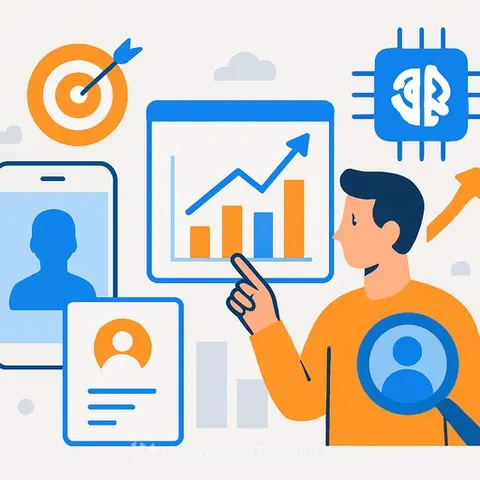
Customers increasingly evaluate products through AI-powered conversations without ever visiting a company's website, forcing marketers to rethink how they measure brand discovery and buyer intent.
Beyond raw traffic: demand and search signals
AI discovery engines introduce users to new brands without always providing an outbound link. The impact of these recommendations often appears later, when a user searches for your company by name. To capture this delayed interest, analytics teams should track fluctuations in direct traffic, social media mentions, and brand-name search volume using platforms like Google Search Console.
An upward trend in brand-name searches can signal growing awareness from conversational AI environments such as ChatGPT, Perplexity, and Google features like AI Overviews, Lens, and Circle to Search. Many AI citations originate from community platforms like Reddit, YouTube, and LinkedIn. Measuring share of voice now requires tracking brand visibility across the broader digital ecosystem where AI models source their information.
Attribution and engagement quality
As the path to purchase fragments, attributing a conversion to the last click before a sale misrepresents marketing performance. Multi-touch attribution models can show how initial, non-converting visits contribute to outcomes over a 30- or 90-day window. This approach places greater value on assisted conversions and reveals how early-stage brand exposures-potentially from an AI recommendation-nurture prospects into customers.
Because AI filters top-of-funnel discovery, visitors who reach your website are often further along in their decision-making. Reporting should prioritize deep engagement metrics: the ratio of returning visitors to new visitors and the depth of content consumption. If overall traffic shrinks but repeat-visit rates and pages per session increase, your website is attracting higher-quality, more qualified buyers.
Intent signals that predict pipeline
Users arriving after AI-assisted research skip introductory content. They seek high-intent resources like pricing calculators, technical integration guides, or product comparison pages. Tracking these downstream actions-rather than superficial clicks-shows how your web presence converts informed traffic into active sales pipelines.
Why this matters for marketers
AI-mediated discovery doesn't make analytics less important-it changes what you measure. As buyers complete more research before reaching a website, traffic becomes a weaker proxy for awareness or purchase intent. Marketers who stop optimizing for clicks and start measuring buying signals will understand how AI influences the customer journey, even when much of it happens outside their own digital properties. Updating your measurement framework to focus on brand demand, engagement quality, assisted conversions, and downstream intent is the practical next step. For structured guidance, an AI Learning Path for Marketing Managers covers AI analytics training that aligns with these new priorities.