
AI news ·
Microsoft Bets Big on AI: Inside Satya Nadella’s $80 Billion Vision for the Future
Microsoft commits $80B in 2025 to AI datacenters, advancing technology with a focus on U.S. leadership and workforce training. Its AI tools evolve into key collaborators across products.
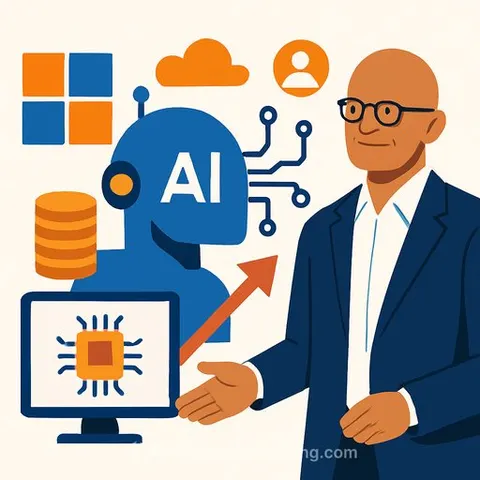
Microsoft’s AI Trajectory: A New Phase
Microsoft is entering a pivotal stage in its AI journey, with CEO Satya Nadella steering the company through what he calls a transformative period in technology. The company is committing around $80 billion in fiscal year 2025 to develop AI-powered datacenters that will support model training and AI deployments.
Focused AI Investment Strategy
In January 2025, Microsoft released a vision outlining a three-part strategy to strengthen America’s leadership in technology. The first focus is on advancing American AI technology and infrastructure. The company compares AI to “the electricity of our age,” highlighting its potential to drive widespread economic growth similar to how electricity did a century ago.
Microsoft builds on policies initiated during former President Trump’s 2019 executive order aimed at boosting the U.S. position in AI. Its partnership with OpenAI remains central, delivering products like Copilot that are increasingly embedded across Microsoft’s product range.
Balancing Innovation with Caution
Despite heavy investments, Microsoft is cautious about product rollouts. Past missteps, including the infamous Clippy assistant from the late 1990s, have left a mark on the company’s approach. Some insiders even describe a “post-traumatic stress disorder” from earlier technology failures, influencing the current risk management mindset.
Recent AI mishaps have sharpened this caution further. Nadella has talked about AI agents evolving into “chiefs of staff” — tools that handle complex tasks and manage information flow, moving beyond simple assistant roles to become essential collaborators in the workplace.
Seamless AI Integration Across Products
Microsoft’s AI efforts extend beyond standalone tools. Its Copilot technology now integrates with Microsoft 365, Windows, and enterprise solutions, aiming to create a consistent AI experience across its ecosystem.
Education and workforce development are also key parts of the strategy. The second pillar focuses on skilling programs that prepare workers for widespread AI adoption, reflecting the belief that human capital development is as critical as technological progress.
The third pillar supports exporting American AI technology to allies and partners, helping strengthen the domestic economy while sharing AI advancements globally. This positions Microsoft’s AI work within a broader geopolitical context.
What Product Developers Should Watch
- Expect Microsoft to continue investing heavily in AI infrastructure and integration.
- Look for AI tools evolving from basic assistants to “chiefs of staff” capable of complex task management.
- Anticipate ongoing emphasis on workforce training and skill development alongside technology deployment.
- Follow how Microsoft navigates the balance between innovation and reliability, especially given past AI challenges.
For product development professionals interested in expanding AI skills aligned with industry trends, exploring current training options can provide a practical edge. Resources like Complete AI Training’s latest courses offer up-to-date education on AI tools and applications.