
AI news ·
Ministers Propose Amendments to Data Bill Amid Fierce Artist Backlash Over AI Copyright Reforms
The government plans to amend the data bill after artists' backlash over AI use of copyrighted works. Creators demand stronger protections and transparency for AI training.
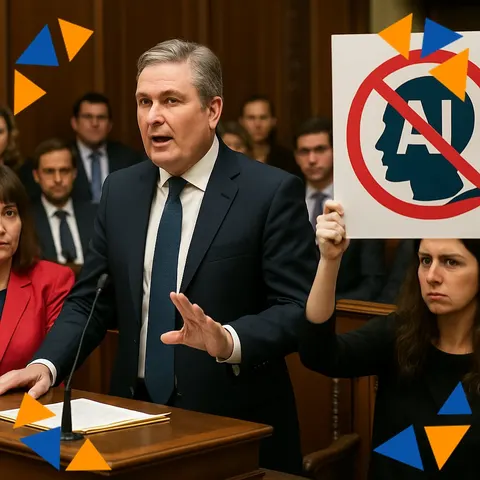
Ministers to Amend Data Bill Amid Artists’ Concerns Over AI and Copyright
The government is preparing to make concessions on copyright law changes to address the concerns of artists and creators ahead of a key parliamentary vote next week. These adjustments include a commitment to conduct an economic impact assessment of the proposed copyright reforms and to report on transparency, licensing, and data access for AI developers.
These moves come in response to widespread unease among creatives who fear that the government's plans could undermine their rights. High-profile artists like Paul McCartney and Tom Stoppard have publicly opposed the changes, with Elton John criticizing the reforms for overriding traditional copyright protections that support artists' livelihoods.
What the Proposal Entails
The government wants to allow AI companies to use copyrighted works to train their models without prior permission unless the copyright owner explicitly opts out. Creators argue this favors AI firms, urging that current copyright laws should apply to AI training materials.
These commitments will be introduced as amendments to the data bill, which has become a focal point for debates around AI and copyright. The bill is scheduled for further discussion in the House of Commons next Wednesday.
Criticism and Pushback
Despite the government's promises, critics remain unconvinced. Beeban Kidron, a cross-bench peer and campaigner, called the amendments insufficient. The Liberal Democrats plan to introduce their own changes to enforce compliance with existing copyright law for AI developers.
British composer Ed Newton-Rex, an outspoken critic of the proposals, argued that ample evidence already shows these changes would harm creators, making impact assessments unnecessary.
Government's Position and Industry Response
Science and Technology Secretary Peter Kyle has tried to engage the creative sector following criticism that his initial focus was too heavily weighted towards the tech industry. He has argued that without reform, AI companies might relocate to countries like Saudi Arabia, a point also raised by officials in Downing Street.
Government sources claim that since AI firms are already moving abroad, reform is necessary to give UK creators a way to challenge unauthorized use of their work by overseas companies. They also suggest they are reconsidering the opt-out system and are open to broader solutions.
However, some MPs see this as conceding too much to US tech companies without clear proof of job creation or economic benefits, warning of potential outsourcing and loss of creative jobs.
Calls for Stronger Protections
Lady Kidron, who has successfully amended the data bill in the House of Lords, insists that delaying action with reports and reviews is inadequate. She challenges the government to protect UK property rights and support domestic creative and AI businesses instead of favoring foreign companies.
James Frith, a Labour MP involved in cultural policy, emphasized that creative industries should not have to sacrifice their legal rights for uncertain benefits.
- Kidron’s amendments would require AI companies to comply with UK copyright law regardless of their location.
- The Liberal Democrats plan to push for similar measures, demanding transparency about which copyrighted materials AI models have ingested during development.
- They also want disclosure on the use of web crawlers—tools that gather data from the internet for AI training.
Victoria Collins, the Liberal Democrat technology spokesperson, stated, “An economic impact assessment should be the bare minimum creatives can expect.” She urged MPs to support stronger protections to defend British creators.
What Creatives Should Know
If you work in a creative field, these developments could affect how your work is used by AI companies. Understanding the ongoing legal debates and potential changes is crucial for protecting your rights and earnings.
Staying informed about policy shifts and supporting campaigns that advocate for fair copyright laws can help ensure creators maintain control over their work as AI technology advances.
For more on copyright and AI, visit the UK Intellectual Property Office’s resources on intellectual property rights and the World Intellectual Property Organization.