
AI news ·
Mississippi asks appeals court to reassign judge over AI-assisted ruling errors
Mississippi's attorney general asked the 5th Circuit to overturn a ruling blocking the state's DEI ban and reassign the judge whose order contained AI-generated errors. The appeal follows U.S.
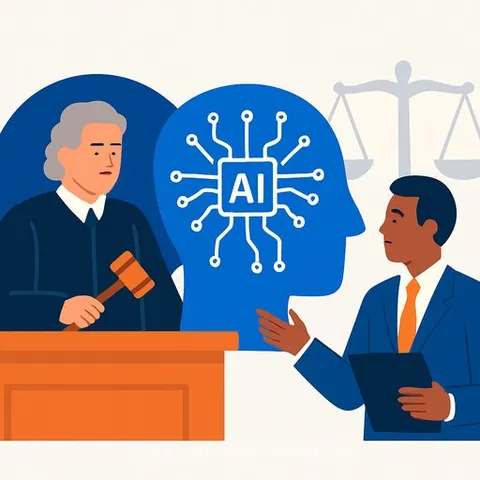
Mississippi's attorney general asked a federal appeals court on Monday to overturn a ruling blocking the state's ban on diversity, equity and inclusion programs, and to reassign the judge who issued it after an earlier decision in the case contained errors generated by an artificial intelligence program.
The challenge targets a preliminary injunction from U.S. District Judge Henry Wingate in Jackson, Mississippi, in a lawsuit over the state's restrictions on DEI programs. That injunction followed a temporary restraining order Wingate issued and later acknowledged contained AI-generated errors.
Anthony Shults, a lawyer for the Mississippi attorney general's office, told the New Orleans-based 5th U.S. Circuit Court of Appeals that "the district court's AI-infected, error-plagued TRO raises significant concerns about the court's deliberative process."
How the AI errors surfaced
At Monday's hearing, Circuit Judge Jerry Smith said Wingate's office had issued the temporary restraining order "based on names and persons that didn't exist, and based upon authorities and statements that didn't exist." The appeals court had asked lawyers in the case to prepare to address whether the lawsuit should be reassigned if it returns to the district court.
Wingate replaced his initial order after state lawyers questioned the accuracy of parts of it. He did not explain the mistakes at the time. In a subsequent letter to a member of Congress, Wingate said a law clerk had relied on AI platform Perplexity to help draft the order and acknowledged the filing reflected "a lapse in human oversight."
Shults told the appeals court there was also a new AI-related citation error in the order that replaced Wingate's earlier one. The panel questioned whether it could be confident the use of AI did not affect the lower court's legal reasoning.
For legal professionals, the case highlights a growing tension around generative AI in court work. There are no uniform rules in U.S. courts over how judges and lawyers can use artificial intelligence, but attorneys must verify the accuracy of court filings. Dozens of lawyers have been sanctioned since generative AI tools became widespread for failing to vet AI-assisted filings that included made-up case citations or non-existent legal sources. Resources on AI for Legal cover these verification obligations and emerging court expectations.
The debate over reassignment
Robert McDuff, a lawyer challenging the state's law on behalf of teachers, civil rights advocates and other plaintiffs, argued against reassigning the case. "It's not as if AI told Judge Wingate to grant the TRO," McDuff said. "He made a decision to grant the TRO. Regrettably, a shortcut was taken in his office."
McDuff called the lower court's use of AI "really problematic" but said it did not impact the legal reasoning in the decision or the outcome. In a statement after the hearing, he said "whatever happens with respect to any reassignment of the case to a new judge, it is pretty clear that the challenged provisions are unconstitutionally vague and potentially quite restrictive of free speech on public school campuses."
The panel appeared poised to call for a different judge. Wingate's office and the Mississippi attorney general's office did not immediately respond to requests for comment.
Why this matters for legal professionals
The case establishes that AI use by judges, clerks, or lawyers can become grounds for challenging a ruling or seeking reassignment, even when the errors are later corrected. For paralegals and associates who handle legal research and document drafting, the practical takeaway is straightforward: every AI-generated citation, quote, and case reference must be independently verified before filing. The AI Learning Path for Paralegals addresses these verification workflows directly. A judge's chambers is not exempt from the same scrutiny that has already led to sanctions against dozens of attorneys.