
AI news ·
Most laid-off workers suspect AI played a role in their job loss, survey finds
53% of laid-off workers suspect AI caused their dismissal, yet only 22% were explicitly told so, per a Resume Genius survey of 1,000 employees. The gap is sharpest in tech and finance, where 75% and 73% respectively believe automation drove their job loss.
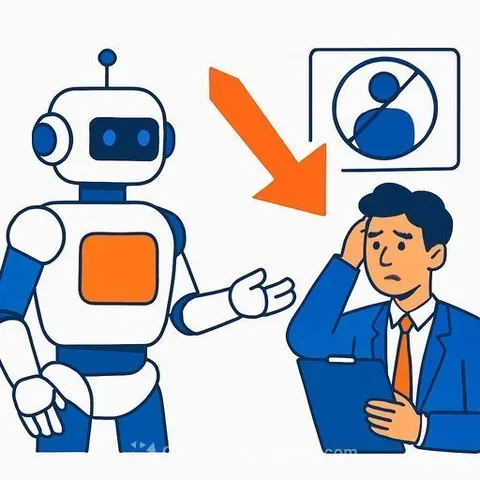
More than half of workers laid off in the past year believe AI played a role in their dismissal, even when employers cited other reasons. The 2026 AI Layoffs Report by Resume Genius, which surveyed 1,000 downsized employees, found that 53% suspect automation contributed to their job loss - but only 22% were explicitly told AI replaced their role.
The gap between official explanations and worker perceptions is wide. Employers most frequently cited company-wide budget cuts (37%) or corporate reorganisation (31%) to explain redundancies. Yet 31% of workers suspect AI was involved despite those alternative reasons. The disconnect is sharpest in tech and finance, where 75% and 73% of workers respectively believe AI drove their dismissal.
Generational and sector divides
Younger workers are more likely to suspect AI involvement. Two-thirds of Gen Z respondents (66%) believe automation factored into their layoff, compared with 52% of Millennials and 46% of Gen X. Across all age groups, suspicion outpaced direct confirmation - 39% of Gen Z workers suspect AI involvement without official verification.
Transparency varies by industry. While 39% of technology workers and 37% of finance staff received direct confirmation that AI displaced them, fewer than a quarter of healthcare and retail workers were told technology caused their dismissal. This lack of clarity feeds a broader trust problem: research published in Human Resources Director indicates most workers don't trust leaders to stay transparent during financial strain or technological change.
Communication failures in offboarding
The survey also exposes operational flaws in how layoffs are executed. More than a quarter of affected workers (26%) received no advance notice before termination. Among those who did, the window was tight: 31% got two to four weeks' notice, and 26% got one week or less.
Forty-two percent of respondents learned of their dismissal through impersonal channels. Nineteen percent were told via group webinars, 14% received emails, and 9% discovered their termination through messaging platforms or sudden loss of digital access. The problem peaked in logistics and transportation, where 63% of employees were terminated without an individual conversation. Technology firms also cut 34% of workers without a one-on-one meeting.
When formal HR channels stay silent, informal networks fill the void. Industry studies confirm that gossip beats HR in layoff announcements, leaving remaining staff anxious and disengaged.
Unequal support packages
The report found a dramatic gap in severance and support. Overall, 41% of surveyed workers received no severance pay, outplacement counselling, or financial assistance. Retail and hospitality workers were nearly four times as likely as tech or finance workers to leave with nothing - 62% received no support, compared with 16% in technology and 15% in finance.
That disparity shapes perceptions of fairness. Sixty-four percent of retail and hospitality workers said their employer handled the redundancy process unfairly. The psychological impact is lasting: 86% of respondents say their layoff permanently changed their view of job security and employer loyalty.
As a result, 40% of workers plan to monitor external job openings while employed. In tech, 55% intend to keep searching. Forty percent of laid-off workers are considering changing industries entirely, and 28% are pivoting toward contract work. Among Gen Z, 33% plan to start their own businesses rather than return to traditional employment.
Why this matters for HR professionals
For HR teams, the report points to a concrete operational failure: the way layoffs are communicated is creating a workforce that no longer trusts official narratives. When 31% of workers suspect AI involvement without confirmation, and 42% learn of their dismissal through webinars or emails, the offboarding process itself becomes a retention risk for remaining staff.
HR leaders who manage structural changes with clear protocols, adequate notice, and equitable support are better positioned to maintain stability. That includes being explicit about how technology modifies job roles - silence on that front doesn't prevent suspicion, it amplifies it. For practical guidance on handling AI-related workforce transitions, see AI for Human Resources or the AI Learning Path for HR Managers.