
AI news ·
National Nurses Week: How SDSU Nurse-Scientist Rebecca Mattson Uses AI to Detect Lung Cancer Early and Support Pregnant Women’s Nutrition
During National Nurses Week, SDSU nurse-scientist Rebecca Mattson uses AI to detect lung cancer early and provide personalized nutrition support for pregnant women. Her work enhances proactive, patient-centered care without replacing nurses.
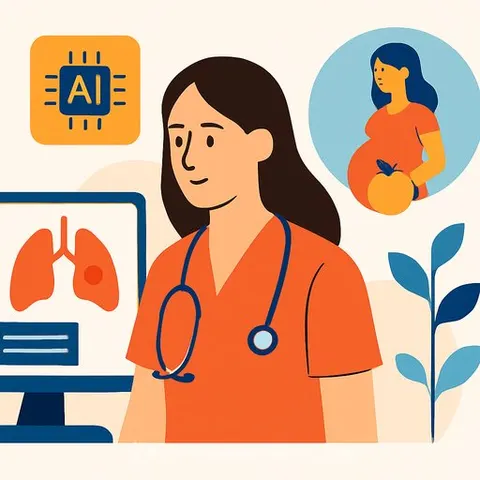
National Nurses Week: An SDSU Nurse-Scientist Advances Health Care with AI
During National Nurses Week, the focus turns to recognizing the vital role nurses play in health care. At San Diego State University, assistant professor and nurse-scientist Rebecca Mattson is applying artificial intelligence and machine learning (AI-ML) to tackle urgent health challenges—specifically early lung cancer detection and maternal nutrition support.
AI to Detect Lung Cancer and Related Conditions Early
Mattson is a co-investigator in the NIH-funded AIM-AHEAD Program, which develops AI-ML tools to improve health outcomes in underserved populations. Alongside SDSU mathematics professor Uduak George, who leads the algorithm development, Mattson helps create an AI model that analyzes anonymized medical records to identify early signs of lung cancer and metabolic conditions linked to heart disease, stroke, and type 2 diabetes.
George’s AI algorithms process data from tens of thousands of cases, allowing the model to detect subtle patterns that current screening methods might miss. Meanwhile, Mattson reviews existing screening practices to ensure the AI model reflects real-world clinical needs. Their goal is a single, interpretable tool that integrates social, behavioral, and clinical data—helping health care providers catch disease earlier during routine visits.
Early detection is crucial. “The earlier a cancer is detected, the sooner treatment can begin, which generally leads to better outcomes,” Mattson explains.
AI-Powered Nutritional Support for Pregnant Women
Beyond cancer detection, Mattson leads development of an AI-driven website to offer personalized, real-time nutrition guidance for pregnant women. This is especially important for those managing gestational diabetes or hypertension. The prototype, created with support from SDSU’s ZIP Launchpad, delivers trimester-specific, evidence-based nutritional advice similar to what obstetricians or dietitians provide.
The platform also tracks nutrition throughout pregnancy. Currently in its pilot stage, Mattson gathers user feedback through the REDCap AI Pregnancy and Nutrition survey to refine the tool for broader use.
AI as a Tool to Enhance Nursing Care
Mattson emphasizes that AI is not a substitute for human care but a tool that can make health care more proactive, personalized, and accessible. Nurses, she notes, are uniquely positioned to use these technologies where they can make the most impact.
The AIM-AHEAD program (Artificial Intelligence/Machine Learning Consortium to Advance Health Equity and Researcher Diversity) was launched in 2021 to ensure AI health technologies serve all populations fairly. Through partnerships with researchers and community groups, the program aims to improve access, quality, and outcomes for those most at risk of health disparities.
- AI models trained on large, diverse datasets can detect diseases earlier than traditional methods.
- Integrating multiple data types—social, behavioral, clinical—can provide a fuller picture of patient health.
- Real-time, personalized nutritional support can improve pregnancy outcomes, particularly for high-risk groups.
- AI tools support nurses by enhancing decision-making and patient engagement, not replacing human care.
For health care professionals interested in expanding their knowledge of AI in medical settings, exploring courses on AI applications in health care can provide practical skills and insights.