
AI news ·
Only 17% of Government Leaders Plan to Boost AI Skills—Experts Warn of a Looming Crisis
Only 17% of government leaders plan to improve their AI skills, raising concerns about effective regulation. Experts stress that clear AI training is crucial for responsible governance.
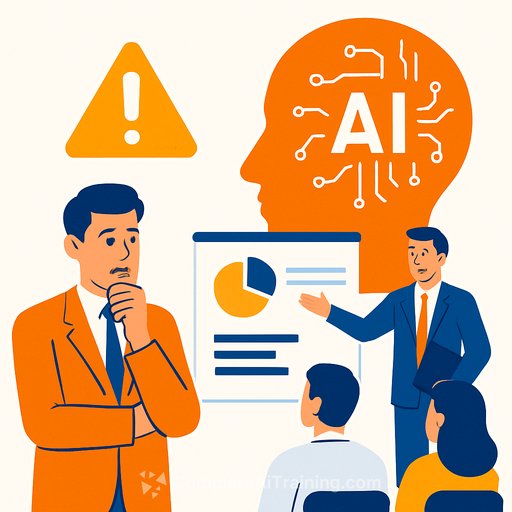
Only 17% of Government Leaders Plan to Improve Their AI Skills — A Serious Concern
Since AI tools like OpenAI’s ChatGPT gained widespread attention in late 2022, the challenge of regulating AI has sparked intense debate. A key issue is the limited AI knowledge among political leaders, which complicates efforts to create effective regulations. Writing rules for an industry where even leaders struggle to explain how AI models generate results is a major hurdle.
Robyn Scott, CEO of Apolitical—a learning platform for government employees—highlighted at the Brainstorm AI conference in London that just 17% of government leaders surveyed have plans to enhance their AI skills. She called this “a disaster,” emphasizing that governments and regulators cannot afford to be so underprepared in AI expertise.
Global Approaches to AI Regulation
Europe has taken an early lead with its AI Act, aiming to set high standards. Singapore has also introduced safeguards, while the U.K. relies on sector-specific regulators to oversee AI as part of their existing roles. Despite differing methods, clarity in regulations remains crucial.
Scott pointed out that “clarity is half the battle.” Governments are large and complex, and often struggle with interpreting broad AI directives. Clear rules help lawmakers and companies align their efforts more effectively.
The European approach tends to focus on broad, overarching rules, which has helped establish strict standards on AI and other sectors. However, critics argue this can stifle innovation and favor large companies. In contrast, the U.K. prefers sector-specific regulation, trusting industries to adapt based on their unique needs.
Laura Gilbert, senior AI director at the Tony Blair Institute, supports sector-specific regulation as more adaptable. She warns that overly specific rules risk becoming outdated quickly and require lengthy revisions, making them less future-proof.
Challenges and Opportunities in AI Regulation
Regulation will likely increase compliance and training costs for companies. Yet, early alignment with clear rules can create advantages. Scott noted progress in governments “cascading legislation” with training, citing the UAE’s mandatory introductory AI courses for all government employees as an example.
However, scaling up AI skills across government remains a challenge. While pilot programs show good adoption, widespread upskilling is still limited.
Experts at Brainstorm AI agreed multiple regulatory approaches will emerge, each with its benefits and drawbacks, but all aimed at supporting rather than hindering innovation.
Insights from Industry Leaders
- Betsabeh Madani-Hermann, global head of research at Philips: “If a company is global, that’s where agility comes in. When we innovate, we bring regulators, innovators, engineers, and clinicians together from the start to avoid building in silos and missing nuances.”
- Navrina Singh, founder and CEO of Credo AI: “Don’t apply a one-size-fits-all approach. Focus on use case-specific partners and recommendations. There’s also a huge need for standardization and interoperability, which hasn’t happened at scale yet.”
- Lord Chris Holmes of Richmond, MBE: “There’s a false choice between regulation and innovation that has persisted for decades. Both can coexist, and regulation doesn’t have to stifle innovation.”
Why Government AI Training Matters
Governments need to equip their leaders and employees with AI knowledge to craft meaningful policies and implement them effectively. Without this, regulations risk being ineffective or harmful.
For government employees looking to build practical AI skills, training platforms like Complete AI Training offer courses designed specifically for public sector roles. These resources can help bridge the knowledge gap and prepare government workers for AI’s growing impact on policy and services.
Improving AI skills across government isn’t just a nice-to-have—it’s essential for responsible AI governance and ensuring that regulations serve the public interest effectively.