
AI news ·
OpenAI warns AI could weaken citizens' leverage over governments
OpenAI's Strategic Futures team warns AI could sever the link between governments and citizens, letting states rule without public consent. The analysis argues automated militaries and economies could strip voters of leverage, even if elections continue.
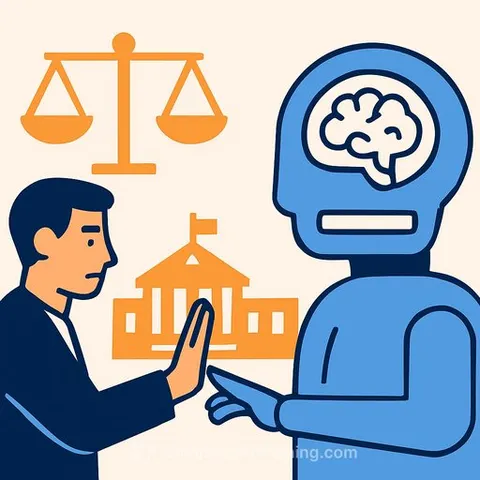
OpenAI's Strategic Futures team is warning that artificial intelligence could eventually sever the link between governments and the people they govern, creating a political system in which citizens lose leverage even if elections continue. The team's analysis, published in a blog post by author Dean Ball, argues that AI-run bureaucracies, autonomous military systems and machine-generated economic output could give states unprecedented independence from public consent.
The post reflects Ball's views and does not necessarily represent the official position of OpenAI or other employees, the company said.
Power without people
The argument rests on a centuries-old assumption about how political power works: governments ultimately depend on people. They need soldiers, police officers and bureaucrats to function, and they raise revenue by taxing human labor and economic activity. That dependence creates a check on state power, because rulers must maintain at least some public support to keep the system running.
AI could break that link. Ball writes that autonomous systems could eventually let governments project force without relying heavily on human soldiers or police. Highly automated economies could generate revenue with less human participation, and machines could run large portions of government bureaucracy.
If that happens, the public could find itself with little leverage over the institutions that govern it. This scenario does not require the end of democratic elections. "Humans can be on their way to disempowerment even if the routine of voting for our representatives is maintained," Ball wrote.
Why traditional safeguards may not hold
The warning challenges the assumption that constitutions and laws can contain the concentration of power. Legal limits matter, the team argues, but the underlying distribution of technological and economic power may matter just as much. A government that no longer needs its citizens for revenue or enforcement may face few practical constraints, regardless of what documents say.
The team does not present decentralization as a simple answer. Ball warns that giving everyone unrestricted access to powerful AI systems could create its own dangers, particularly if individuals or autonomous systems can cause widespread harm.
Instead, the Strategic Futures team says the goal should be a balance in which no single company, government or small group can dominate society. Its principles include preserving individual autonomy when using AI, structuring laws to empower individuals and smaller organizations where possible, and keeping political, social and economic institutions in control of major decisions as they evolve. Public sector workers tracking these issues can follow AI for Government coverage and the AI Learning Path for Policy Makers for ongoing analysis.
Open questions
The Strategic Futures team plans to publish its work through blog posts, papers, videos and podcasts. The team acknowledges that its analysis is incomplete.
"Our efforts will be a work in progress, with an emphasis on iteration, debate, and receptivity to feedback. Standing 'in the foothills of the singularity,' we have many more questions than we have answers," the post concluded. "Our highest hope is to shed light on the most difficult subjects relating to how AI will reshape our world. Our work has only just begun, and we have much climbing left to do."
Why this matters for government professionals
This analysis matters for people who work in government because it describes a future in which their roles could change fundamentally. If AI systems take over enforcement, revenue collection and administration, the skills that make public servants valuable today - judgment, institutional knowledge, accountability to the public - could be displaced by machine systems that answer to no one directly. For those building careers in public service, the practical takeaway is to understand how AI is being deployed in government operations and to advocate for systems that preserve human oversight and accountability. The question is not whether AI will enter government work, but whether the people who understand both the technology and the mission will be the ones shaping how it gets used.