
AI news ·
OYO uses artificial intelligence for dynamic pricing and hotel operations
OYO's AI handles real-time pricing and demand forecasting across its global portfolio. The system drove a 47% revenue jump to Rs. 2,019 crore in Q1 FY2026.
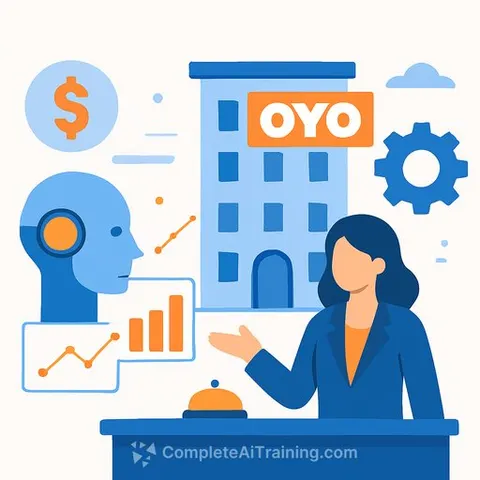
OYO's AI systems now manage room pricing, demand forecasting, inventory allocation, fraud detection, and guest personalization across its global portfolio. The technology contributed to a profit after tax of Rs. 623 crore in FY2025 and a 47% year-on-year revenue jump to Rs. 2,019 crore in Q1 FY2026, as the U.S. market became the company's largest after the acquisition of G6 Hospitality.
Real-Time Pricing Adjustments
Instead of fixed overnight rates, OYO's AI updates room prices continuously based on remaining inventory, booking velocity, competitor rates, local events, school holidays, and even weather forecasts. The system processes hundreds of variables in seconds and recommends the optimal price. During high-demand periods it raises rates to capture more revenue; when demand drops it lowers prices to fill rooms. Hotel owners no longer need to adjust rates manually.
Industry research shows that AI-based revenue management can increase Revenue per Available Room (RevPAR) by 8% to 15%. Modern forecasting models achieve demand prediction accuracy between 92% and 95%, processing millions of pricing data points daily to react faster than traditional methods.
Demand Forecasting and Inventory Allocation
OYO's predictive AI analyzes historical booking data, tourism patterns, flight bookings, corporate travel schedules, and local events to forecast room demand days, weeks, or months ahead. This gives hotel owners enough lead time to adjust pricing strategies for expected occupancy swings. In India, ICRA expects luxury hotel occupancy to stay between 72% and 74% in FY2026, with average room rates reaching Rs. 8,200-8,500 per night, driven by business and leisure travel growth.
The platform also decides where to allocate room inventory across online travel agencies, direct websites, corporate bookings, and walk-in channels. It evaluates which channel delivers higher margins, lower commissions, and better conversion rates, then distributes rooms accordingly. This cuts unnecessary discounts and reduces the risk of empty rooms.
Operational Efficiency and Guest Experience
AI helps hotel staff manage daily workflows. The system predicts guest check-outs and generates housekeeping schedules, assigning rooms to cleaning teams in the most efficient order. It also identifies maintenance issues early by tracking equipment performance, alerting staff before small problems become costly repairs. Fewer delays and faster room turnarounds improve the experience for arriving guests.
For customers, AI personalizes recommendations based on travel history, destination preferences, and booking behavior. A business traveler might see hotels near commercial districts, while a family receives suggestions close to tourist attractions. Offers are tailored to individual booking patterns, which lifts conversion rates and satisfaction scores.
Fraud Detection and Financial Performance
Fraudulent bookings cause significant revenue loss for hotels. OYO's AI scans payment behavior, duplicate reservations, and sudden cancellation spikes to flag suspicious activity in real time. Early alerts let hotel owners block fake bookings before they affect occupancy or revenue, strengthening trust across the platform.
The financial impact is measurable. In FY2025, OYO reported revenue of about Rs. 6,463 crore, with gross booking value reaching Rs. 16,436 crore. Adjusted EBITDA touched Rs. 1,132 crore, and the company recorded its tenth consecutive quarter of EBITDA profitability. The first quarter of FY2026 saw revenue climb to Rs. 2,019 crore - a 47% increase over the prior year - while profit after tax doubled to Rs. 200 crore. Premium hotel growth, international expansion, and AI-driven operations all contributed to these results.
Why this matters for hospitality and events professionals
For hospitality and events professionals, understanding how AI systems like OYO's drive revenue and efficiency is increasingly critical. Resources that cover AI for Hospitality & Events can help teams stay current with these technologies. Automated pricing, demand forecasting, and fraud detection are no longer experimental - they are tools that directly affect occupancy rates, staffing decisions, and profit margins. Professionals who can interpret AI-generated insights and adjust operations accordingly will be better positioned to compete in a market where response speed and precision matter more than ever.