
AI news ·
Parsnipp CEO Andrew Higgins discusses AI search marketing platform and 380% traffic gain
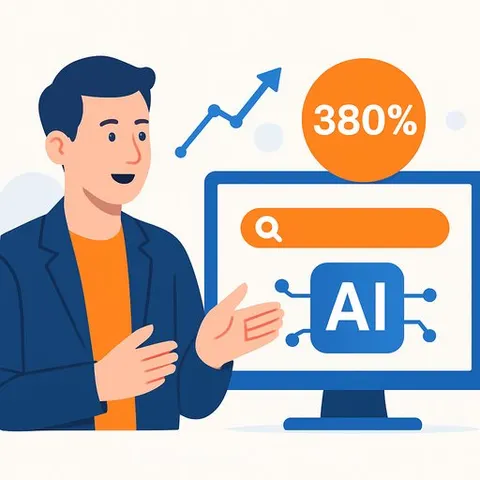
Parsnipp's AI search platform helped customer NPHub boost LLM referral traffic 380% in 30 days. CEO Andrew Higgins expects a seed round in early 2027 after closing pre-seed this summer.
Andrew Higgins, CEO and co-founder of Parsnipp, is building an AI search marketing platform that helps brands manage how they appear across AI-driven search and commerce experiences. The company's products include Generative Engine Optimization (GEO), Answer Engine Optimization (AEO), LLM advertising, and agentic commerce tools. Parsnipp closed its pre-seed round this summer and expects to raise a seed round in early 2027.
Higgins spent nearly a decade building Pixlee, a user-generated content and influencer marketing company acquired in 2022. After that acquisition, he ran growth across Emplifi's six-product social media marketing suite. He also served as CMO of StartX, the accelerator and venture fund for Stanford founders.
The idea for Parsnipp came from watching AI change how people use the internet, research, and shop. "That means marketers need a whole new playbook and a new set of tools to win in AI search," Higgins said.
Three core products
Parsnipp's first product covers GEO and AEO: AI visibility analytics, content optimization tools, and a recommendation engine that help brands improve how they appear in conversations between people and large language models. The second product, LLM ads, helps brands buy and manage advertising campaigns across LLMs. OpenAI is rolling ads out more globally, and Higgins expects advertiser participation options to expand.
The third product is agentic commerce. "It's not enough for your brand to be visible across LLMs. Your product feed and ecommerce experience have to translate too, so you're driving actual transactions and not just mentions," Higgins said. As commerce becomes native to the LLMs consumers use daily, this becomes a bigger priority for online sellers.
Building a new category
The biggest challenge is that the category is brand new. "That means a lot of opinions, not enough data, and a playbook that hasn't been fully written," Higgins said. "Some of the conversation is really valuable, and some of it is pretty vague."
The company focuses on giving brands recommendations with tangible impact, simplifying what Higgins describes as a convoluted conversation about how AI is changing modern marketing. The product vision stays consistent - building the platform marketers use to manage AI search - but priorities shift almost daily as the space evolves.
Parsnipp's early milestones include building the initial product and onboarding first customers. "It's really fun to watch an idea you wrote on a piece of paper, or vibe coded a UI for, turn into real, usable software that's driving measurable results for brands," Higgins said.
Customer results and differentiation
One customer case study stands out. NPHub implemented targeted GEO strategies through Parsnipp and saw a 380% increase in weekly LLM referral traffic and significantly improved organic AI search visibility in 30 days. Higgins emphasized that real data matters in a category with more opinion than proof.
Parsnipp differentiates itself in two ways. First, the company invests in modeling the customer, not just testing and aggregating conversations between simulated customers and LLMs. "Context matters enormously in how LLMs interact with people," Higgins said. Second, beyond organic AI visibility, Parsnipp builds for paid LLM advertising and agentic commerce compatibility.
Higgins said the company stays focused on customers' day-to-day challenges rather than chasing a massive total addressable market. "That's one of the traps with AI software: it's cool and powerful, but a lot of folks don't know how to point it at the business value they need this quarter or next," he said.
Near-term goals are straightforward: assemble a strong team and build tools that matter. "We're just excited to be building inside one of the hottest conversations in modern marketing, and to contribute in our own way to a discipline that's going to be core to how brands stay relevant and grow in this era of AI," Higgins said.
Why this matters for marketers
Marketers can no longer treat AI visibility as an experimental side project. The NPHub result - a 380% increase in LLM referral traffic in 30 days - shows that GEO strategies can produce measurable outcomes when applied deliberately. For teams already managing AI for Marketing initiatives, the practical takeaway is to measure how your brand appears in LLM responses, not just in traditional search results. That means auditing your content for AI visibility, testing how your brand answers appear in different prompt contexts, and ensuring your product feed translates into AI-driven commerce experiences.
For SEO specialists, the shift is more direct. GEO extends familiar optimization work into a new channel where the rules are still forming. The tools and tactics that worked for traditional search don't automatically transfer to LLM visibility. Professionals who develop AI for SEO Specialists skills will be better positioned to build the playbook that doesn't exist yet - and to show their organizations where the actual returns are, rather than chasing the hype around AI marketing.