
AI news ·
People act more rationally when dealing with AI than humans, study finds
People accept unfair financial offers from AI more readily than from humans, a UCD study found. Researchers say the shift likely comes from expectations-people assume AI is logical and adjust their own behavior to match.
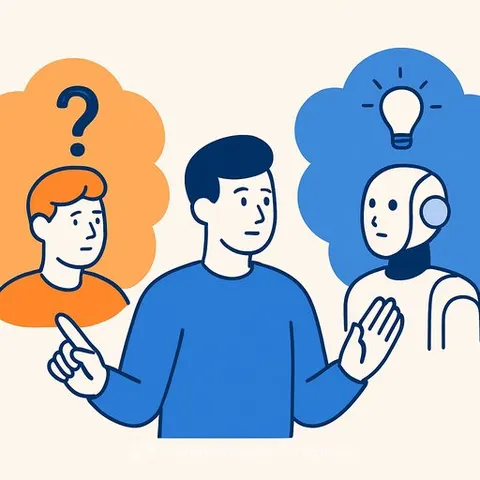
People accept unfair AI offers more readily than human ones, study finds
Researchers at UCD Michael Smurfit Graduate Business School discovered that people make more rational financial decisions when interacting with AI than with humans-even when the terms are objectively unfair.
In an economic game with real money, participants chose whether to accept or reject offers from either human or AI partners. Each offer gave the partner $0.90 and the participant $0.10 from a $1 pool. Rejecting meant both walked away empty-handed.
The rational choice was always to accept. Participants paired with AI did so more often than those paired with humans, suggesting AI presence prompted more logical decision-making.
The shift may not stem from AI itself. Instead, people may alter their behavior to match what they perceive as AI's logical nature-becoming more rational to align with that expectation.
Perception shapes trust and decisions
The findings carry weight for businesses, particularly in negotiations where human-AI interactions are routine. Decision-makers already hold assumptions about how AI "thinks"-whether logical, subjective, or unbiased. These beliefs determine whether they trust AI recommendations and act on them.
The real influence of AI isn't technological. It's how people perceive the technology, which then shapes their final choices.
Dr Suhas Vijayakumar, who led the research, said people may reject unfair offers from humans because they expect reciprocity and emotional fairness-standards they don't apply to machines. "Future research needs to look at further expectations and beliefs about AI," he said.
What this means for marketing professionals
For marketers using AI for marketing, the takeaway is clear: audiences don't evaluate AI and human recommendations equally. They bring different expectations to each.
When AI makes a recommendation, people assume logic. When a person does, they factor in emotion and motivation. Understanding this gap helps teams design campaigns and customer interactions that work with-not against-how people actually perceive AI.
The research also touches on how generative AI and large language models are trusted in practice. The same principle applies: what people believe about how these systems work influences whether they follow their outputs.
Consulting both AI and human input on decisions may produce more rational outcomes by combining algorithm with intuition.