
AI news ·
Researchers develop two-step artificial intelligence system to detect and classify brain tumors
A new AI detects and classifies brain tumors from MRI scans in 21.6 milliseconds. It used 7,023 images to speed screening for a disease causing 250,000 deaths each year.
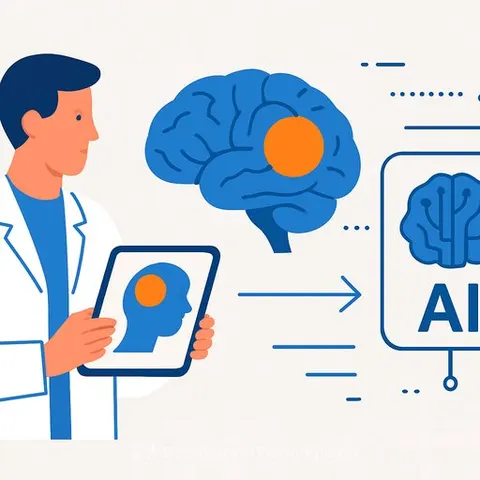
A new artificial intelligence system from the University of Sharjah can detect brain tumors from MRI scans and classify them into three types with higher accuracy than conventional diagnostic methods, according to a study published in the journal Healthcare Analytics. The two-step approach could help clinicians screen for tumors faster, potentially improving treatment outcomes for a disease that causes an estimated 250,000 deaths each year worldwide.
The researchers designed a pipeline that first determines whether an MRI scan contains a tumor. If a tumor is present, the system then classifies it as glioma, meningioma, or pituitary tumor. This mirrors real clinical workflows, where a binary yes/no decision precedes more detailed diagnosis.
Architecture comparison under unified conditions
The team evaluated several deep learning architectures, including convolutional neural networks (CNNs), long short-term memory (LSTM) networks, and attention mechanisms. They found that a CNN-LSTM with attention model performed best at distinguishing tumor types, while a Vision Transformer achieved the highest accuracy for simple tumor detection. All models were tested on the same preprocessing pipeline-resizing scans to a fixed resolution, normalizing intensity, and equalizing contrast-to eliminate dataset-specific biases.
"The experiments show that model performance improves when progressing from standard CNNs to CNN with LSTM, and then to attention-enhanced architectures," the authors wrote. "Across both stages, attention mechanisms improved feature representation and classification accuracy by capturing more informative global patterns in MRI images."
Speed and clinical potential
The system averaged inference times of 21.6 milliseconds for binary classification and 17.6 milliseconds for multi-class classification. "The system showed efficient inference times, supporting its suitability for near real-time clinical applications," the researchers noted. They analyzed 7,023 MRI images from public datasets, covering three tumor categories and healthy individuals.
The study adds to the growing body of research in AI for Healthcare, demonstrating how advanced models can improve diagnostic accuracy. However, the authors acknowledged that full patient identifiers were not consistently available across the source datasets, so strict patient-level separation could not be guaranteed. Future work should include larger, more diverse clinical datasets and interpretability tools such as feature attribution and lesion-level visualization to build clinician trust.
Why this matters for healthcare professionals
The findings suggest that AI-based tumor detection can reduce the time between imaging and diagnosis, but the system is not yet ready for clinical use. Healthcare professionals should view these results as a proof of concept that requires validation on real-world hospital data. The researchers emphasized that their focus was on classification performance under a unified protocol, not on developing a deployable tool. For radiologists and oncologists, the key takeaway is that attention-enhanced models and Vision Transformers show complementary strengths-one performs better at identifying tumor presence, the other at classifying subtypes-which could eventually be combined into a single screening workflow.