
AI news ·
Senator Banks urges Trump administration to counter Chinese open-weight AI models
Senator Jim Banks is urging the Trump administration to subsidize U.S. open-weight AI development, warning that Chinese models are dominating global markets. The policy fight could reshape the cost and availability of AI models for developers within the year.
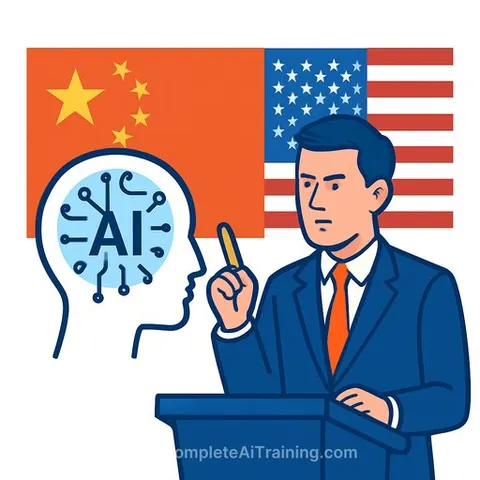
Republican Senator Jim Banks has asked the Trump administration to create incentives for U.S. tech companies to develop open-weight AI models, warning that Chinese alternatives are gaining ground in global markets. In a letter to White House economic adviser Christopher Phelan, Banks called for policy options that would "limit dependence" on Chinese-made open-weight models and make it harder for Chinese firms to use American semiconductors in their products.
"America cannot afford to see Chinese open models proliferate and burrow into the global economy only to be weaponized, like rare earths, at a time and place of China's choosing," Banks wrote.
The open-weight vs. closed-weight divide
Open-weight AI models publish their underlying architecture, so anyone can download and adapt them for specific applications. Examples include Meta's Muse Glimmer, Nvidia's Nemotron, and startup Thinking Machines' Inkling. Their lower cost compared with proprietary systems has made them attractive to budget-conscious buyers.
Closed-weight models, by contrast, keep their internal components under the exclusive control of their developers. ChatGPT from OpenAI, Anthropic's Claude, and Google's Gemini are the best-known examples. They are generally considered the more powerful option, but they come with usage restrictions and higher prices.
Banks, who sits on the Senate Armed Services Committee, framed the letter as a response to the expanding footprint of Chinese open-weight models in the American market. His push arrives amid a broader policy debate over how Washington should treat open-weight AI. Reuters reported that Nvidia and Meta joined a coalition of dozens of U.S. technology companies and venture capital investors in July to urge policymakers to leave open-weight AI unregulated.
What this means for developers
The outcome of this policy fight will directly affect which models you can use at work and what they cost. If the administration follows Banks' suggestion and creates incentives for domestic open-weight development, expect more U.S.-built alternatives to the Chinese models that currently dominate the low-cost segment. If regulators instead restrict open-weight distribution, your options may narrow to closed APIs or self-hosted systems with stricter licensing.
For teams building on open-weight models, the semiconductor angle matters too. If the U.S. tightens chip export rules further, Chinese model developers could face supply constraints that slow their release cycles. That would change the competitive calculus for developers who currently compare American and Chinese open-weight options side by side.
Developers should watch how the administration responds, since the letter targets economic adviser Phelan rather than the Commerce Department, which typically handles export controls. The choice suggests the White House is weighing this as an economic competitiveness issue, not just a security one. For those working with AI models, the practical takeaway is straightforward: the open-weight market you build on today may look different within a year, and the models you choose now should be portable enough to migrate if the policy environment shifts. The AI for IT & Development tag tracks these developments, and the AI Learning Path for Software Developers covers the skills needed to evaluate and integrate both open and closed models as the landscape evolves.
Why this matters for IT and development teams
If you're choosing between open-weight and closed-weight models for a project, the regulatory outcome will influence your total cost of ownership. Open-weight models eliminate per-token fees but require infrastructure and expertise to deploy. Closed models are simpler to integrate but lock you into a vendor's pricing and policies. A policy shift that changes the availability of Chinese open-weight models could remove your cheapest option overnight, so it's worth building evaluation criteria now that account for model provenance and supply chain risk, not just benchmark scores.