
AI news ·
Shapiro urges federal AI regulation as industry leaders push back
Gov. Josh Shapiro urged federal AI regulation, proposing scrutiny only of unreleased "frontier models," but industry attendees pushed back, arguing oversight would slow innovation.
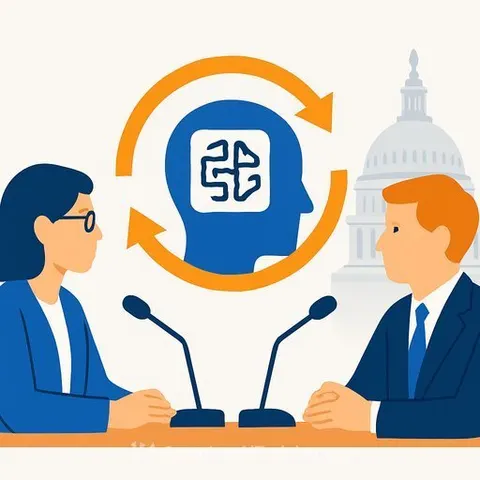
Gov. Josh Shapiro called for the federal government to regulate artificial intelligence development and criticized national leaders for inaction during a keynote address Thursday at the AI Horizons Pittsburgh Summit. His remarks, delivered at Bakery Square, landed with a divided audience - many industry attendees pushed back against the idea of federal oversight, arguing it would slow innovation and create unintended consequences.
Shapiro attempted to chart a middle path. He proposed that government regulators scrutinize only unreleased "frontier models" while allowing the broader pace of AI development to continue. He compared the approach to existing federal oversight of the pharmaceutical and aerospace industries.
"We need the federal government to establish the rules of the road," Shapiro said. "We can't kick the can down the road anymore."
Industry attendees push back on regulation
Several summit attendees told TribLive they oppose federal intervention. West Virginia entrepreneur James Carnes, co-founder of carbon-tracking firm Iconic Air, said companies should police themselves. "Anytime there's new technology, there's going to be risks," Carnes said. He argued that rogue AI models have caused no real damage and that misinformation drives much of the fear surrounding the technology.
Steve Yuschock, a manager with fiber-optic firm DQE, said recent apocalyptic warnings about AI were more hype than reality. "It's worse for government to regulate," Yuschock said. Andrew Wyatt, co-founder of AI media monitoring firm Delve, said regulators should only step in if companies fail to set up their own guardrails. He compared potential government regulators to TSA agents slowing a process airlines could manage themselves.
For government professionals navigating this debate, the AI Learning Path for Policy Makers offers a framework for understanding the technology behind these regulatory questions.
Shapiro frames AI as a geopolitical race
Shapiro framed AI development as a competition with China and said the U.S. should seek an "international consensus" on development standards. He suggested talks begin next week during Chinese President Xi Jinping's visit to the United States. "We need to beat China on AI," Shapiro said, while also advocating for diplomatic engagement.
The governor, up for reelection in November and viewed as a potential 2028 Democratic presidential contender, criticized President Donald Trump and House Speaker Mike Johnson for their reluctance to regulate the industry. Trump recently called AI concerns a "hoax" on social media, saying the only guardrail needed was a "STRONG AND SMART (High IQ!) PRESIDENT."
A White House spokesman responded in a statement: "The Trump Administration is committed to unleashing American innovation, supporting the safe and successful deployment of the world's most advanced AI models, and protecting our national security."
Some experts warn the pace is reckless
Not everyone at the summit agreed with the hands-off stance. Eser Saydam, a senior system engineer manager at Nutanix, said he was hoping for more assurance than the president's intellect. "I think we're moving too quickly," Saydam said. "It seems reckless." He acknowledged the balancing act of regulation versus foreign competition but said the U.S. must prioritize its own standards.
Ameena Elahi, assistant director of AI initiatives at Penn Medicine, also urged caution. She described new developments as "exciting but really scary" and said, "We can't rush to it at the expense of people."
Shapiro's Republican gubernatorial opponent, Stacy Garrity, called his calls for regulation "a shameless flip flop," citing his history of support for the AI and data center industries. Recent polling shows Shapiro with a 16-point lead.
Pittsburgh mayor touts AI for city government
Earlier in the day, Pittsburgh Mayor Corey O'Connor appeared on a panel where he pitched AI development as an economic boon for a city facing a budget deficit that could exceed $30 million by year's end. "If you're from Pittsburgh, you know we're strapped for cash," O'Connor said. "We want to expose Pittsburgh and use Pittsburgh."
O'Connor said he calls several businesses each week to pitch the city and wants to house tech firms in redeveloped city-owned buildings. He described potential AI applications for local government as "permit streamlining," tracking potholes, and managing snow plowing. He balked at placing an AI data center within city limits or replacing municipal workers with the technology.
Why this matters for government professionals
The divide at the Pittsburgh summit mirrors the tension government officials face nationwide: industry resistance to regulation versus public calls for safety guardrails. Shapiro's proposal to limit federal scrutiny to frontier models offers one potential template, but the lack of consensus - even among technologists - means policy frameworks remain unsettled. For agencies and offices exploring AI for Government, understanding these fault lines will shape procurement, compliance, and workforce planning decisions in the months ahead.