
AI news ·
South Korea launches national AI strategy to close regional healthcare gaps
South Korea's 'AI Basic Healthcare Strategy' will provide AI tools to public health centres in underserved areas for tasks like image interpretation and chronic disease management.
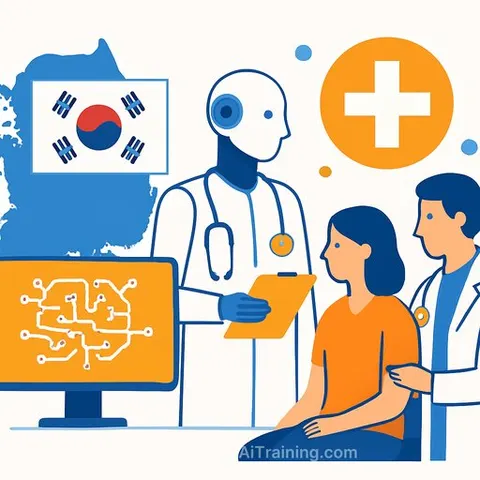
South Korea has unveiled a national strategy to deploy AI tools across its healthcare system, with a focus on closing the gap between medical services in major cities and underserved regions. The 'AI Basic Healthcare Strategy' covers AI-supported patient services, nationwide digital health infrastructure, and the development of a sustainable healthcare AI ecosystem.
Public health centres and primary care clinics in medically underserved areas will receive AI tools that assist medical professionals with tasks including interpreting medical images, producing clinical records, and managing chronic diseases. The government also plans to expand its Personal Health Record platform, allowing patients and providers to access medical information from multiple institutions more easily.
Emergency response and regional networks
An integrated emergency AI platform will be piloted in Daegu during the second half of 2026. The system will analyse patients' conditions, hospital capacity, and available medical resources from the ambulance stage to help emergency teams identify appropriate hospitals.
Under the planned 'Public Healthcare AI Highway', nine regional and local responsible medical institutions are expected to join a shared national AI platform during the second half of 2026. The network is intended to cover all 72 designated institutions by 2029.
Regional AI-specialised hospital pilots will integrate the technology across clinical and administrative processes, including registration, nursing, diagnosis, surgery, and discharge. Wider measures include healthcare data infrastructure, AI ethics and security guidelines, specialist workforce development, and potential changes to how medical AI services are compensated.
Why this matters for healthcare professionals
South Korea is moving beyond isolated AI applications towards shared infrastructure intended to reduce regional inequalities in medical care. Its success will depend on clinical reliability, interoperability, protection of sensitive health data, and whether underserved institutions have the staff and resources needed to use the systems effectively.
For healthcare professionals, the strategy signals a shift toward AI tools embedded in everyday clinical workflows - documentation, imaging, and chronic disease management - rather than standalone pilot projects. The Daegu emergency platform and regional hospital pilots will be worth watching closely, as they will test how AI performs under real-world pressure and whether it genuinely improves outcomes in areas that have historically struggled with access. Those working in resource-constrained settings may find the AI for Healthcare resources useful as these systems begin to roll out.