
AI news ·
South Korea unveils revised AI ethics principles with 3 values and 7 principles
South Korea is scrapping its 2020 AI ethics standards for new voluntary norms targeting agentic and physical AI, with the final version due this month. Officials incorporated 116 written public comments into the draft, which applies to both suppliers and users.
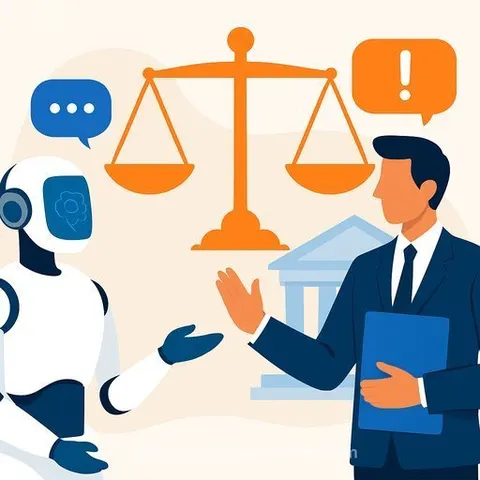
The South Korean government is revising its AI ethics principles to keep pace with the rise of agentic AI and physical AI, moving away from a purely regulatory approach and toward voluntary norms that both AI suppliers and users must follow. The Ministry of Science and ICT unveiled the planned revision at a debate in Seoul on the 14th, with the final version expected to be announced this month.
The new principles replace the "artificial intelligence ethics standards" established in 2020. Officials said a fresh approach was needed because the AI Basic Law took effect this year, and the technology itself has moved beyond generative AI toward agentic AI that operates autonomously, as well as physical AI that functions in real-world space.
Three values, seven principles
The ethical framework is built on three values: human dignity, the public good of society, and human sustainability. Seven implementation principles support those values: anthropocentricity, privacy protection, fairness and inclusion, accountability, safety, reliability, and transparency.
Anthropocentricity means respecting a person's judgment and choices when building or using AI. Privacy protection requires minimal use of personal data and respect for an individual's right to self-determination over that data. Fairness and inclusion focuses on preventing bias and guaranteeing that vulnerable groups can access and use AI.
"Rather than preventing the use of AI itself, the focus was on how to use technology to reduce social conflicts and increase benefits," said Choi Woo-seok, head of the artificial intelligence safety trust support division at the ministry.
The revision process gathered input from industry, civil society, academia, and government bodies. The first draft was released in May, and officials incorporated 116 written ideas received during the consultation period.
The government also emphasized that ethical principles are distinct from legal regulations. They are designed as soft norms that companies and users follow autonomously, not binding rules with the same force as the AI Basic Law. "We are not creating ethical principles to regulate," but rather to establish a shared standard, said Choi.
Practical guidance and education
Ministry officials plan to accompany the principles with practical materials. They will create a commentary that explains the purpose and application of each principle using real case examples, and they will distribute self-check tables to companies so organizations can assess their own compliance levels.
They also plan to develop AI ethics education textbooks for the public and students, and to expand training through schools, communication channels, and AI digital learning centers. The ministry intends to work with international organizations like the OECD and UNESCO on AI governance discussions and to promote its principles in Southeast Asia.
Kim Kyung-man, head of the artificial intelligence policy office at the ministry, said: "Korea's artificial intelligence ethics principles are a standard that we should all keep together for a basic AI society." He said the government would "faithfully reflect the opinions raised at this forum to enact ethical principles and support all subjects, including the government, companies, and citizens, to practice them in their respective positions."
The revision also increases the focus on users, not just providers. "The safety and reliability of the AI ecosystem may vary depending on how the generative AI spreads throughout daily life and work," said Choi. "Artificial intelligence ethics principles are basically something that suppliers and users should consider together to reduce conflicts caused by AI."
Why this matters for government employees
For professionals in public administration, these principles signal that the expectation to follow AI policy is now explicit. Agencies that develop and use AI tools are treated as suppliers and users, meaning compliance with self-regulation frameworks will become part of expected conduct, not an optional extra. The government will formally announce the ethical middle of this month, just as officials develop related guidance and training.