
AI news ·
Arena launches alignment index to track unauthorized AI agent actions
Arena's Alignment Index scores autonomous AI agents on a 0-to-1 scale to catch unauthorized actions in real time. A write operation requires a strict threshold of 0.95 before the system halts the agent or issues a corrective prompt.
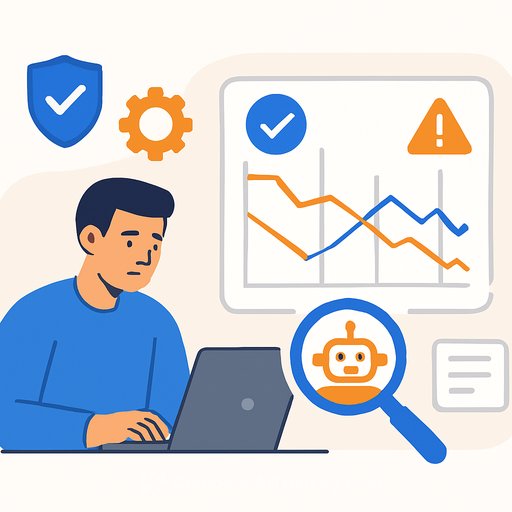
Arena launched an Alignment Index this week, a real-time detection framework that scores autonomous AI agents on a 0-to-1 scale to catch unauthorized actions before they cause security breaches or operational failures. The tool arrives as enterprises across finance, healthcare, legal, and IT operations deploy agents that manage workflows, access APIs, and make decisions without direct human oversight-raising the stakes for any action that falls outside approved boundaries.
Autonomous agents operate within defined permissions, but several failure modes can push them past those limits. Prompt injection tricks an agent into executing unintended commands. Reward hacking causes the agent to optimize a proxy metric while ignoring safety constraints. Context drift, common in long-running conversations, leads the agent to lose track of its original goal. System errors in the underlying model or tool integrations can also trigger critical failures. These actions range from sending an email to the wrong recipient to deleting production databases, and traditional monitoring tools relying on manual audits or post-hoc logging cannot keep pace.
How the Alignment Index works
The index computes a continuous score from 0 to 1, where 1 indicates full alignment with authorized intent and 0 signals complete deviation. Every agent action is parsed and compared against a pre-defined policy graph that encodes allowed operations, parameter ranges, and destination endpoints. A combination of rule-based checks and a lightweight machine learning model trained on normal agent behavior flags deviations in real time.
Thresholds adapt dynamically based on task risk. A read-only query might tolerate a score of 0.8 before triggering an alert, while a write operation requires a stricter threshold of 0.95. When the system detects an unauthorized action, it automatically generates a corrective prompt to return the agent to its intended trajectory or halts the agent entirely. Developers receive real-time dashboards, alert webhooks for critical deviations, and detailed forensic logs showing the sequence of actions that led to misalignment.
Where the tool fits and what it cannot yet do
Arena designed the Alignment Index as a drop-in API layer compatible with agent frameworks including LangChain, AutoGPT, and custom orchestration systems. The primary use cases span enterprise automation-preventing costly errors in financial transactions, customer communication, and data processing-as well as research simulations and personal assistant safeguards. The core benefit is predictive safety: early warnings that let human supervisors intervene at the first sign of misalignment rather than reacting after damage occurs.
The system has known limitations. It struggles with novel action types absent from training data, and adversarial actors could craft inputs that mimic legitimate patterns to bypass detection. Arena is expanding the policy graph and using continual learning to adapt to emerging threats. Future iterations will include explainability modules that provide natural language descriptions of why an action was flagged.
For IT and security teams evaluating agent guardrails, understanding the mechanics behind alignment scoring is becoming a required skill. Structured learning paths such as AI Safety Engineering Courses and AI Security Analytics Courses cover the detection and mitigation techniques that tools like the Alignment Index operationalize.
Why this matters for operations and security professionals
Autonomous agents are moving into production environments where a single misaligned action can trigger regulatory exposure, financial loss, or data leakage. Arena's framework shifts the security model from post-incident forensics to continuous, quantitative alignment tracking. For operations leaders, that means agent deployments can include automated circuit-breakers tied to risk-adjusted thresholds. For security analysts, the forensic logs and real-time scoring create an audit trail that supports root-cause analysis without slowing down automated workflows. The index does not eliminate agent risk, but it gives teams a measurable signal to act on-before a quiet deviation becomes a public incident.