
AI news ·
Stablecoins emerge as top payment method as AI agents buy data and services
Coinbase's x402 protocol has processed over 165 million AI-agent payments this year, with cumulative volume exceeding $50 million. Roughly 99% of those transactions settled in USDC, positioning stablecoins as the default payment method for machine-to-machine commerce.
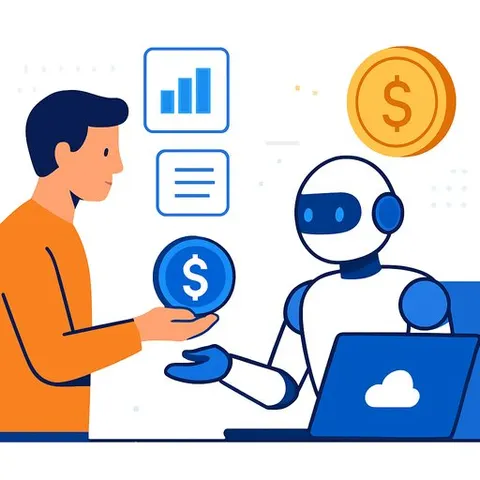
Stablecoins are becoming the default payment method for AI agents that buy data, computing power, and online services without human involvement. Coinbase's AI-agent payment protocol, x402, has processed more than 165 million payments this year, with cumulative volume exceeding $50 million, according to a CoinDesk report published August 22.
AI agents are software programs that carry out multistep tasks on their own based on user instructions. As part of that work, they can directly purchase data and computing resources. Coinbase, Circle, MoonPay, Visa, Mastercard, and Cloudflare are all building payment infrastructure to serve this emerging market.
The x402 protocol lets AI agents check a service's price, pay directly, and receive the result without creating a separate account or entering card information. Lincoln Murr, head of AI product at Coinbase, estimated that about 99% of payments through x402 were settled in the dollar stablecoin USDC. So far, the main use cases have been micropayments for API calls and access to data and computing resources, not purchases of physical goods.
Why stablecoins fit machine-to-machine payments
Stablecoins can be transferred 24 hours a day and are better suited than card payments for small, frequent transactions. Stephanie Cohen, Cloudflare's chief strategy officer, said stablecoins are particularly well suited to very small and frequent payments for API calls, data, AI inference, and content.
"The clearest use case right now is machine-to-machine payments where AI agents pay for APIs," Murr said. He added that because AI agents move quickly across the internet, they need a standardized way to pay. Coinbase counted more than 480,000 AI agents in the x402 ecosystem as of April.
Card networks are still competing for this market. Mastercard is testing a system that sets in advance how much agents can spend and what they can buy. Visa and DBS have run experiments in which AI agents purchase goods with credit and debit cards. Existing card networks retain an advantage in larger payments because they offer broad merchant networks, credit, and systems for refunds and dispute resolution.
Murr compared today's AI-agent payments market to the "Napster and LimeWire era" of the early internet. Payment volumes remain small, but stablecoins could become a leading method for machine-to-machine payments if AI agents increasingly make multiple low-cost purchases of data and services to complete a single task. For HR teams, this shift signals that AI agents are moving beyond content generation into autonomous financial transactions, which will require new oversight and training approaches. Understanding how AI Agents & Automation handle payments is becoming relevant for workforce planning, and the financial mechanics behind these systems tie directly into AI for Finance applications that HR professionals may need to evaluate.
Why this matters for HR professionals
If AI agents begin handling routine purchases and data access autonomously, finance teams will need to track machine-initiated spending rather than employee-initiated expenses. That changes procurement workflows, budget oversight, and audit trails. HR departments should start identifying which roles will manage these agent payment systems and what training those employees will need to monitor, approve, and reconcile machine transactions alongside human ones.