
AI news ·
Trump Signs Take It Down Act, Making Non-Consensual Deepfakes a Federal Crime
President Trump signed the Take It Down Act, criminalizing non-consensual AI-generated explicit images and requiring platforms to remove them within 48 hours. The law offers federal protections and enforcement tools for victims.
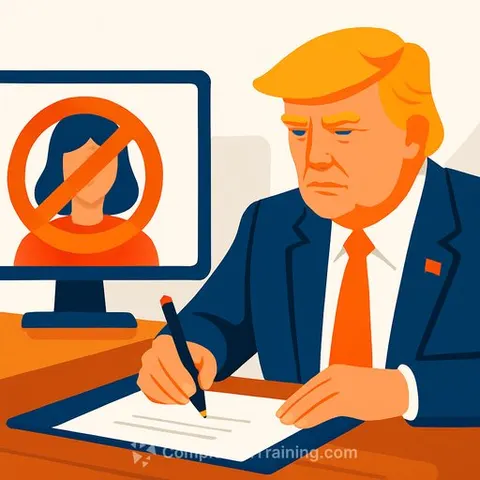
President Trump Signs Law Criminalizing Non-Consensual Deepfakes
Non-consensual deepfakes—explicit images created by superimposing a person's face onto nude bodies using AI—have targeted individuals from celebrities like Taylor Swift and Rep. Alexandria Ocasio-Cortez to everyday teens. After growing public concern, President Donald Trump signed the Take It Down Act into law at the White House, establishing federal criminal penalties for sharing such images without consent.
Key Provisions of the Take It Down Act
- Criminalizes sharing non-consensual explicit images, whether real or AI-generated.
- Requires technology platforms to remove such images within 48 hours of notification.
- Clarifies law enforcement authority to prosecute offenses related to non-consensual AI-generated sexual images.
This legislation closes previous gaps where protections for adult victims were inconsistent across states. Before this law, federal statutes primarily addressed AI-generated explicit images of children, leaving adult victims vulnerable. The Take It Down Act is among the first federal laws targeting harms resulting from AI-generated content.
Bipartisan Support and Advocacy
The bill passed Congress with near-unanimous support, reflecting a rare bipartisan consensus. Only two House members opposed it. Support came from more than 100 organizations, including major tech companies like Meta, TikTok, and Google. First Lady Melania Trump actively advocated for the legislation, lobbying Congress and hosting teen victims during key moments, such as President Trump's joint session address.
Two teenage victims, Elliston Berry and Francesca Mani, attended the bill signing. Berry, who was targeted by a classmate using AI to create a nude image of her, has spoken publicly about the impact of this harassment and the relief the law brings.
Why the Law Matters for Legal Professionals
For legal practitioners, the Take It Down Act establishes clear federal standards and enforcement tools against a growing form of digital abuse. It increases accountability for platforms hosting harmful content and provides victims with concrete legal recourse. This clarity helps prosecutors, defense attorneys, and civil litigators understand the scope of prohibited conduct and platform responsibilities.
Additionally, the law signals a legal acknowledgment of the unique harm caused by AI-facilitated non-consensual sexual images, setting a precedent for future legislation addressing AI-related offenses.
Tech Platforms and Enforcement Challenges
Before the law, many tech companies had voluntarily implemented removal processes for non-consensual sexual images. Google, Meta, and Snapchat offer image removal requests, and some partner with organizations like StopNCII.org and Take It Down to streamline removals across platforms.
Apple and Google have also removed apps that generate manipulated nude images from their stores. Yet, bad actors often exploit platforms with weaker safeguards, highlighting the need for legal enforcement.
Experts emphasize the law compels platforms to act decisively to protect users from intimate violations. While not a complete solution, it sets a baseline for preventing digital harm.
Voices from Advocacy Groups
Ilana Beller from Public Citizen, a progressive advocacy group supporting the law, remarked that non-consensual intimate deepfakes cause clear harm without societal benefit. She stressed the importance of signaling societal rejection of such behavior through federal legislation.
Imran Ahmed, CEO of the Center for Countering Digital Hate, noted the legislation forces social media platforms to protect women from invasive rights breaches, addressing unacceptable online harms faced by young women.
Looking Ahead
The Take It Down Act marks a significant step in addressing AI-generated content abuse. Legal professionals should monitor its implementation and evolving case law to effectively advise clients and enforce protections.
For those interested in AI's impact on law and technology, exploring educational resources can provide valuable insight. Visit Complete AI Training for courses on AI and its applications across industries.