
AI news ·
Two Berlin graduates ask 30 design leaders if AI has ended their industry and
Two Berlin graduates compiled 30 candid AI responses from 50 design leaders into a new book, "Are we cooked?!" The limited first edition runs 500 copies via Kickstarter.
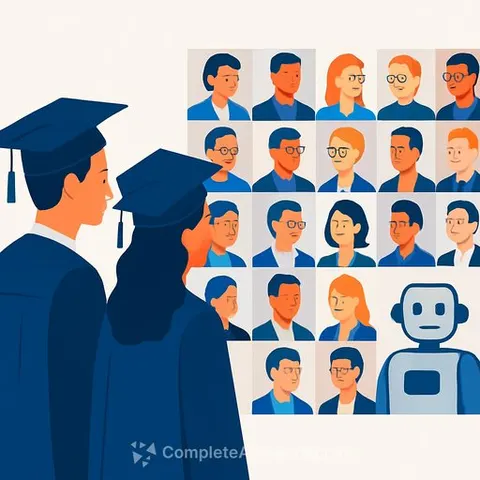
Two Berlin graduates, Max Voigt and Erik Burdach, interviewed nearly 50 design leaders and agency heads about AI, then compiled the 30 sharpest responses into a hardback book titled "Are we cooked?!" The project - originally a university assignment - refuses to offer a tidy verdict on whether AI has ended the design industry. Instead, it presents a cross-section of candid perspectives from contributors including Kurppa Hosk, Mutabor, LVMH, and artist Boris Eldagsen.
The contributors ranged from agency leaders and independent artists to AI provocateurs. Each got a spread built around a single pull quote, several rounds of rapid-fire questions, and a mock "file evaluation" scoring their enthusiasm, ambivalence, and abstraction level. The book also includes a "metaphor radar" that catalogues how differently people describe AI: black magic, a weak intern, fast food, a dream machine, or "the tools of the devil," depending on who you ask.
No easy answers
Eldagsen, the artist who won and then forfeited the 2023 Sony World Photography Award to make a point about AI-generated imagery, delivers the book's starkest line: "AI can replace everything that is just 'good enough.'" He argues that large agencies still have a future because branding was never just image generation - it's knowledge transfer, client management, and understanding a target audience, all the unglamorous groundwork no prompt can shortcut.
Andrea Ciulu's contribution is reduced to a single spread and a single line: "Get drunk, AI can't." It's the funniest moment in the book and arguably the most serious one too. Underneath the joke sits a real argument: whatever AI eventually gets good at, it won't be good at being human about it. The unplanned tangent, the bad decision made at 1am that becomes the campaign's best idea, the shared hangover that bonds a creative team - none of that is easily automated.
Metaphors and discomfort
The "metaphor radar" spread alone is worth the price for anyone who has sat in a client meeting and realised half the room uses "AI" to mean five completely different things. If an industry can't agree on its own metaphors, it's no wonder it can't agree on strategy. The book is honest enough not to force consensus where none exists. Max and Erik set out to ask questions that would survive the next software update, chasing less "which model did you use?" and more "what is design actually for?"
That refusal to resolve the tension is the book's entire ethos. Most AI-and-creativity content splits into breathless evangelism or defensive dismissal. This book feels like a room full of experienced, thoughtful people disagreeing with each other in public - roughly what the design industry needs more of and gets too little of at actual conferences.
Why this matters for creatives
The book's real value is in capturing a specific, anxious moment through 30 different lenses, at a scale and level of candour no single panel discussion can match. It gives designers a reference point for discussing AI without falling into hype or dismissal - useful for team conversations, client pitches, and personal strategy. Studio Sprengsatz is currently running a Kickstarter campaign for a limited first edition of 500 copies. That feels about right: not a mass-market verdict, but a snapshot of what the industry's most interesting practitioners were actually saying to each other, when nobody was performing for a stage.