
AI news ·
University of Washington researchers build PaperTok to turn papers into short videos
UW researchers built PaperTok to convert papers into 45 sec videos, countering AI science misinformation. In tests with 118 users, videos were engaging but some felt 'too AI-ish'.
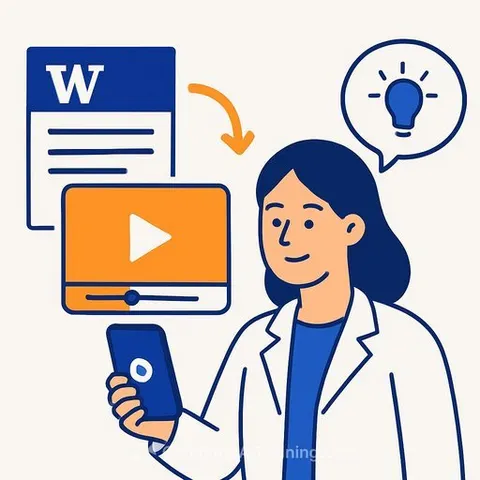
Researchers at the University of Washington's Prosocial Computing Group have built PaperTok, an AI tool that turns research papers into 45-second videos. The system, presented this month at the ACM Conference on Human Factors in Computing Systems in Barcelona, responds to a surge in AI-generated science content on social media produced by non-experts - a trend that can accelerate misinformation.
How the tool turns papers into videos
PaperTok relies on Google Gemini to write a short script after a researcher uploads a paper. The system first offers four hook options, such as asking whether the viewer ever gets overwhelmed reading dense academic papers. Once the user selects a hook, the tool generates a script and breaks it into storyboard scenes, similar to a movie plan. Users can iteratively edit the transcript and the resulting generative video before adding a byline that appears with the paper's authors at the end.
"Because you're competing with other videos online, you have only a few seconds to grab someone's attention," said co-lead author Donghoon Shin, a UW doctoral student in human centered design and engineering. The team interviewed eight science communicators to learn what makes short-form videos credible and engaging.
Why researchers built it
Non-scientists have been using generative AI to produce short science videos, and the lab saw a risk of convincing but incorrect content spreading without expert oversight. "The alternative is that science is being talked about without scientists," said co-lead author Meziah Ruby Cristobal, a UW doctoral student in the same group.
Senior author Gary Hsieh, a UW professor, added that most people do not read research papers, and he still struggles with papers outside his own field. The goal was to give experts a faster way to create content that lay audiences will watch. This approach fits a wider effort to apply AI for Science & Research in ways that keep humans, not models, in control of accuracy.
What early users thought
The team asked 100 online participants and 18 academic participants to compare PaperTok videos with those from two other PDF-to-video generators. Users found PaperTok easier to use and its videos more engaging. Some, however, flagged that the output felt "too AI-ish" - with telltale artifacts like nonsense text - and worried that sharing such videos could undermine their scholarly credibility. The group plans to add customization features, such as letting users draw on specific scenes to change elements according to their intent.
Why this matters for science and research professionals
PaperTok is not publicly available; it requires a paid Google Gemini subscription to access. Still, the research signals a shift in how scientists can meet audiences on platforms like TikTok without ceding the floor to automated accounts. Cristobal said the core motivation was not to replace researchers but to keep them central: "If anything, we hope that PaperTok highlights how important people are in science communication." For professionals who need to explain complex findings to funders, students, or the public, tools that combine AI speed with expert editing offer a practical path - one where the scientist, not the algorithm, remains the final editor.