
AI news ·
U.S. and China agree to new AI risk notification mechanism
The U.S. and China agreed to a new notification system for AI incidents that could threaten national security, aiming to increase transparency between the world's two largest AI powers.
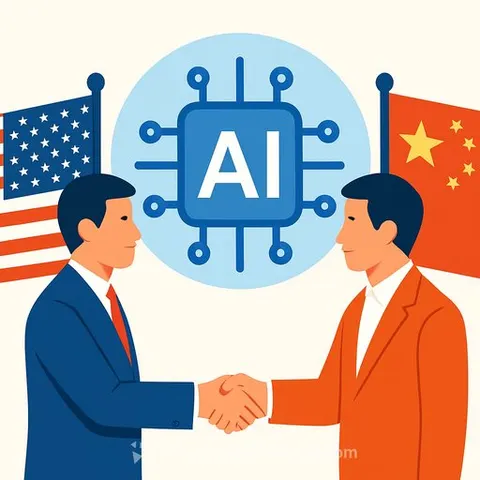
The U.S. and China have agreed to create a new notification system for artificial intelligence incidents that could threaten national security, Treasury Secretary Scott Bessent said Sunday. The mechanism, announced after talks in New York between Bessent and Chinese Vice Premier He Lifeng, aims to increase transparency between the world's two largest AI powers ahead of a White House meeting this week between President Donald Trump and China's Xi Jinping.
"We want a shared vision of common goals and common threats," Bessent told reporters. "We think that just like any cross-border activity, that moving from opaque to more transparency between the No. 1 and the No. 2 AI powers in the world is very important."
The discussions also produced agreement to operationalize a new Board of Trade that Trump and Xi first discussed during their May meeting in Beijing. U.S. Trade Representative Jamieson Greer said the two sides are still negotiating which "nonsensitive" items could qualify for lower tariffs, with consumer goods, agricultural products, energy supplies, and medical devices under consideration.
A framework other nations may adopt
Chinese state media characterized the talks as "candid, in-depth and constructive," noting the AI discussions without disclosing specifics. George Chen, a partner at The Asia Group consultancy, said the notification mechanism "sets a precedent that other countries may follow." The fact that both sides agreed to continue dialogue carries weight on its own, he added.
Trump has consistently pushed back against calls to slow AI development, arguing that restrictions would allow China to close the gap with U.S. companies. The proposed notification mechanism represents a middle path - preserving competitive speed while building channels for crisis communication.
Tariff talks and the trade agenda
Greer stood alongside Bessent in the JPMorgan Chase headquarters lobby Sunday evening and said the groundwork was now in place for Thursday's Xi-Trump meeting. "Today those notions have become reality," Greer said, referring to the Board of Trade concept. The tariff discussions remain fluid, with both sides still defining what qualifies as nonsensitive goods eligible for reduced rates.
For regulatory affairs professionals tracking these developments, the notification mechanism signals a shift toward formalized international AI governance. Understanding how bilateral agreements shape compliance expectations is becoming essential. AI Regulatory Compliance Courses address the frameworks emerging from precisely this kind of government-to-government negotiation.
Why this matters for government and legal professionals
The U.S.-China AI notification mechanism creates a new category of cross-border incident reporting that will require legal and policy teams to monitor. Government attorneys and trade specialists should watch for details on what triggers a notification, which agencies will handle the process, and whether the mechanism generates obligations that flow down to private-sector AI developers. The parallel tariff discussions on nonsensitive goods - potentially covering medical devices, energy products, and agricultural items - add a trade law dimension that could affect import compliance strategies if the two leaders finalize terms this week.