
AI news ·
US federal agencies use artificial intelligence to detect $6.5 billion in healthcare fraud
Federal officials charged 455 defendants in a $6.5 billion healthcare fraud takedown. The government now uses AI to stop suspicious billing before payouts occur.
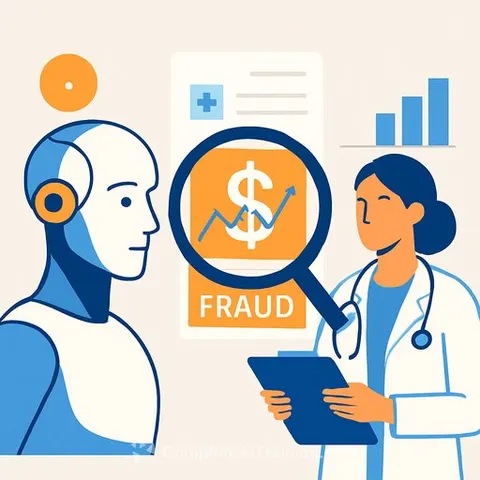
Federal officials announced a $6.5 billion healthcare fraud takedown this week, charging 455 defendants - including nearly 100 physicians and other licensed clinicians - in a nationwide sweep that leaned heavily on AI and data analytics to spot suspicious claims. The 2026 National Health Care Fraud Takedown, coordinated by the Department of Justice and the Department of Health and Human Services, marks a concrete shift toward catching fraud before payouts happen, a change that will ripple through how providers and institutions manage their own billing and compliance.
Technology uncovers a $67 million scheme
The arrests included the first prosecution stemming from the agencies' Fusion Center, which combines traditional data analytics with financial analysis. In that case, tools flagged a clinician who billed Illinois Medicaid for hundreds of hours of behavioral health services each day - while the same patients were hospitalized at other facilities the same day. The alleged scheme, worth $67 million, involved services that were never provided. Data analysis spotted the impossible billing pattern, triggering an investigation that led to charges.
The Fusion Center is just one piece of a broader federal effort. The Centers for Medicare and Medicaid Services will now supply cloud computing space in its integrated data repository to the DOJ's fraud division, giving investigators direct access to advanced analytics and AI tools. AI for Government is expanding beyond administrative tasks into active fraud prevention, a move that signals more scrutiny for claims data across federal programs.
A shift toward proactive fraud prevention
"We are deploying advanced AI and analytics to identify fraudulent billing - our objective is to stop the fraud before it happens," said Robert Kennedy, Jr., HHS secretary, during a DOJ press briefing. "We will continue expanding these capabilities." That statement reflects a deliberate pivot. Historically, investigators identified fraud long after claims were paid. Now, AI models can analyze claims, enrollment, and provider data in near real time, flagging unusual patterns early.
Peter Justen, founder and CEO of AmeriTrust Solutions, a firm that provides AI-enabled benefits enrollment services, said the technology can fundamentally change the timeline. "Historically, much of healthcare fraud has been identified only after claims have been paid and investigators begin looking for patterns. AI can help identify unusual behaviors much earlier by analyzing large volumes of claims, enrollment, provider and identity data in near real time," he said. The earlier the detection, the less money flows out the door, and the less clean-up required after the fact.
Data quality and false positives
Justen warned that AI is only as good as the data it ingests. "If the underlying enrollment or identity data is incomplete or inaccurate, AI simply becomes better at analyzing bad information," he said. That puts a premium on data quality at the very start of the Medicaid life cycle - during application and eligibility verification. His point underscores a reality for healthcare organizations: data integrity is not an IT issue; it's a financial and legal one.
False positives are another concern. AI models identify patterns and probabilities, not intent. If agencies rely too heavily on automated outputs without human review, legitimate providers or beneficiaries could face unnecessary scrutiny because of incomplete or misleading data. Privacy safeguards are equally critical, given the sensitive personal information already managed by healthcare organizations and government agencies. AI for Healthcare demands strong security controls, clear governance, and transparency around data use - without those, public trust erodes.
Justen stressed that AI is not a standalone solution. "Successful fraud prevention requires accurate data, well-designed business processes, cross-agency collaboration and experienced investigators," he said. "AI is a powerful tool that can help prioritize where to look, but it works best when it's supporting, not replacing, human expertise and sound operational controls."
Why this matters for healthcare professionals
For people working in healthcare, the ramp-up of AI-driven fraud detection means claims will face more automated scrutiny before payment. Providers should expect tighter audits, faster inquiries when billing patterns deviate from norms, and a greater need for clean, accurate documentation from the point of patient intake. The Fusion Center model and CMS's expanded data-sharing with DOJ signal that federal agencies are linking datasets in ways that make anomalies harder to hide. Investing in internal data quality checks, training staff on documentation standards, and maintaining strong compliance programs can help organizations avoid the risks of false positives and ensure they don't become collateral damage in a system designed to catch bad actors.