
AI news ·
Virgin Voyages executive says AI should create more time for human connection
Virgin Voyages' Nicole Huang will keynote FTE Global in Dallas in September 2026, arguing AI should free staff for human interaction, not replace it. The cruise line uses Google Cloud's Gemini across marketing, sales, and crew training to cut repetitive tasks.
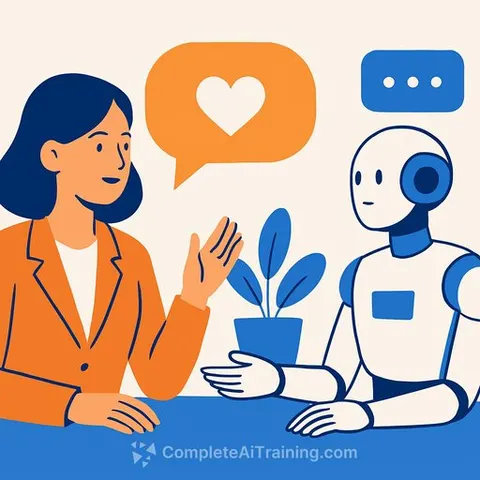
Virgin Voyages' fleet experience chief will tell aviation leaders at FTE Global next September that AI should create more time for human interaction, not replace it. Nicole Huang, SVP Fleet Experience at the cruise line, is scheduled to deliver the Opening Keynote Session at the 20th anniversary edition of the event in Dallas, Texas, from 8 to 10 September 2026.
Huang's presentation, titled "More human, powered by AI: The future of hospitality," will draw on Virgin Voyages' use of Google Cloud's Gemini Enterprise platform. The company has deployed AI agents across marketing, revenue, sales, crew training, commercial operations, and Sailor Services. Each agent flow is designed to remove repetitive tasks and free crew members to focus on passengers.
"Technology should make experiences more efficient, but people are what make them memorable," Huang said.
Why aviation should watch a cruise line
Huang's career spans both aviation and hospitality, and she argues the two industries share a core focus. "Whether you're on an aircraft or a cruise ship, people want to feel welcomed, understood, and cared for," she said. "Great experiences start with operational excellence. Once the basics are right, emotional connection is what people remember. The best experiences combine both."
That point matters for airlines and airports competing on customer experience. A smooth journey removes frustration, but passengers remember the human moments. Huang said the industry should treat operational performance and emotional connection as one problem, not two.
Virgin Voyages was built on the question of how to design cruising from scratch rather than improve it incrementally. Huang sees the same opening for aviation. "I think aviation has the same opportunity: don't just optimise the journey, rethink it," she said.
Expectations are set outside travel
Passengers now judge airlines against the best experience they have had anywhere, not just against other carriers. "Customers don't compare airlines to airlines anymore," Huang said. "They compare every experience to the best experience they've had anywhere."
AI will push those expectations higher, particularly around personalisation. But Huang said the real opportunity is using technology to enable more meaningful human interactions, not replace them. For hospitality and events professionals, that distinction is central: automation should handle routine processes while staff focus on the interactions technology cannot replicate.
Huang also stressed that innovation fails without organisational alignment. "Innovation isn't usually limited by ideas. It's limited by alignment," she said. Her advice for leaders: have a clear vision, keep the customer at the centre, involve frontline teams early, and remember that culture is built through everyday decisions, not presentations.
That frontline focus is especially relevant as AI becomes embedded across the travel journey. Employees closest to customers often see where friction exists and how new tools will work in practice. Including them early helps bridge the gap between strategy and operations.
Why this matters for hospitality and events professionals
Huang's approach suggests a practical benchmark for anyone planning events or managing guest experiences: measure technology by whether it gives staff more time with guests, not by efficiency gains alone. Professionals in hospitality and events can apply this test when evaluating new AI tools - and can use the same framing to build internal support, since Huang's argument gives frontline teams a clear reason to adopt automation rather than resist it. For those exploring how these principles apply to their own work, AI for Hospitality & Events offers practical grounding, while AI for Customer Support covers the service-side applications Huang describes.