
AI news ·
Why Congress Must Pass an AI Whistleblower Protection Law Now
Thirteen AI insiders warned of serious safety gaps and lack of legal protections for whistleblowers in AI companies. Congress must act to safeguard employees reporting risks in AI systems.
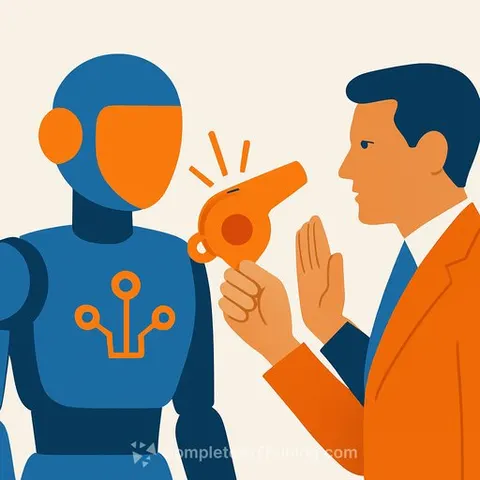
Last year, thirteen AI insiders courageously issued a letter titled “A Right to Warn about Advanced Artificial Intelligence,” exposing serious safety and security gaps in AI products released without adequate oversight. These whistleblowers risked retaliation to highlight the urgent need for legislation that protects employees reporting on high-risk AI systems developed behind closed doors. The AI industry currently lacks explicit legal safeguards for workers to report misconduct, making Congressional action critical to pass whistleblower protections tailored specifically for AI employees.
Historical examples show that sector-specific whistleblower laws are effective. Congress has passed protections for industries like nuclear energy (Energy Reorganization Act, 1978), airlines (AIR21, 2000), federal government employees (Whistleblower Protection Act, 1989), and Wall Street (Dodd-Frank, 2010). Each law empowers workers to report wrongdoing that threatens the public. However, AI’s rapid rise since late 2022 has outpaced legislative safeguards, leaving employees vulnerable amid calls from industry leaders for minimal regulation.
Why an AI Whistleblower Bill is Essential
The whistleblowers’ letter referenced evidence from scholars, advocacy groups, and AI companies themselves warning about the serious risks of deploying AI without proper safety measures. These risks include worsening social inequalities, misinformation, loss of control over autonomous systems, and national security threats. Notably, AI developers have publicly acknowledged problems such as bias, toxicity, and potential misuse but continue to roll out these technologies broadly.
Key documented concerns include:
- Existential risks and societal disruption (OpenAI)
- Toxicity, bias, and dishonesty in AI models (Anthropic)
- Potential for offensive cyber operations and weapon development (Google DeepMind)
- Fraud, discrimination, labor displacement, and national security risks (White House)
- Concentration of power and threats to public safety and international security (UK Government)
- Algorithmic bias denying critical healthcare and spreading misinformation (FAccT Statement)
- Democratic erosion and labor displacement (Encode Justice and Future of Life Institute)
- Extreme risks including extinction-level threats (CAIS Statement)
While scientific and public guidance exist to mitigate these dangers, AI companies face financial motives to resist oversight. In 2024, whistleblowers revealed that AI firms like OpenAI used confidentiality and non-disparagement clauses to silence employees, even blocking disclosures of securities violations to federal authorities. Such agreements require prior company consent before reporting concerns and may force employees to waive legally entitled whistleblower rewards.
These practices create a chilling effect, discouraging insiders from raising alarms despite possessing vital knowledge about AI risks. Without legal protections, whistleblowers risk termination or harassment for reporting on misuse or security flaws. This jeopardizes regulatory efforts and public safety, underscoring the need for clear legal channels enabling safe disclosure to authorities.
Key Components of an Effective AI Whistleblower Law
Legislation must clearly prohibit retaliation against AI employees who report misconduct or potential violations. It should ensure whistleblowers have multiple, secure avenues to disclose concerns both internally and to regulators. To be effective, such a law should incorporate the following elements:
- Due Process Protections: Right to pursue retaliation claims in federal court with access to a jury trial.
- Anti-Retaliation Safeguards: Prohibition on firing, demoting, blacklisting, or harassing employees engaged in protected whistleblowing activities.
- Comprehensive Remedies: Full “make whole” compensation including reinstatement, back pay, lost benefits, compensatory and punitive damages, plus coverage of legal costs.
- Broad Definition of Protected Disclosures: Coverage of reports made internally and to federal, state, or congressional authorities about threats to public health, national security, or financial integrity.
- Ban on Contractual Restrictions: Prohibiting non-disclosure agreements and mandatory arbitration that block whistleblower claims.
- Preservation of Other Rights: Ensuring no federal law preempts state or other whistleblower protections.
These principles follow the successful framework of recent laws like the Taxpayer First Act (26 U.S. Code § 7623(d)) and align with protections under statutes such as Sarbanes-Oxley and the Food Safety Modernization Act. Given the high stakes associated with AI technology, similar protections must be established promptly for the AI sector.
Without legal rights to safely report safety and ethical concerns, AI insiders remain vulnerable, and public oversight is hampered. Congress must act decisively in the 119th session to pass a whistleblower bill tailored to AI, ensuring transparency and accountability in this rapidly evolving field.