
AI news ·
Why Most AI in Healthcare Adds Work: How Clinician-Aligned Systems Like Corti Are Changing the Narrative
Many AI tools in healthcare add workload due to generic designs that miss clinical nuances. Effective AI supports clinicians by integrating smoothly and improving accuracy.
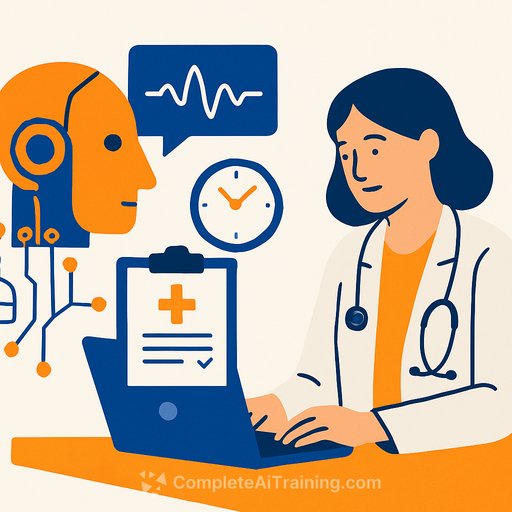
Why Most AI in Healthcare Creates More Work, Not Less
AI tools for healthcare are multiplying, yet many clinicians find themselves burdened rather than relieved. The issue isn’t the number of AI solutions but their generic nature, which fails to meet the specific demands of a highly specialised field.
Healthcare involves complex, nuanced workflows where even minor changes can have a big impact. Generic AI models often miss this, adding extra steps instead of reducing workload.
AI-Powered Clinical Assistance That Listens and Supports
Some AI platforms now listen to patient-provider conversations in real time, transcribing and offering decision support. These systems suggest follow-up questions, provide diagnostic insights, and help with medical coding by recommending ICD-10 codes. Automating documentation and organising clinical notes reduces administrative overhead and improves accuracy.
However, the best AI systems go beyond just transcription. They enable developers to build customised functionalities suited to specific clinical needs, ensuring the technology fits into existing workflows rather than disrupting them.
Augmenting Care, Not Replacing Clinicians
High-quality patient care depends on skilled professionals, and there simply aren’t enough of them. AI’s greatest contribution lies in supporting intake, consultations, and follow-ups—moments where information exchange is critical.
AI should enhance these interactions, not replace the human element. As AI improves in medical reasoning, it will support more parts of the patient care journey without overwhelming clinicians.
Why Ambient AI Scribes Often Fall Short
Ambient AI scribes, which passively listen to clinical encounters, are becoming common, especially in outpatient settings. Yet most rely on general AI models not specifically trained for medicine. This leads to errors and increased correction time, with many doctors spending hours each week fixing AI-generated notes.
Without rigorous fine-tuning and clinical alignment, these tools become a new task rather than a relief.
The Problem of “Pilot Paralysis” in AI Adoption
Research indicates strong support for AI use among healthcare professionals, yet confidence in current solutions is lacking. This leads to “pilot paralysis”: many trials start but few move beyond testing due to concerns over accuracy, cost, and integration issues.
Effective AI in healthcare requires models trained on millions of actual healthcare cases and built with transparency. Clinicians need to trace AI reasoning and detect inconsistencies before they affect patient care.
A Flexible and Specialist AI Stack
AI that performs well across languages and specialties, complies with medical regulations, and offers explainable outputs is key. One approach mimics medical residency, gradually increasing AI responsibility under human supervision.
Such systems include:
- Solo: Fast audio reasoning handling complex medical terms in 10+ languages, integrating smoothly with existing systems.
- Ensemble: Focused on creating concise, accurate documentation that converts conversations into structured notes.
- Symphony: Combines speed and reasoning to provide real-time clinical support, running significantly faster than some general AI models.
Additionally, specialised expert models address tasks like medical coding and quality control. This modular design makes integration into existing workflows easier and more effective.
Enabling Rapid, Compliant Innovation
Lowering the cost and raising the quality of AI models allows more healthcare providers and developers to build applications. For example, creating a scribe app has gone from requiring millions in funding to being achievable within minutes using new tools.
Opening API endpoints for transcription, summarisation, dictation, and patient engagement supports a wider variety of healthcare services, even in niche specialties.
Clinicians as Partners in AI Development
Trust in AI builds over time. Transparency, research publication, and compliance are essential. Providing accessible features allows clinicians to evaluate and shape tools that fit their specific workflows.
Involving clinicians in development ensures AI tools meet real-world needs. As familiarity with AI grows, healthcare professionals will increasingly design their own workflows instead of settling for generic solutions.
The Reality of Personalisation in Healthcare AI
Personalisation is often touted but rarely delivered in current AI tools. Healthcare operates within regulatory frameworks, documentation standards, and system-wide protocols that limit how much AI can be customised.
The priority is consistent, high-quality augmentation of care before moving to deeper personalisation. AI should first reliably support best practices across diverse clinical settings.
In a crowded market of generic AI solutions, specialised, clinician-aligned systems that prioritize transparency and usability stand apart. They offer practical support that reduces workload and improves patient outcomes.