
AI news ·
World leaders gather at UN under shadow of wars, climate crisis and AI fears
130 heads of state meet at the UN as wars, climate shocks, and a push for AI guardrails dominate the agenda.
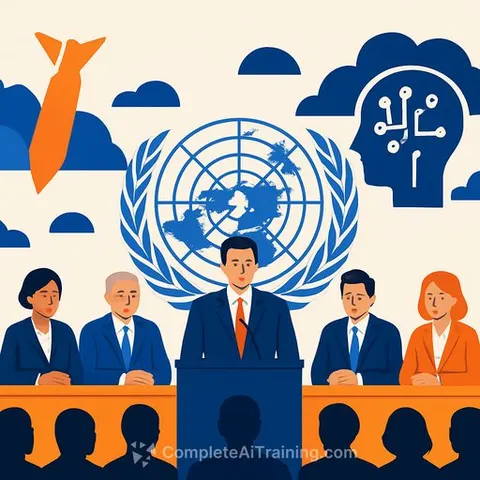
World leaders gather at the United Nations this week under the weight of escalating wars, climate shocks, and a new, urgent fear: that artificial intelligence is advancing without guardrails and could threaten humanity. The annual General Assembly high-level meeting opens Tuesday with some 130 heads of state and government set to speak, even as the UN itself faces questions about its relevance and a looming leadership transition.
Secretary-General Antonio Guterres will deliver his final "state of the world" address to the assembly. His second five-year term ends December 31, and no clear successor has emerged. Behind the scenes, speculation about who will lead the organization next will run through the week's private meetings.
Wars, warming, and a world body under strain
The agenda is dominated by major conflicts in Ukraine, Gaza, Sudan, Congo, and Myanmar. Leaders must confront a persistent question: can they do anything to end them? Alongside the wars, they face the relentless rise of global warming, growing inequality within and among nations, and economic shocks from blocked shipping routes and supply chains that are driving up the cost of living and slowing growth.
The United Nations' own future is also on the table. Its 193 member nations have agreed to a reform package that includes updating the Security Council, where the US, Russia, China, Britain, and France still hold veto power. Reform, however, is easier said than implemented. The organization has been pushed to the sidelines on its core responsibility of ensuring international peace and security, and US arrears have left its finances in rocky shape.
Richard Gowan, International Crisis Group's global issues program director, said the UN is no longer "in freefall" but "is stuck in an open-ended or permanent crisis." He added, "The UN may not be in emergency care like it was last year, but it does seem to be trapped in a trauma center for the foreseeable future."
France's UN ambassador, Jerome Bonnafont, said it is "extremely critical" for leaders to support the UN as the place where nations meet, especially at a time of polarization. "We believe in multilateralism," he said, "and we believe that the high-level week is the occasion for countries in the world to reaffirm that they prefer cooperation and dialogue to confrontation."
AI moves to the center of global concern
The future of artificial intelligence has pushed to the forefront. Advances are speeding forward with no industry controls and no global guardrails for a technology that carries both advantages and serious unknowns. Days before the gathering, leaders of three major AI companies warned about the technology getting out of human control and called for a pause. President Donald Trump dismissed their concerns as "a hoax" and urged continued advances to keep the US ahead of China.
The Security Council added a high-level meeting on AI to its agenda for Wednesday afternoon, a sign of the growing apprehension. It will also hold a high-level meeting on Ukraine with President Volodymyr Zelenskyy on Wednesday morning. For communications and policy professionals tracking the regulatory conversation, AI Public Policy Courses offer background on the governance frameworks now under discussion.
Who is speaking, and who is not
President Trump and French President Emmanuel Macron both speak Tuesday after Guterres' opening address. Zelenskyy and Iranian President Masoud Pezeshkian speak Wednesday. Israeli Prime Minister Benjamin Netanyahu addresses the assembly Thursday. Palestinian President Mahmoud Abbas will not attend because the US refused to give him a visa; he will speak by video the same day.
Equally telling is who is skipping the gathering. China's President Xi Jinping is meeting Trump in Washington on Wednesday and is sending a vice president instead. Russian President Vladimir Putin is not coming, and Indian Prime Minister Narendra Modi has backed out.
Former UN deputy secretary-general Mark Malloch-Brown, a United Nations Foundation board member, said, "While the world still trusts the UN, the global public is eager for change."
Why this matters for government and communications professionals
The week's speeches and side meetings will shape the near-term global narrative on AI risk, multilateral reform, and conflict diplomacy. For those in government, PR, and communications roles, the UN gathering is the primary signal generator for international policy framing. The addition of a Security Council session on AI marks a shift from industry self-regulation toward state-level governance discussions. Tracking which leaders show up, what they prioritize, and how they frame cooperation versus confrontation will set the tone for policy debates through the rest of the year.