AI agent for treasury analysts
Card Processor Settlement Reconciliation Agent
Every settlement agrees with sales and the bank, with fees, chargebacks and delays explained and booked
What it does
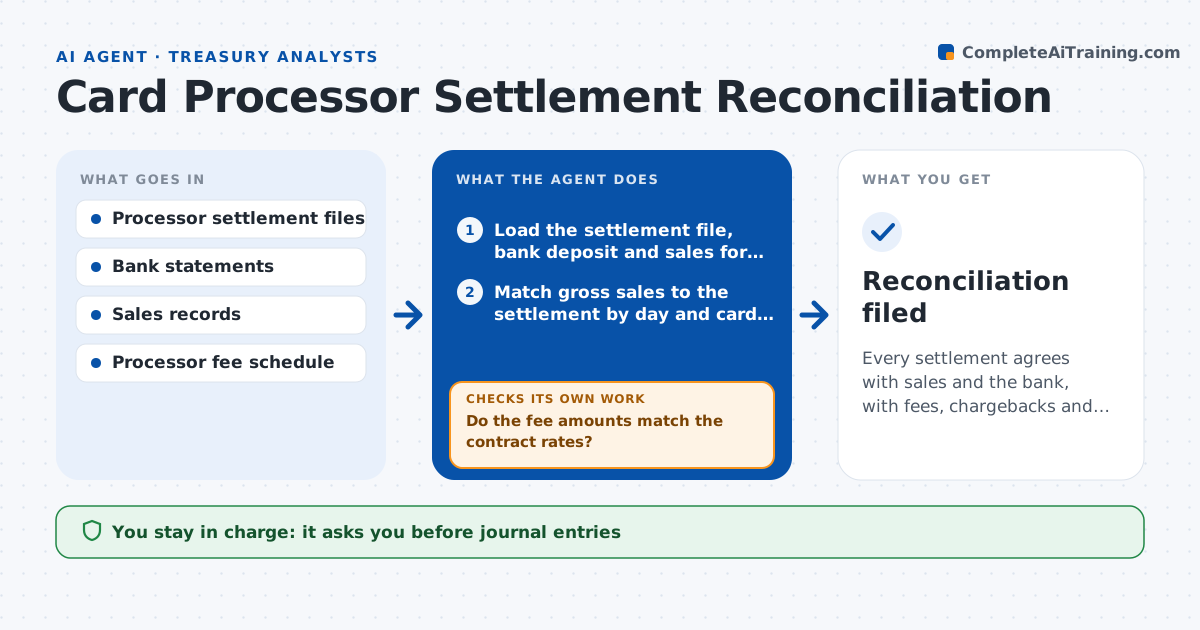
A merchant's card sales never equal the bank deposits. The processor deducts fees, holds back reserves, nets out chargebacks and refunds, and pays on different days. Treasury spends hours each week finding why a deposit is short. This agent matches each processor settlement file to the bank deposit and to the sales records for the same period. It separates gross sales, fees, refunds, chargebacks and reserves, and checks fee rates against the processor contract. It flags differences, such as an unexpected fee, a chargeback not in the books or a deposit delayed past the usual days. It requests detail from the processor for anything it cannot explain, and rechecks when the answer arrives. Treasury approves the journal entries. Edge case: a weekend settlement posts on Monday, so the agent treats it as timing and not a shortfall.
How it works
Follow the arrows from top to bottom. The orange dashed arrow is the loop: when a check fails, the agent goes back and tries again.
Read the steps as a list
- A processor settlement file arrives
- Load the settlement file, bank deposit and sales for the period
- Match gross sales to the settlement by day and card brand
- Separate fees, refunds, chargebacks and reserves
- Do the fee amounts match the contract rates?If not: calculate the overcharge and list the transactions affected. Back to step 3.
- Compare the net settlement with the bank deposit
- Does sales less items equal the deposit within $5?If not: search for missing items, timing differences or unreported chargebacks. Back to step 3.
- Request detail from the processor for unexplained items
- Draft journal entries for fees, chargebacks and timing
- Treasury approves the journal entriesThe agent waits here for your OK.
- Reconciliation filed
How it decides
It accepts a settlement when gross sales less documented fees, refunds and chargebacks equal the deposit, and it treats any other gap above a small tolerance as an exception to explain.
- Tolerate differences up to $5 per day
- Treat weekend settlements as timing for up to 3 days
- Dispute fee overcharges above $50
- Flag any reserve change not in the contract
Make it yours
Every agent is a starting point. You choose these settings for your own situation.
- Difference tolerance (default $5)
- Dispute threshold (default $50)
- Processors covered
- Reconciliation frequency
What keeps you in control
It always asks you first
- Journal entries
- Dispute claims to the processor
Hard limits
- Never moves funds or disputes charges itself
- Does not change processor contracts
- Keeps the file trail for each day
It stops when
- Done: all settlements agree or have documented exceptions
- Stop: settlement files are missing
Set it up
We guide you through the set-up, step by step
Members get the full set-up guide for this agent. No technical skills needed: you copy, paste and upload.
- One set of instructions to paste into your AI, with the clicks for ChatGPT, Claude, Microsoft 365 Copilot, Gemini and Grok
- The agent then walks you through connecting your own data, one source at a time
- A downloadable copy with the flow chart, the rules and the full guide