AI agent for blockchain developers
Contract Gas Optimization Agent
Lower gas cost for the heaviest functions with behavior preserved
What it does
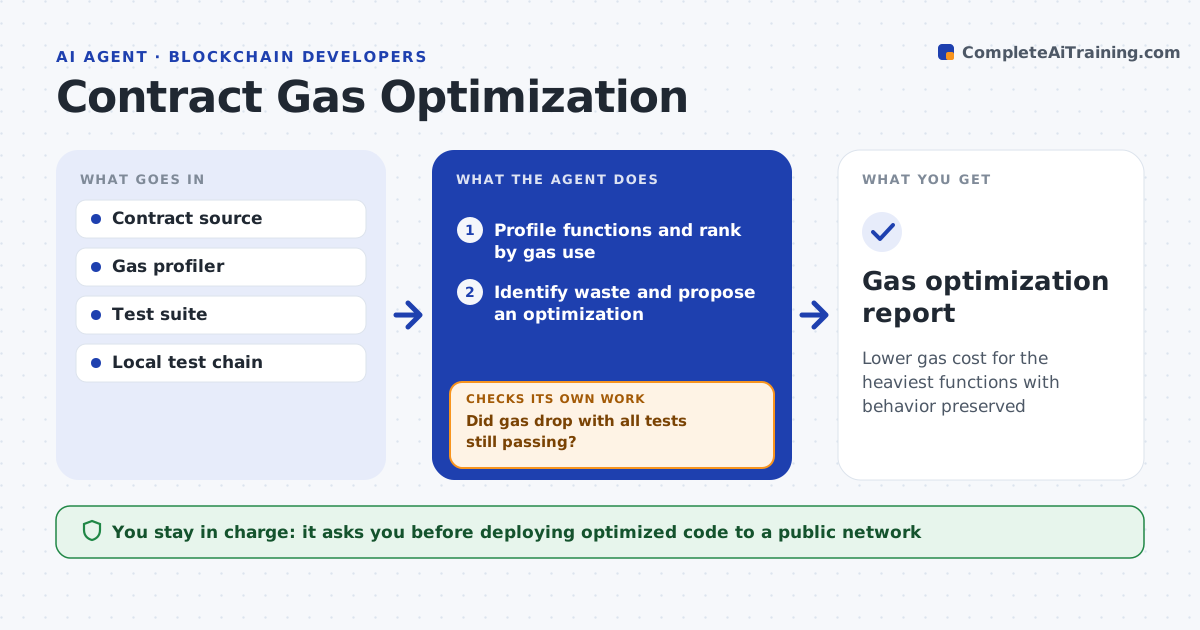
On a blockchain, every operation costs gas that users pay, so wasteful contract code is a real cost to them. This agent profiles a contract's functions to find the most expensive ones and reads the code for common waste, such as repeated storage reads, unnecessary storage writes and unbounded loops. It proposes one specific optimization at a time, applies it in a test copy and re-measures gas. It reruns the full test suite to confirm behavior is unchanged. If gas does not drop or any test fails, it reverts and tries another approach. It reports the gas saved per function. You approve changes before they reach a public network. Edge case: an optimization that saves gas but reduces readability or safety is flagged for a judgment call, not applied automatically.
How it works
Follow the arrows from top to bottom. The orange dashed arrow is the loop: when a check fails, the agent goes back and tries again.
Read the steps as a list
- Gas review requested
- Profile functions and rank by gas use
- Identify waste and propose an optimization
- Apply it in a test copy and re-measure gas
- Did gas drop with all tests still passing?If not: revert and try another approach. Back to step 3.
- Flag optimizations that hurt readability or safety
- Developer approves changes for deploymentThe agent waits here for your OK.
- Gas optimization report
How it decides
It targets the highest-gas functions and keeps an optimization only when gas drops and every test still passes.
- Target the highest-gas functions first
- Keep a change only if gas drops and tests pass
- Flag trade-offs against safety or readability
Make it yours
Every agent is a starting point. You choose these settings for your own situation.
- Functions to target
- Minimum gas saving to keep a change
- Readability and safety limits
- Test suite to run
What keeps you in control
It always asks you first
- Deploying optimized code to a public network
Hard limits
- Never deploys to a public network without approval
- Keeps every change behind passing tests
It stops when
- Done: gas reduced with tests passing
- Stop: the contract has no test suite to protect behavior
Set it up
We guide you through the set-up, step by step
Members get the full set-up guide for this agent. No technical skills needed: you copy, paste and upload.
- One set of instructions to paste into your AI, with the clicks for ChatGPT, Claude, Microsoft 365 Copilot, Gemini and Grok
- The agent then walks you through connecting your own data, one source at a time
- A downloadable copy with the flow chart, the rules and the full guide