AI agent for agricultural scientists
Crop Nutrient Deficiency Diagnosis Agent
Identify the most likely cause of a crop symptom and the cheapest confirming test
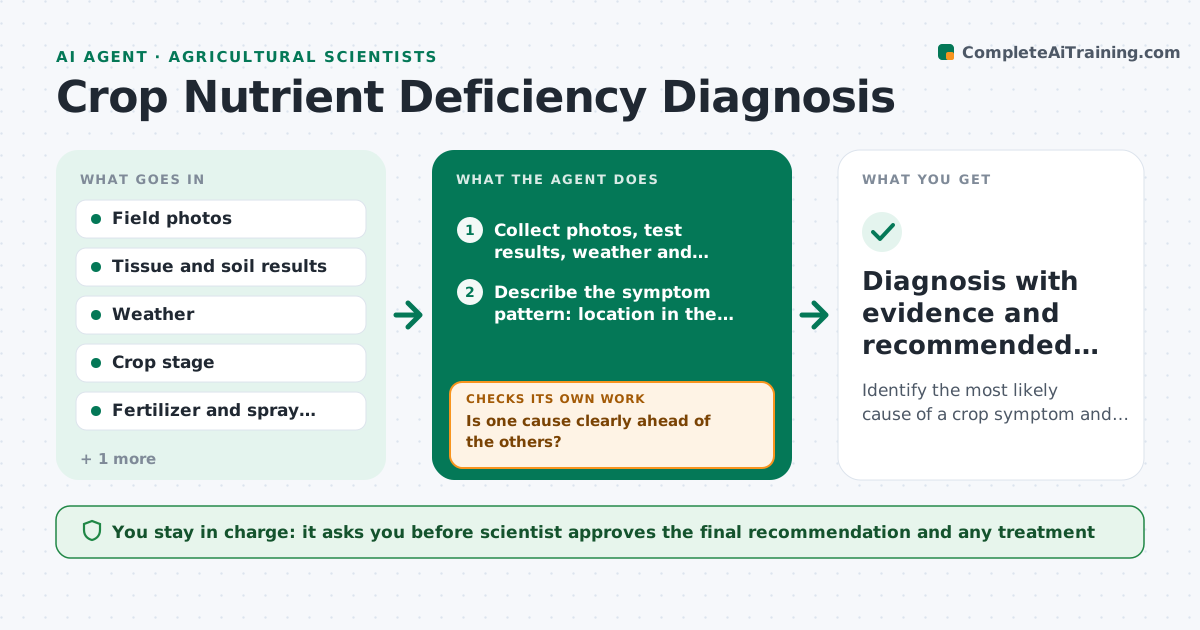
What it does
Yellow leaves on a crop can mean low nitrogen, sulfur, an iron problem, root disease or waterlogging. The scientist looks at photos, orders tests and often treats the wrong thing first. This agent narrows the cause. It combines field photos, tissue and soil test results, recent weather, crop stage and treatment history, then ranks the likely causes with the evidence for each. It proposes the confirming test that separates the top two causes, such as a tissue sulfur test, and updates the ranking when the result arrives. It repeats until one cause is clearly ahead. The scientist approves the recommendation. Edge case: two nutrient problems are present. The agent reports both and the order to address them.
How it works
Follow the arrows from top to bottom. The orange dashed arrow is the loop: when a check fails, the agent goes back and tries again.
Read the steps as a list
- Symptom reported with photos and field data
- Collect photos, test results, weather and treatment history
- Describe the symptom pattern: location in the plant, field pattern and timing
- List candidate causes and score each against the evidence
- Is one cause clearly ahead of the others?If not: Pick the cheapest test that separates the top causes and request it. Back to step 3.
- Record the new result when it arrives
- Update the ranking with the new evidence
- Does the leading cause explain the field pattern and weather?If not: Add causes such as disease or compaction and rescore. Back to step 3.
- Scientist approves the recommendationThe agent waits here for your OK.
- Diagnosis with evidence and recommended action
How it decides
It scores each cause by how many findings support it and how well the symptom pattern fits. The next test is the one that best separates the leading causes at the lowest cost.
- A cause is clearly ahead when its score exceeds the next by 20 percent
- Choose the confirming test with the lowest cost and time
- Patchy field patterns suggest soil or drainage causes
- Treat only after confirmation unless damage is spreading fast
Make it yours
Every agent is a starting point. You choose these settings for your own situation.
- Crops and regions covered
- Test costs and lead times
- Score margin to call a cause (default 20 percent)
- Photo requirements
- Who approves treatments
What keeps you in control
It always asks you first
- Scientist approves the final recommendation and any treatment
Hard limits
- Never orders treatment itself
- Presents a ranking, not a certainty
It stops when
- Done: cause confirmed and action recommended
- Stop: results conflict with all candidate causes, request expert review
Set it up
We guide you through the set-up, step by step
Members get the full set-up guide for this agent. No technical skills needed: you copy, paste and upload.
- One set of instructions to paste into your AI, with the clicks for ChatGPT, Claude, Microsoft 365 Copilot, Gemini and Grok
- The agent then walks you through connecting your own data, one source at a time
- A downloadable copy with the flow chart, the rules and the full guide