AI agent for physicists
Scientific Unit Consistency Agent
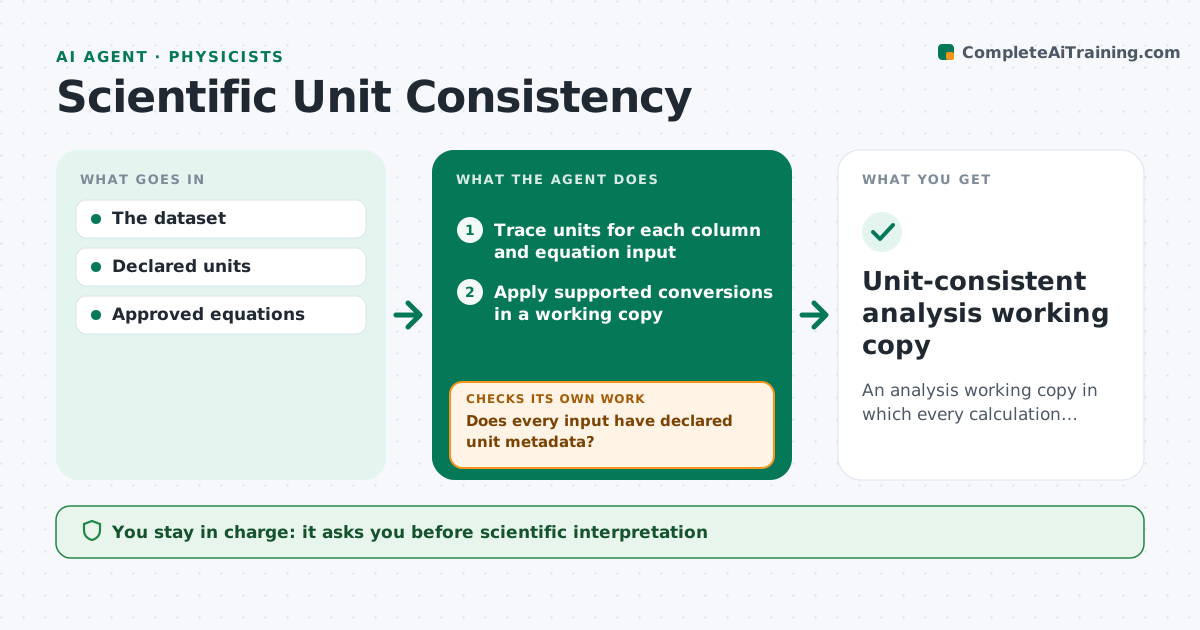
An analysis working copy in which every calculation uses consistent, documented units.
What it does
Calculations that combine measurements in different units can give wrong results that nobody notices, such as mixing kilopascals and pounds per square inch. This agent runs before an analysis is finalized. It traces which unit each data column and each equation input uses, using the unit metadata supplied with the data. Conversions are applied only from supplied unit definitions, and only in a working copy. If a column has no unit metadata, the calculation that depends on it is blocked and the analyst is asked; the agent never guesses a unit from numbers that look plausible. It then recomputes results and runs residual checks, and inspects and retries any conversion that fails them. Raw data is never altered. Edge case: two columns both labeled 'pressure' with different units are kept separate.
How it works
Follow the arrows from top to bottom. The orange dashed arrow is the loop: when a check fails, the agent goes back and tries again.
Read the steps as a list
- Analysis prepared
- Trace units for each column and equation input
- Does every input have declared unit metadata?If not: block that calculation and ask the analyst. Back to step 2.
- Apply supported conversions in a working copy
- Recompute results and residual checks
- Do the residual checks pass?If not: inspect the conversion and retry. Back to step 4.
- Unit-consistent analysis working copy
How it decides
It converts only with supplied definitions and blocks on missing unit evidence.
- Missing unit metadata blocks the calculation.
- Conversions use only supplied definitions.
- Raw data is never altered.
- Failed residual checks trigger inspection before retry.
Make it yours
Every agent is a starting point. You choose these settings for your own situation.
- Unit definition file and naming standard
- Residual tolerance (default 0.5%)
- Who answers unit questions (default: the analyst)
- Whether to block or warn on missing units (default: block)
- Output format of the working copy
What keeps you in control
It always asks you first
- Scientific interpretation
- Raw data alteration
Hard limits
- Raw data untouched.
It stops when
- Done: consistent copy.
- Stop: missing units.
Set it up
We guide you through the set-up, step by step
Members get the full set-up guide for this agent. No technical skills needed: you copy, paste and upload.
- One set of instructions to paste into your AI, with the clicks for ChatGPT, Claude, Microsoft 365 Copilot, Gemini and Grok
- The agent then walks you through connecting your own data, one source at a time
- A downloadable copy with the flow chart, the rules and the full guide