AI agent for physicists
Derivation Check Agent
Show that every step of a derivation holds, or locate and correct the failing step.
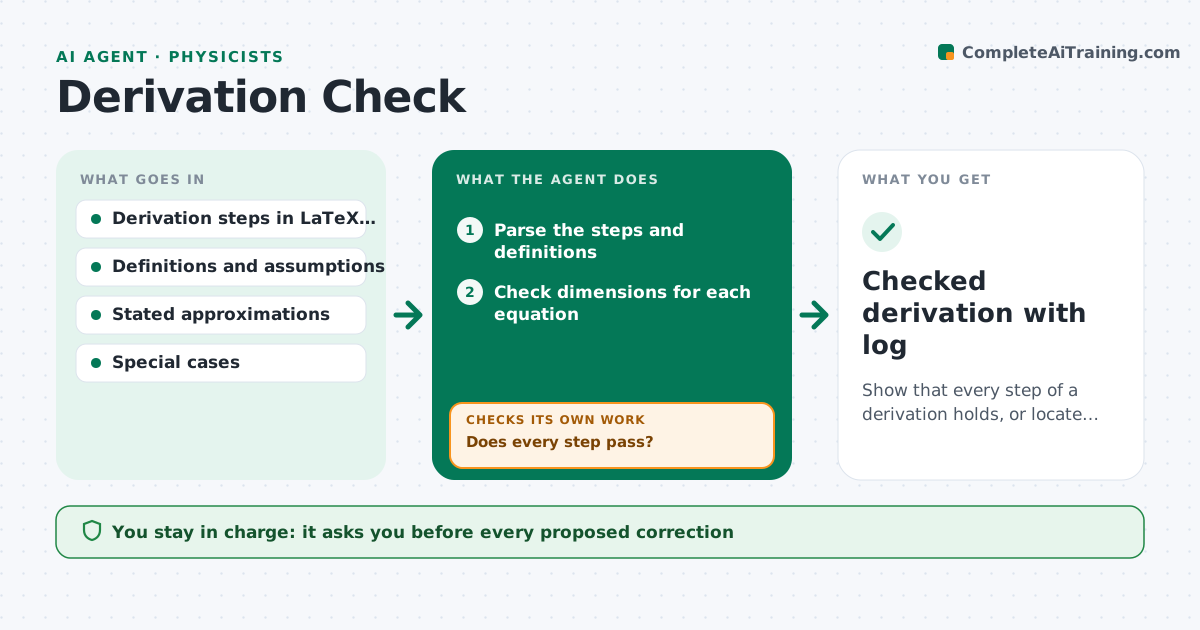
What it does
A derivation that runs for ten pages can hide a sign error on page three that carries through to the end. This agent takes the derivation as a list of steps and checks each one: symbolically with a computer algebra system where possible, and numerically with random test values where not. It checks each equality, each substitution and each limit, and reports the first step that fails with the expression it expected. It proposes a correction and then rechecks the whole chain from that point forward, since later steps may depend on the wrong result. It also checks dimensions and known special cases at the end. It never edits the paper. The physicist approves. Edge case: a step valid only under an approximation is checked at the stated order, not exactly.
How it works
Follow the arrows from top to bottom. The orange dashed arrow is the loop: when a check fails, the agent goes back and tries again.
Read the steps as a list
- Derivation submitted
- Parse the steps and definitions
- Check dimensions for each equation
- Check each step symbolically
- Check unresolved steps numerically with random values
- Does every step pass?If not: locate the first failing step and propose a corrected expression. Back to step 4.
- Physicist confirms or rejects the correctionThe agent waits here for your OK.
- Recheck the whole chain from the corrected step onward
- Do the final result and special limits agree with known cases?If not: report the limit that fails and look for an earlier error. Back to step 3.
- Checked derivation with log
How it decides
A step passes if the algebra system proves equality or random numerical tests agree within the tolerance. It stops at the first failure and rechecks forward.
- Use symbolic proof where available and numerical tests at 20 random points otherwise
- Check approximation steps at the stated order only
- Stop at the first failing step before checking later ones
- Test known limits and special cases at the end
Make it yours
Every agent is a starting point. You choose these settings for your own situation.
- Tolerance for numerical tests
- Number of random points (default 20)
- Approximation order
- Limits to test
- Algebra system
What keeps you in control
It always asks you first
- Every proposed correction
- Final checked version
Hard limits
- Never change the manuscript
- State which steps were only checked numerically
It stops when
- Done: all steps and limits pass
- Stop: a step cannot be tested and needs manual review
Set it up
We guide you through the set-up, step by step
Members get the full set-up guide for this agent. No technical skills needed: you copy, paste and upload.
- One set of instructions to paste into your AI, with the clicks for ChatGPT, Claude, Microsoft 365 Copilot, Gemini and Grok
- The agent then walks you through connecting your own data, one source at a time
- A downloadable copy with the flow chart, the rules and the full guide