AI agent for biologists
Molecular Cloning Troubleshooting Agent
Find the cause of a failed cloning with the fewest experiments and fix it
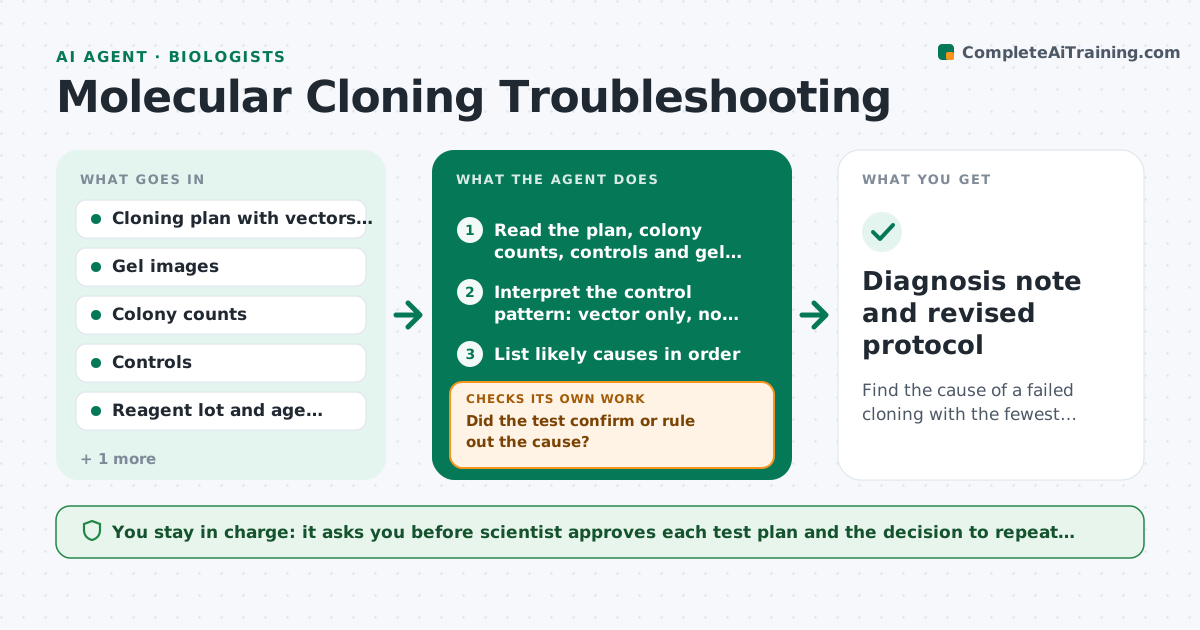
What it does
A cloning attempt gives no colonies or only colonies without the insert, and the lab repeats the whole thing hoping for luck. This agent diagnoses systematically. It reads the cloning plan, the gel images and colony counts, lists the likely causes in order, such as ligation ratio, digest failure, competent cell efficiency or antibiotic plate problems, and proposes the cheapest test first, such as a control transformation or a gel of the digest. It rechecks the result after each test and moves to the next cause. It stops when the cause is found and suggests the fix. The scientist approves repeating or redesigning. Edge case: the vector-only control has many colonies. The agent points to incomplete digestion or self-ligation.
How it works
Follow the arrows from top to bottom. The orange dashed arrow is the loop: when a check fails, the agent goes back and tries again.
Read the steps as a list
- Cloning attempt fails
- Read the plan, colony counts, controls and gel images
- Interpret the control pattern: vector only, no ligase and competent cell control
- List likely causes in order
- Choose the cheapest test that separates the top causes
- Scientist approves the test planThe agent waits here for your OK.
- Record the new result when the test is done
- Did the test confirm or rule out the cause?If not: Move to the next cause and choose the next test. Back to step 4.
- Propose the fix: new ratio, new digest, fresh cells or redesign
- Does the fix address the observed control pattern?If not: Reassess the control results and revise the cause list. Back to step 3.
- Diagnosis note and revised protocol
How it decides
It uses the pattern of controls to rank causes. Each cause has a quick test. It picks the test with the best information per cost and time.
- Many colonies on the vector-only plate point to incomplete digest or self-ligation
- No colonies on the competent cell control point to cell or antibiotic problems
- Ligation tests use 1 to 3 and 1 to 5 insert to vector ratios
- Run the cheapest test first unless a cause is clear
Make it yours
Every agent is a starting point. You choose these settings for your own situation.
- Cloning methods used
- Standard controls
- Test cost and time preferences
- Lab protocols to reference
- Reagent lot records
What keeps you in control
It always asks you first
- Scientist approves each test plan and the decision to repeat or redesign
Hard limits
- Never changes a protocol without approval
- Does not replace expert judgment on unusual constructs
It stops when
- Done: cause found and the fix tested
- Stop: no cause identified after all tests, redesign the cloning strategy with the scientist
Set it up
We guide you through the set-up, step by step
Members get the full set-up guide for this agent. No technical skills needed: you copy, paste and upload.
- One set of instructions to paste into your AI, with the clicks for ChatGPT, Claude, Microsoft 365 Copilot, Gemini and Grok
- The agent then walks you through connecting your own data, one source at a time
- A downloadable copy with the flow chart, the rules and the full guide