AI agent for software architects
Service Boundary and Coupling Agent
A ranked, tested set of boundary changes that reduce coupling and let services change separately
What it does
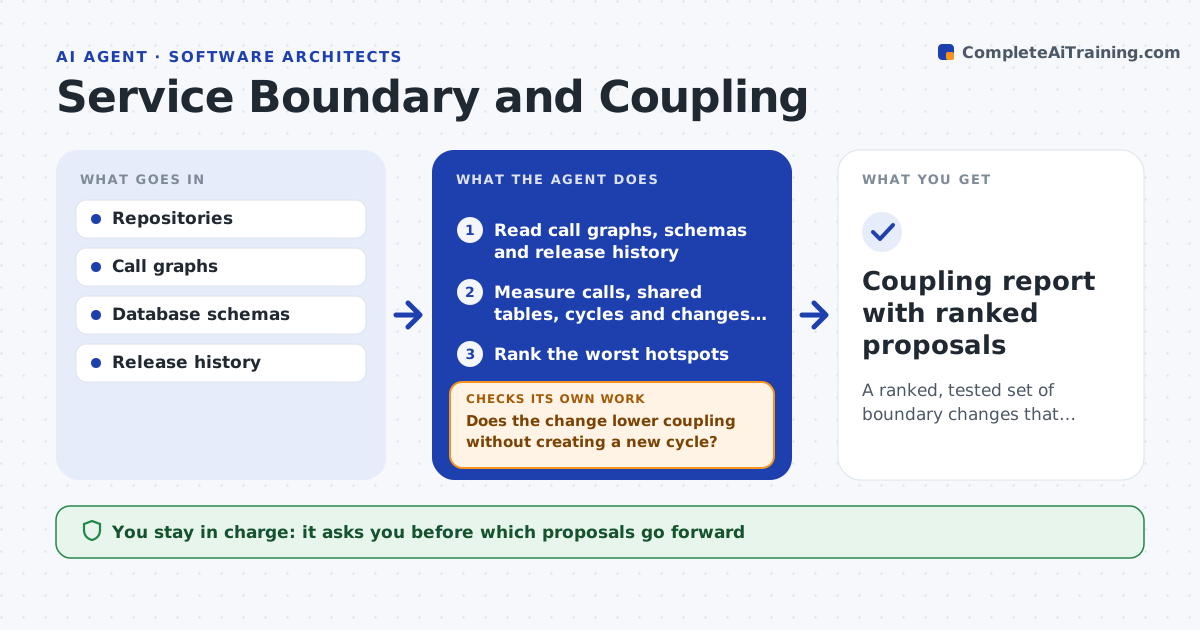
A change to one service keeps breaking three others, but nobody has a map of why. This agent reads the code repositories, call graphs, shared database schemas and deployment history. It measures coupling: how many services call each other, which share a database table, which form cycles, and which are changed together in the same release. It ranks the worst hotspots and proposes boundary changes, such as moving a table to one owner, adding an interface, or merging two services that always change together. For each proposal it rebuilds the graph on paper, measures the coupling again and checks that no new cycle appears. If a proposal makes things worse, it drops it and tries another. The architect decides which changes go forward. Edge case: a shared table is read by 11 services.
How it works
Follow the arrows from top to bottom. The orange dashed arrow is the loop: when a check fails, the agent goes back and tries again.
Read the steps as a list
- Architect requests a coupling review
- Read call graphs, schemas and release history
- Measure calls, shared tables, cycles and changes released together
- Rank the worst hotspots
- Propose a boundary change for each top hotspot
- Rebuild the call graph with the change applied and remeasure
- Does the change lower coupling without creating a new cycle?If not: drop that proposal and try another option for the hotspot. Back to step 5.
- Estimate effort and risk for each surviving proposal
- Do the combined changes still leave an acceptable load on each service?If not: rework the heaviest service's proposal. Back to step 5.
- Architect decides which changes to take forwardThe agent waits here for your OK.
- Coupling report with ranked proposals
How it decides
It prefers proposals that cut cross-service calls and shared tables without creating a new cycle or a heavier load on one service.
- Rank shared tables read by more than 3 services as top risk
- Treat two services changed together in over 70 percent of releases as merge candidates
- Reject a proposal that creates a call cycle
- Show effort next to every gain
Make it yours
Every agent is a starting point. You choose these settings for your own situation.
- Repositories to scan
- Coupling thresholds
- Release history window (default 12 months)
- Output format
What keeps you in control
It always asks you first
- Which proposals go forward
Hard limits
- Never edits code or schemas
- Never presents a guess as measured data
It stops when
- Done: ranked proposals with tested effects delivered
- Stop: call data is missing for key services
Set it up
We guide you through the set-up, step by step
Members get the full set-up guide for this agent. No technical skills needed: you copy, paste and upload.
- One set of instructions to paste into your AI, with the clicks for ChatGPT, Claude, Microsoft 365 Copilot, Gemini and Grok
- The agent then walks you through connecting your own data, one source at a time
- A downloadable copy with the flow chart, the rules and the full guide