AI agent for engineering managers
Technical Debt Prioritization Agent
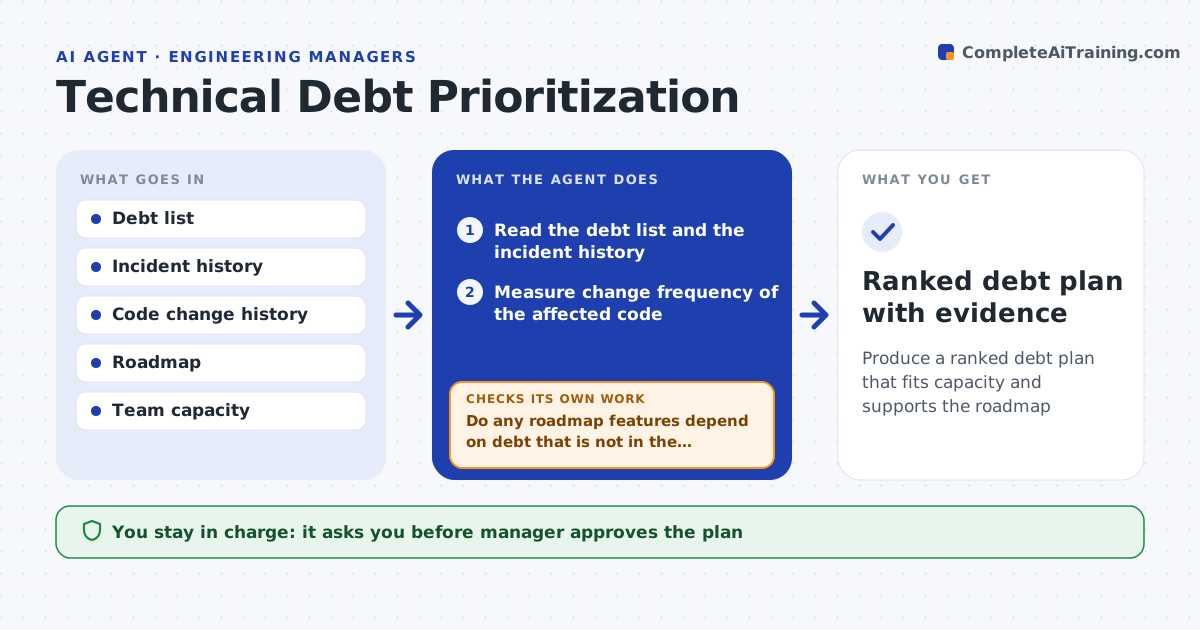
Produce a ranked debt plan that fits capacity and supports the roadmap
What it does
The debt list has 150 items and the team works on whatever annoys them most. This agent reads the list, the incident history and the change frequency of the code involved. It scores each item by risk, such as incidents caused or likely, and by cost: how much work it takes and how much it slows other work. It builds a ranked plan that fits the team's capacity, usually 10 to 20% of each sprint. It checks the plan against the roadmap, spotting debt in areas that upcoming features will touch, and adjusts the order. It explains each ranking with the evidence. The manager approves the plan. Edge case: a small item blocks a big feature next quarter, so the agent moves it up.
How it works
Follow the arrows from top to bottom. The orange dashed arrow is the loop: when a check fails, the agent goes back and tries again.
Read the steps as a list
- Quarterly planning
- Read the debt list and the incident history
- Measure change frequency of the affected code
- Score each item by risk and by cost
- Rank items by value per week of work
- Fit the ranked list to the team's capacity
- Compare the plan with the roadmap
- Do any roadmap features depend on debt that is not in the plan?If not: move that debt up and drop items at the capacity line. Back to step 5.
- Write the reasons for each item
- Manager approves the planThe agent waits here for your OK.
- Ranked debt plan with evidence
How it decides
It ranks by risk reduction and speed-up per week of work, then moves items up when the roadmap depends on them and cuts the plan at capacity.
- Score items higher when they caused incidents in the last 6 months
- Score items higher in code changed more than 20 times a quarter
- Reserve 15% of sprint capacity for debt by default
- Move up any item that blocks a committed feature
Make it yours
Every agent is a starting point. You choose these settings for your own situation.
- Capacity share (default 15%)
- Scoring weights
- Time window for incidents (default 6 months)
- Roadmap source
- Review schedule
What keeps you in control
It always asks you first
- Manager approves the plan
- Product owner agrees the capacity share
Hard limits
- Never reorder committed roadmap items
- Never close or delete debt items
It stops when
- Done: the plan is approved and loaded into the tracker
- Stop: the debt list has no evidence to score and needs triage first
Set it up
We guide you through the set-up, step by step
Members get the full set-up guide for this agent. No technical skills needed: you copy, paste and upload.
- One set of instructions to paste into your AI, with the clicks for ChatGPT, Claude, Microsoft 365 Copilot, Gemini and Grok
- The agent then walks you through connecting your own data, one source at a time
- A downloadable copy with the flow chart, the rules and the full guide