About Agentation
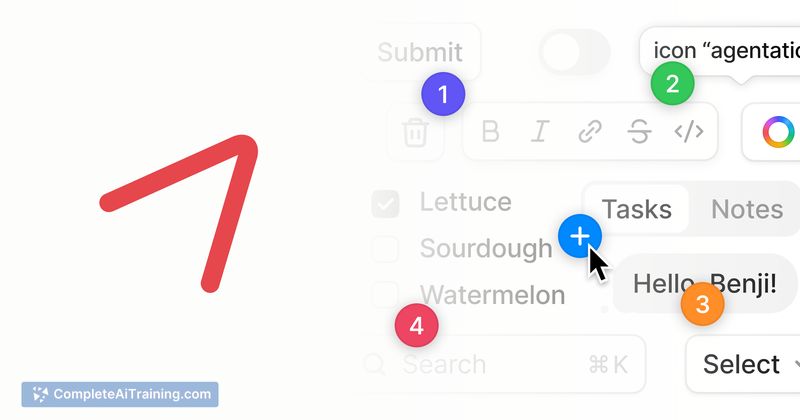
Agentation is a visual feedback tool that converts UI annotations into structured context that AI coding agents can consume. You click an element, add a note, and copy agent-ready output to paste into code-focused AI agents.
Review
Agentation focuses on reducing the ambiguity between design feedback and automated code changes by turning on-screen notes into machine-readable annotations. The tool's launch shows a clear emphasis on precise element identification, component context, and a lightweight workflow for feeding annotations into AI agents.
Key Features
- Multiple annotation modes: click-to-annotate, text selection, multi-select, draw areas, and freeze animations to capture specific states.
- Smart element identification: automatically generates grep-friendly selectors so agents can find the exact element in the codebase.
- React component detection: surfaces the full component hierarchy for any annotated element within the popup.
- Computed styles and layout mode: view live CSS properties alongside notes and drag prebuilt components to rearrange sections with real-time sync.
- Structured markdown output and MCP integration: copy clean, agent-ready annotations with one keystroke and use two-way sync so agents can acknowledge, question, or resolve feedback.
Pricing and Value
At launch, pricing details are not listed on the public page; interested users should check the official site or sign-up flow for current plans and trial options. The core value proposition is clearer workflow and fewer misunderstandings when working with AI coding agents - it converts visual context into actionable, structured data that saves time during handoffs and iterative fixes.
Pros
- Reduces back-and-forth by producing clear, agent-ready annotations that map directly to UI elements.
- Precise selectors and component hierarchy information help coding agents target the right code paths.
- Multiple capture modes and computed style visibility support detailed design-spec communication.
- Two-way MCP sync enables a feedback loop where agents can respond to or resolve annotations.
Cons
- Handling of highly dynamic or transient UI states (toggles, hover-only elements, conditional renders) is not fully documented and may require edge-case testing.
- Scalability and visualization for branching or parallel agent workflows need further validation in larger projects.
- Public-facing documentation and pricing information are limited at launch, which can make evaluation harder for larger teams.
Agentation is well suited for developer-designer teams and engineers who use AI coding agents to implement UI changes and want to reduce ambiguity in requests. Given its early-stage launch, it makes most sense to trial it on targeted components or smaller scopes before rolling it into complex, mission-critical pipelines.
Open 'Agentation' Website
Your membership also unlocks: