AI tool
AgentLoop
AgentLoop manages execution loops for artificial intelligence agents. It provides developers with a framework to build autonomous systems that complete multi-step tasks using large language models.
About AgentLoop
AgentLoop is an open-source, zero-dependency Node.js tool that automates the back-and-forth between ChatGPT and OpenAI Codex CLI. It runs a local daemon that launches a fresh Codex worker and a fresh critic each cycle, using a GUIDELINES.md rubric and file-based memory to carry state across clean contexts. A live dashboard lets you watch and cancel cycles, and an MCP bridge allows ChatGPT to control the loop without exposing the daemon publicly.
Review
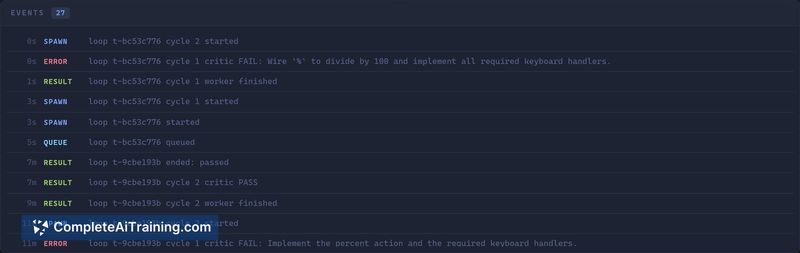
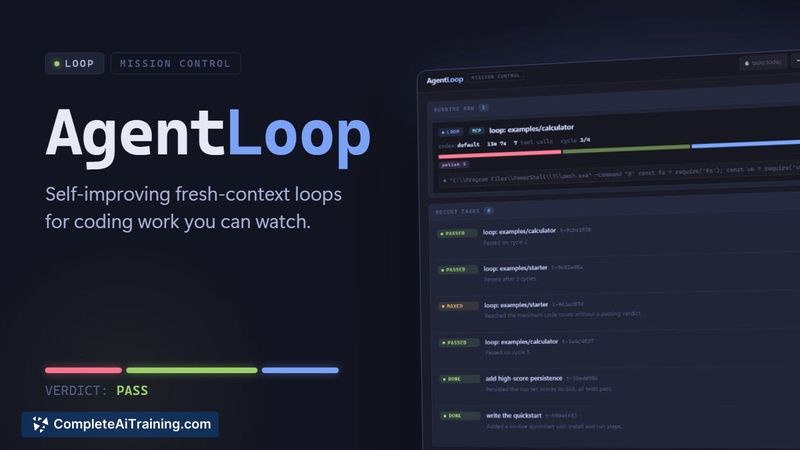
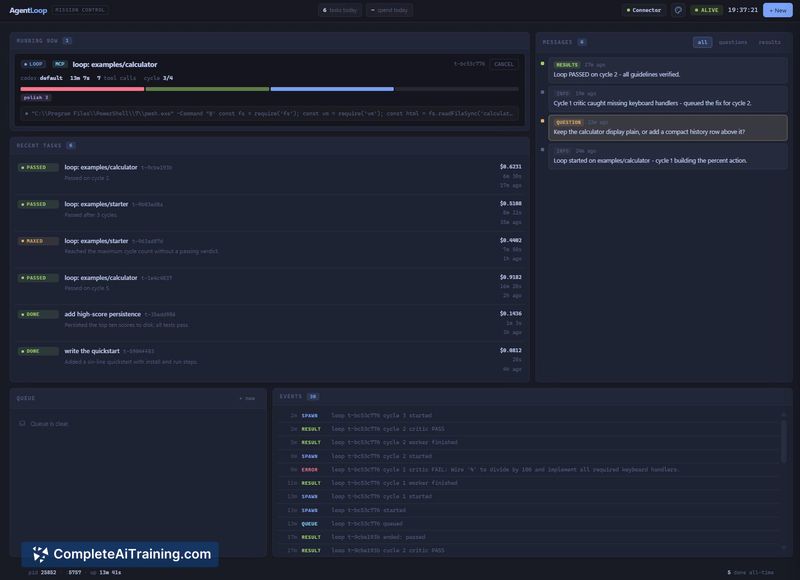
AgentLoop takes a specific approach to AI coding agents: instead of a long-running chat that accumulates context, it resets the worker and critic every cycle. The worker builds or fixes code, the critic tests against a rubric and writes concrete fix notes, and only project files persist between cycles. This design aims to prevent context rot and self-reinforcing errors, though it shifts the burden to the rubric's precision and the quality of the critic's one-shot assessments.
Key Features
- Fresh worker and critic per cycle. Each cycle begins a new Codex session for the worker and another for the critic, so no prior conversation or bias carries over.
- GUIDELINES.md rubric. You define pass/fail criteria in a markdown file. The critic grades against it and produces fix notes for the next worker if something fails.
- Local dashboard with live control. A local web interface shows cycle progress, logs, and state. You can cancel a run mid-cycle, though partial file edits remain on disk.
- Polish mode. After a PASS, leftover cycles switch the critic to an open-ended improve-or-ship question, letting it suggest refinements beyond the rubric.
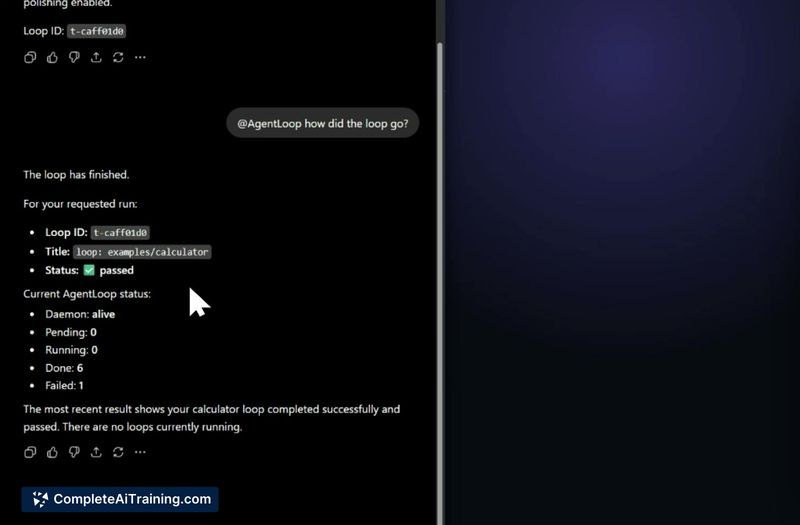
- MCP bridge for ChatGPT. ChatGPT can send goals to the daemon and monitor runs via a Cloudflare Tunnel, keeping the daemon and dashboard loopback-only.
Pricing and Value
AgentLoop is free and open source. There are no paid tiers, subscription fees, or usage limits mentioned. The tool's runtime cost depends on your own OpenAI API usage for Codex workers and critics, which is separate from the tool itself.
Pros
- Fresh context each cycle avoids the problem of a model agreeing with its own earlier mistakes.
- The critic's fix notes are concrete and scoped to one cycle, so a bad call doesn't permanently poison the loop.
- Local, sandboxed execution with network disabled inside the project folder keeps runs contained.
- Polish mode can catch rubric-compliant but wrong results by asking an open-ended improvement question.
- Zero dependencies make it straightforward to install and inspect.
Cons
- The critic has no memory of past cycles; it can ask for a change in one cycle and the opposite in a later one if the rubric doesn't prevent it.
- No built-in per-cycle file budget or allowlist means the worker can touch any file inside the project directory, with only git history as a safety net.
- AgentLoop is not well suited for architectural changes or tasks where the desired outcome can't be expressed as testable rubric items the critic can verify.
AgentLoop fits developers who already use Codex CLI and want to automate the relay of planning, testing, and fixing for well-scoped coding tasks. It's particularly useful when you can write a clear, objective GUIDELINES.md that leaves little room for critic ambiguity. If your work involves large-scale refactors with incomplete test coverage or subjective quality standards, the current design may require more manual supervision than the dashboard alone provides.
Jobs AgentLoop suits
We checked AgentLoop against 500+ jobs; these get the most out of it.
Alternatives to AgentLoop
Other tools that do the same main job. Our AI compared AgentLoop with similar tools and kept the ones you could use instead.