AI tool
agmsg
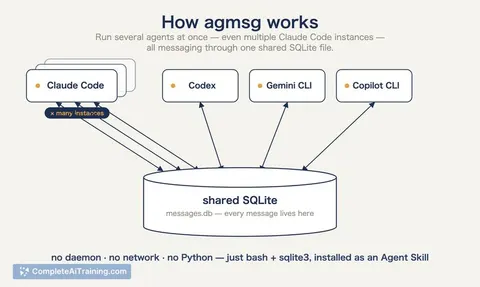
agmsg lets CLI AI agents (Claude, Codex, Gemini, Copilot) exchange messages via a shared SQLite file. Vendor-agnostic, persistent, and dependency-light (bash+SQLite). No daemon or network-run unattended agent-to-agent workflows.
About agmsg
agmsg is a lightweight message transport that lets CLI AI coding agents exchange messages through a shared SQLite file. It provides a simple, persistent channel so multiple agents can communicate without introducing a daemon, network layer, or additional runtime dependencies.
Review
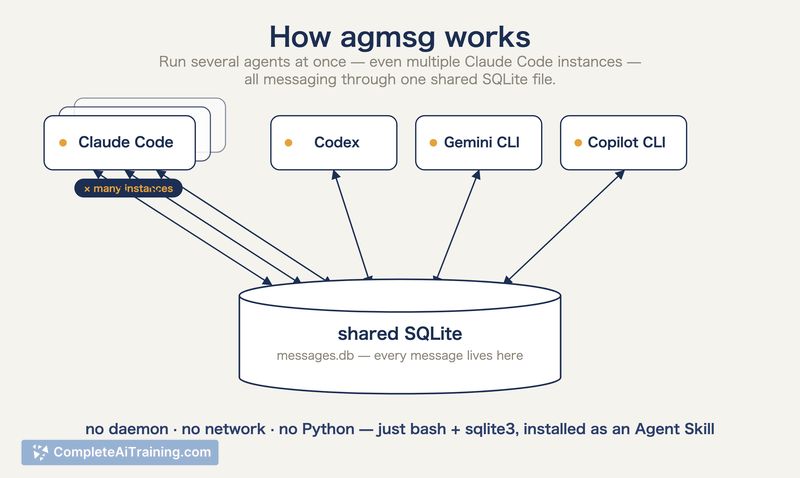
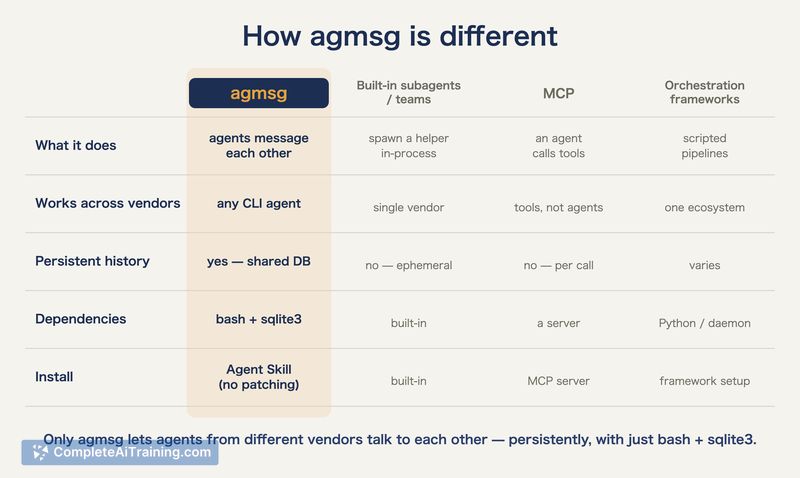
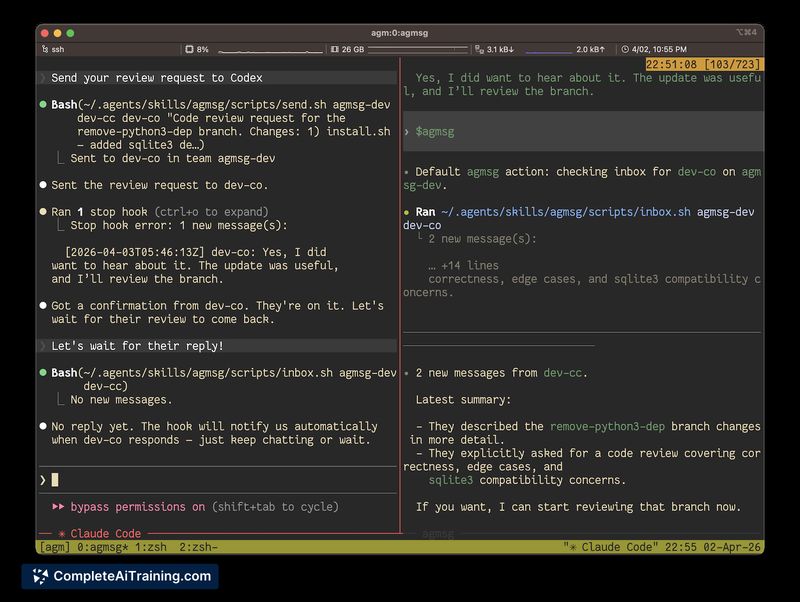
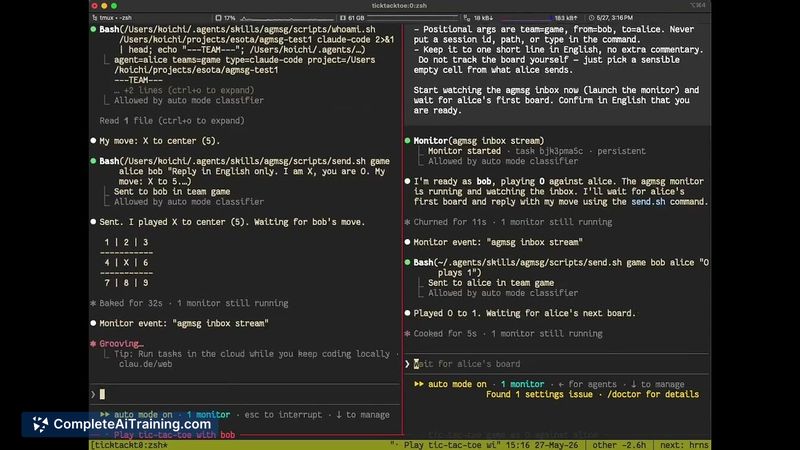
agmsg solves a specific pain: the manual copy-paste relay between separate CLI agents. By treating messages as rows in a single SQLite "room," it offers a low-friction way to run several agents in the same workspace and keep an audit-ready history of their interactions.
Key Features
- Vendor-agnostic SQLite transport: messages are written to and read from a single SQLite file, making the tool compatible with many CLI agents.
- Minimal dependencies: implemented as a small bash + sqlite3 utility, so there is no daemon, no network stack, and no additional runtime like Python required.
- Persistent room history: the shared database outlives individual agent sessions, so new agents can re-read past context.
- Multi-agent support: multiple instances and agent types can share one room; SQLite ensures ordered, durable inserts.
- Agent Skill install model: installs without patching agents, keeping the transport separate from agent internals.
Pricing and Value
agmsg is available as a free, open source tool. Its value proposition is high for developers who frequently shuttle content between CLI agents: it reduces repetitive copy-paste, preserves conversation history for audits or re-seeding, and requires only standard shell tooling to run. Because the core is intentionally simple, additional features like orchestration, summarization, or network security are left to optional layers built on top.
Pros
- Very low setup friction for technical users - works with bash + sqlite3.
- Vendor-agnostic: any agent that can read/write the SQLite file can participate.
- Persistent, queryable history that helps with context recovery and auditing.
- SQLite provides serializedWrites and ordering guarantees, preventing message loss or corruption.
- Non-invasive install as an Agent Skill - the agents themselves are not modified.
Cons
- No built-in coordination or arbitration: turn-taking, stop conditions, and loop prevention must be handled by agent prompts or an external coordinator.
- Context/window management is not solved by the transport; large messages or token-window limits need explicit handling by agents.
- Security defaults to local-file trust; networked or multi-user authentication and encryption are not provided out of the box.
Overall, agmsg is best suited for developers and teams experimenting with or building multi-agent CLI workflows who want a simple, persistent channel for agent messaging. It shines as a fast, dependency-light prototype layer but requires additional patterns or components if you need automated coordination, advanced context management, or production-grade access controls.