AI tool
Agno
Agno is a lightweight library for building advanced Reasoning Agents with integrated memory, knowledge management, and multi-modal support, enabling smarter, context-aware AI applications with seamless tool integration.
About Agno
Agno is an open-source, lightweight library designed to build high-performance, multi-modal reasoning agents. It offers a unified API that supports memory, knowledge integration, tool use, and native handling of text, image, audio, and video data, making it a versatile foundation for agentic AI systems.
Review
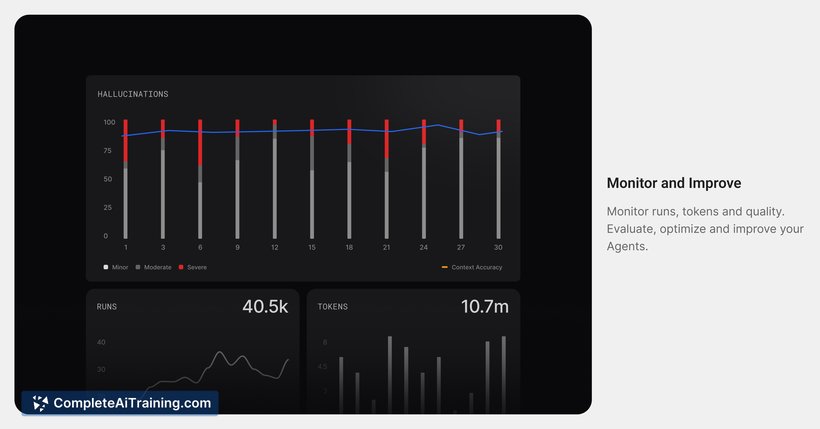
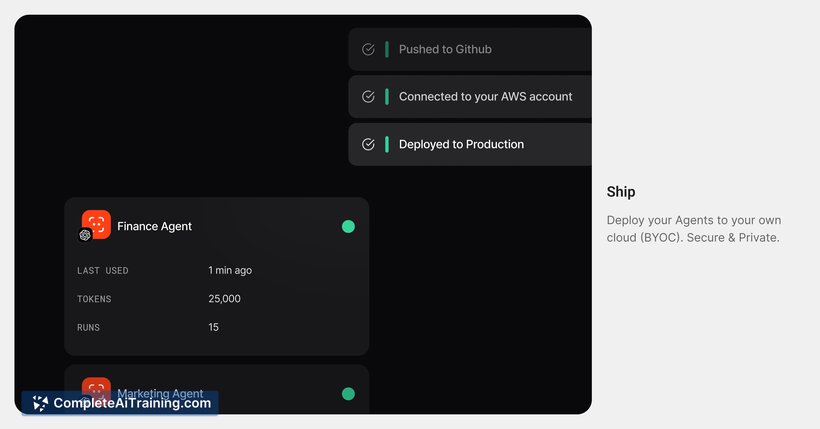
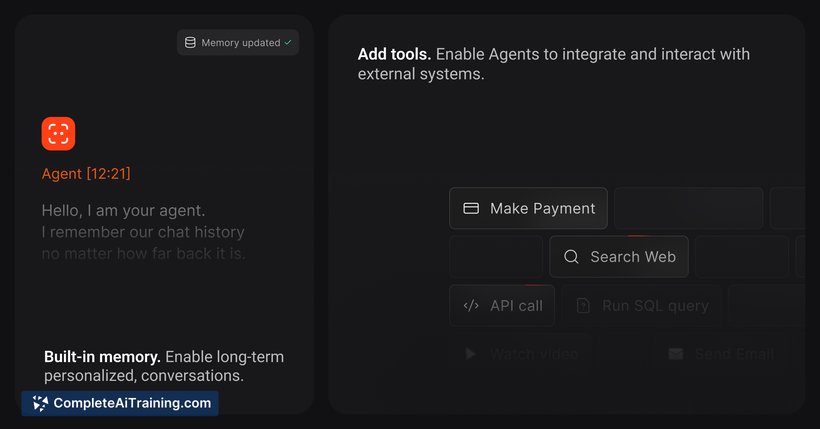
Agno stands out as a remarkably efficient and flexible framework for developers looking to create advanced AI agents capable of multi-modal reasoning. Its emphasis on speed, memory efficiency, and model-agnosticism makes it an attractive choice for both experimentation and production deployments. The open-source nature encourages community contributions and customization.
Key Features
- Lightning Fast & Lightweight: Delivers significant performance improvements with up to 10,000x faster instantiation and 50x less memory usage compared to similar frameworks.
- Model Agnostic: Supports integration with a wide range of language models from providers like OpenAI, Anthropic, Cohere, as well as open-source models through platforms like Ollama and Anyscale.
- Native Multi-modal Support: Handles text, images, audio, and video data natively, enabling truly multi-modal agent capabilities.
- Multi-Agent Teams: Facilitates orchestration of specialized agents working collaboratively within a system.
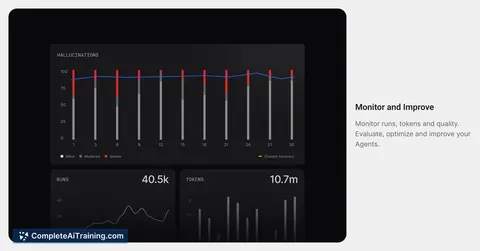
- Memory and Knowledge Integration: Built-in support for memory management, vector databases for retrieval-augmented generation, and custom tool integration.
Pricing and Value
Agno is released under the Apache 2.0 open-source license, which means it is freely available for both individual and commercial use without licensing costs. This makes it a highly cost-effective solution for organizations and developers who want to build sophisticated reasoning agents without the overhead of proprietary software fees. The value proposition is strong, particularly for those needing a scalable, efficient, and extensible AI agent framework with multi-modal capabilities.
Pros
- Exceptional performance and memory efficiency enabling fast agent deployment.
- Supports a broad range of language models with no vendor lock-in.
- Comprehensive native support for multi-modal inputs including audio and video.
- Open-source with a permissive license encouraging customization and community involvement.
- Built-in features for memory, knowledge management, and multi-agent coordination.
Cons
- Being a developer-focused library, it may require significant technical expertise to implement effectively.
- Documentation and community support, while growing, may still be maturing compared to more established frameworks.
- Advanced multi-modal use cases might require careful model selection and configuration outside the core library.
Overall, Agno is ideal for developers and AI researchers aiming to build cutting-edge, multi-modal reasoning agents with a focus on speed, efficiency, and extensibility. It suits teams looking for an open-source foundation to create customized agentic systems that can handle diverse data types and operate collaboratively. Those comfortable with coding and integrating various AI models will find Agno particularly valuable.
Jobs Agno suits
We checked Agno against 500+ jobs; these get the most out of it.