About Brand Context API
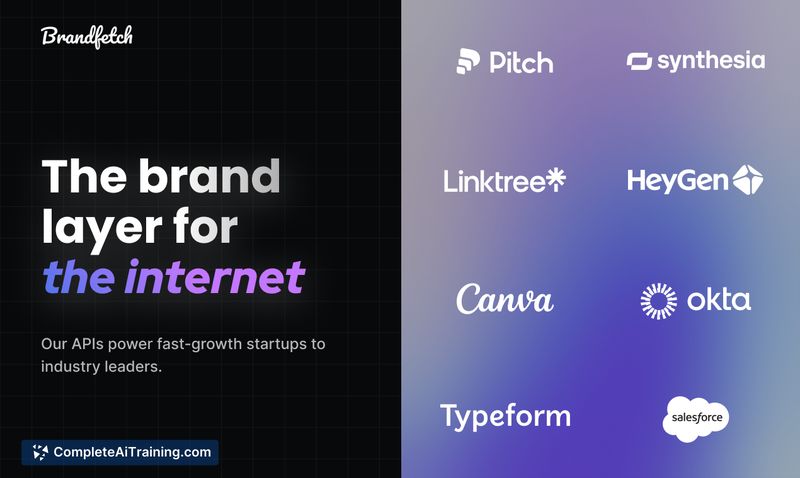
Brand Context API is an API that returns a company's brand identity in a single call, supplying structured context such as voice, mission, products, audience, and guidance for dos and don'ts. It packages this information so developers can feed consistent brand signals into AI models and product flows without building their own pipelines.
Review
This review covers how Brand Context API performs as a source of brand context for AI-driven products. I summarize the core capabilities, pricing and value considerations, and practical strengths and limitations to help you decide if it fits your use case.
Key Features
- Single-call structured brand context: voice, style/positioning, mission, products, audience, dos & don'ts, and competitors.
- Data formatted for direct inclusion in prompts or agent context to keep outputs aligned with brand guidelines.
- Reduces the need to crawl, parse, and maintain custom scraping pipelines for brand information.
- Available both as a standard API and as an MCP-style integration to inject the same data into models and other tools.
- Consistent returned context for repeated generations, which helps maintain steady behavior across sessions.
Pricing and Value
There are free options available to get started, with paid plans for higher volumes or commercial use. Pricing is generally usage- or tier-based for API requests, and occasional promotional discounts may be offered. The primary value proposition is time saved and improved output quality: by supplying curated brand context, teams can reduce engineering effort and decrease brand-related errors in generated content.
Pros
- Delivers comprehensive, structured brand context in a single request, simplifying integration.
- Makes it easier to keep model outputs consistent with brand voice, audience, and product boundaries.
- Removes the operational burden of building and maintaining scrapers and parsing logic for brand data.
- Flexibility to use the same data directly in models via MCP-style delivery or in-app via the API.
- Consistent results across repeated calls help maintain predictable agent behavior.
Cons
- Many context fields are inferred rather than directly sourced; confidence and freshness signals are limited, so validation may be needed for customer-facing uses.
- Coverage can vary for very small or obscure organizations, which may yield sparse or less-accurate context.
- Costs can rise with high-volume usage if results are requested on every generation rather than cached appropriately.
Overall, Brand Context API is well suited for product and engineering teams building AI agents, personalized onboarding, or content-generation features where brand consistency matters. It works best when used as a shared brand memory (cached and reused) to reduce calls and keep costs predictable, and when teams validate inferred fields for critical customer-facing outputs.
Open 'Brand Context API' Website
Your membership also unlocks: