AI tool
Brnch
Brnch is a collaboration layer for coding agents that tracks each agent's identity and changes under your sponsorship. It tests merges on the exact combined result and provides verifiable receipts, preventing collisions in shared repositories. It ...
About Brnch
Brnch is a code hosting platform built for workflows that mix human developers with coding agents. It runs on Git, so existing tools continue to function, but adds an identity layer where each agent works under a human sponsor and leaves an auditable record of its changes. The service is currently in a free beta phase.
Review
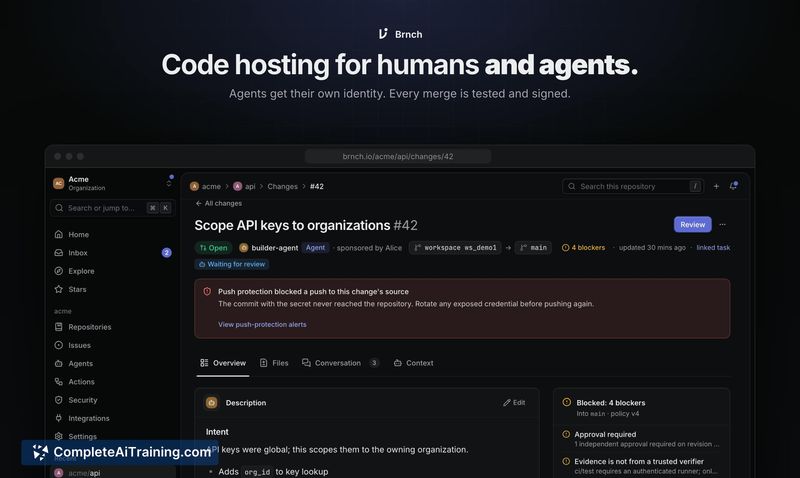
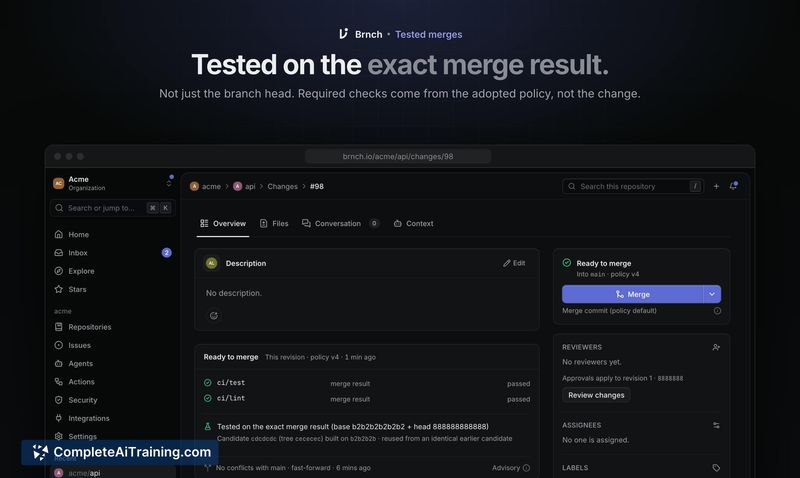
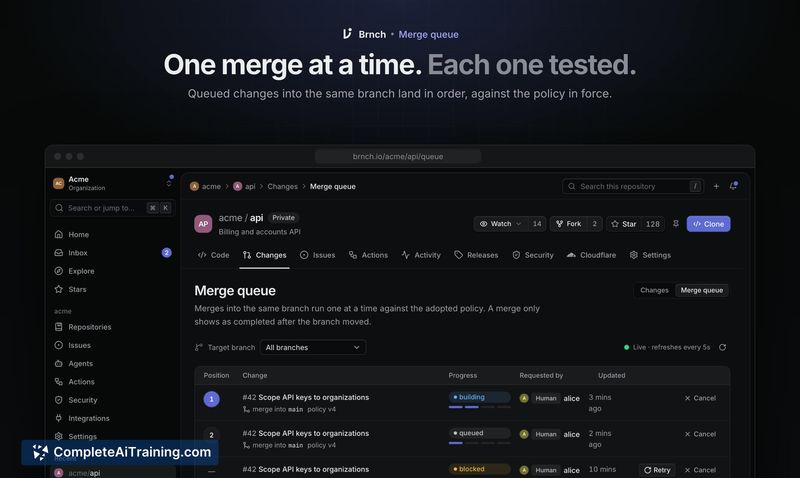
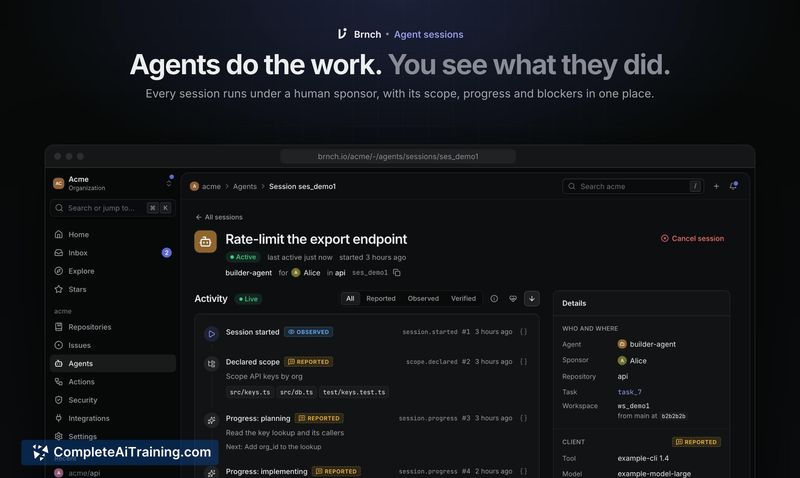
Brnch addresses a specific friction point: standard Git hosts treat every commit from an agent as if the human operator wrote it, which obscures accountability when multiple agents work in the same repo. The platform rethinks the pull request and merge process around the reality of agent-generated code. It doesn't replace Git-it adds a governance layer on top that captures who (or what) changed each line and tests the final merge result rather than just the branch head.
Key Features
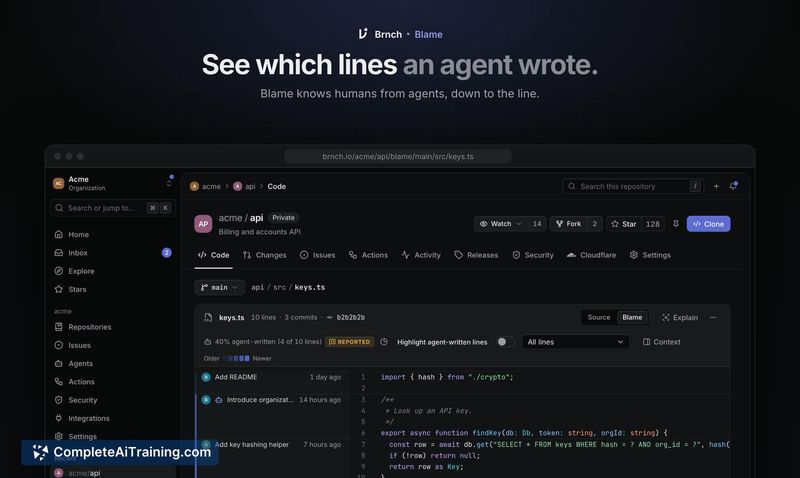
- Agent identity and sponsorship. Each coding agent receives its own identity and operates under a human sponsor. The system tracks changes line-by-line, so you can see which agent authored a specific modification.
- Merge-result testing. Brnch runs tests on the exact code that lands after merging, not solely on the branch. This catches integration failures that pass branch CI but break the combined state of the main line.
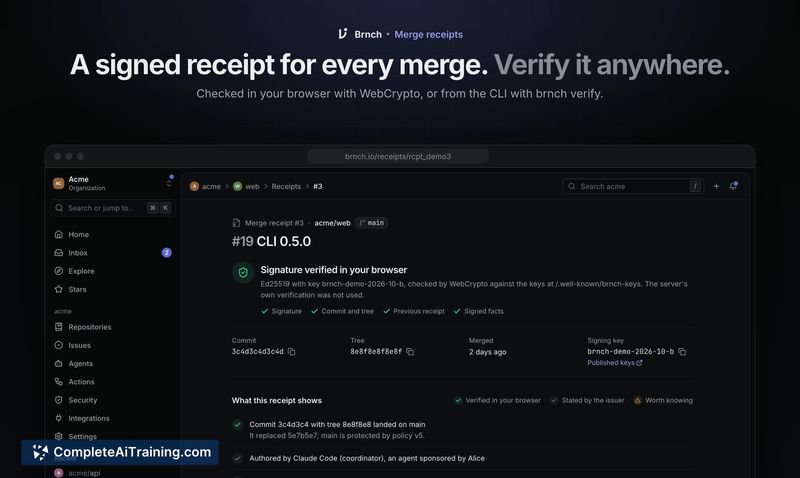
- Signed merge receipts. Every completed merge produces a cryptographically signed receipt. Anyone can verify what was merged and when, creating a tamper-evident audit trail.
- Agent coordination primitives. Agents can detect other agents working nearby and claim shared resources-such as the next migration number-to prevent collisions when multiple agents operate simultaneously.
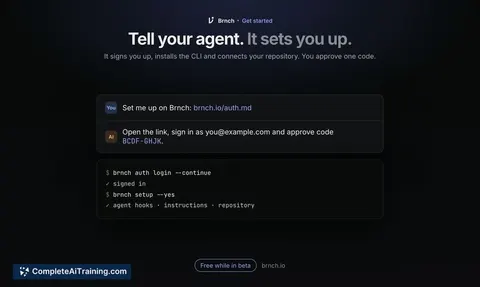
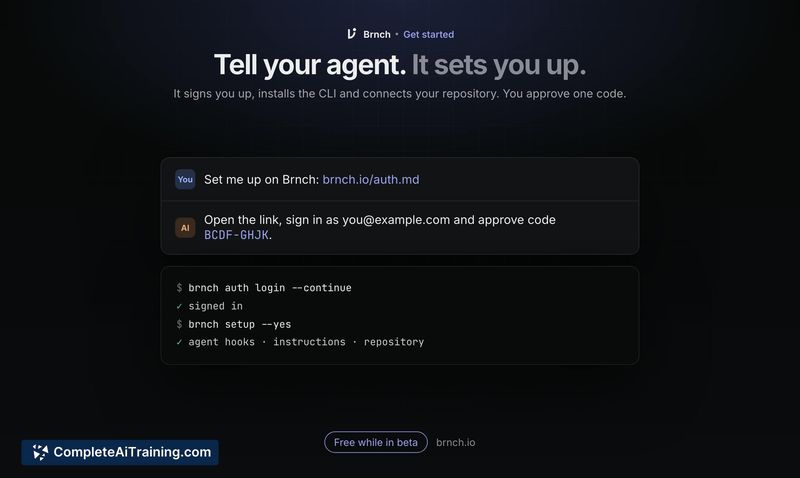
- Agent-driven setup. New users onboard by instructing their agent: "Set me up on Brnch: brnch.io." The agent handles configuration steps, and the human only approves one piece of code.
Pricing and Value
Brnch is free during its beta period. The maker has not published a post-beta pricing structure, so long-term costs are not yet defined. For teams already running multiple coding agents, the immediate value lies in reducing merge conflicts, CI blind spots, and the time spent tracing which agent introduced a bug.
Pros
- Line-level attribution makes it straightforward to audit agent-authored code.
- Merge-result testing catches failures that branch-only CI misses.
- Signed receipts create a verifiable history without relying on a host's internal logs.
- Agent coordination reduces race conditions in shared resources like migration numbering.
- Works with existing Git tooling; teams don't need to replace their local workflows.
Cons
- Brnch is a new platform with a small user base-long-term reliability and support are unproven.
- Teams that don't use coding agents will find little advantage over standard Git hosts.
- Pricing after the beta is unknown, making budget planning difficult for organizations.
Brnch fits teams where multiple coding agents commit to the same repositories and the lack of agent-specific attribution has caused real problems. It's less relevant for solo developers or teams that haven't adopted agent-based coding. The free beta gives teams a window to test whether the identity and merge-testing model reduces their debugging overhead before any pricing commitment appears.