AI tool
Brussle
Brussle calibrates a correction to your decision model's output and applies it only when it improves outcomes on unseen data. It re-runs decisions when source data changes and refits the correction when the model's behavior changes. The tool is bu...
About Brussle
Brussle is an AI metrics and evaluation tool that calibrates decisions from models like Jev against a user's own data. It applies a correction to a model's output only when that correction outperforms the model on held-out outcomes. The tool also re-runs decisions when input data changes and re-fits corrections when the underlying model behavior shifts.
Review
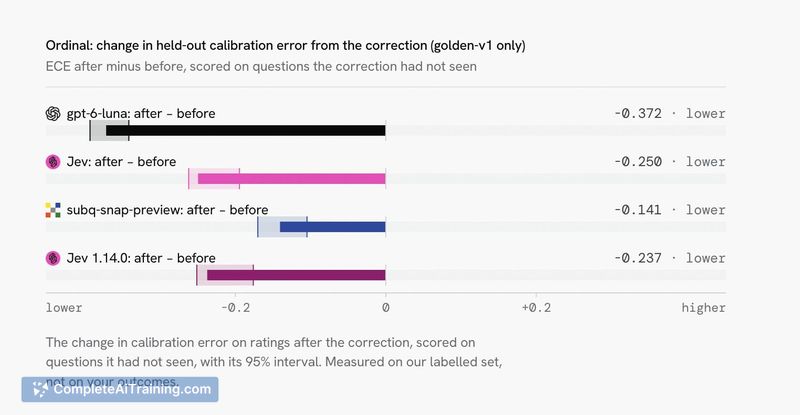
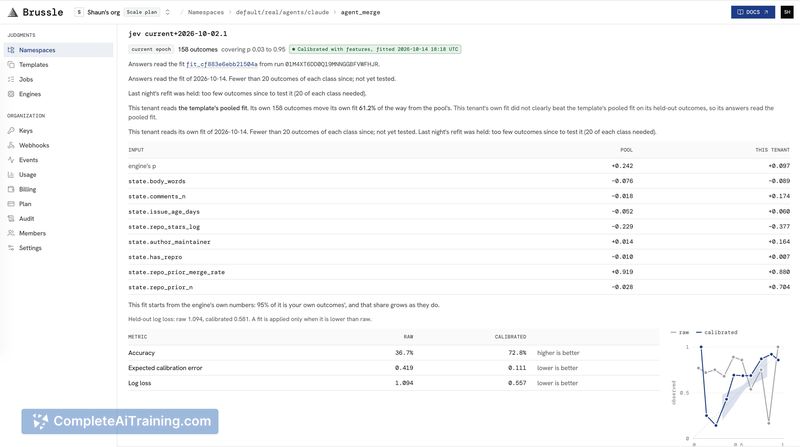
Brussle tackles a specific problem: raw model outputs that don't align well with real-world results on a particular dataset. Rather than retraining or fine-tuning the model itself, Brussle sits on top and adjusts the numbers. The team reports concrete log loss reductions from customer tests-55% on contract decisions and 68% on vehicle-complaint decisions-while keeping record rankings largely intact.
Key Features
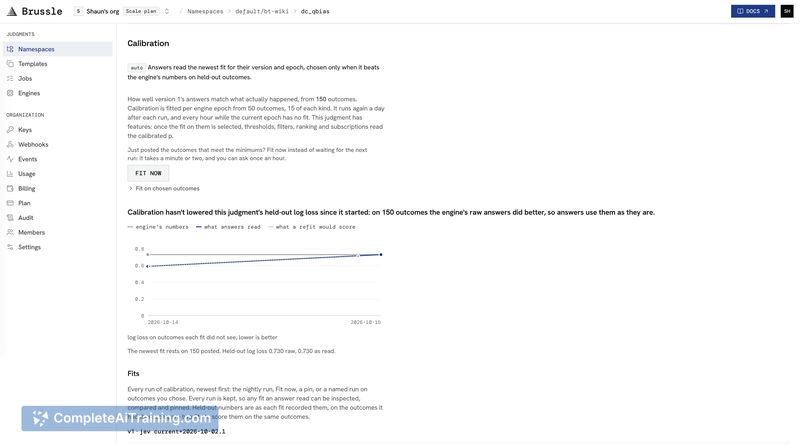
- Outcome-based calibration. Brussle fits a correction to a model's decision numbers and only applies it if the correction beats the model's own numbers on held-out outcomes the fit didn't see.
- Change-triggered re-runs. When data a decision read changes, Brussle runs that answer again. It waits for a burst of changes to settle, skips engine calls for unchanged inputs, and enforces a cost cap through a budget.
- Epoch-based re-fitting. When the engine's behavior changes, Brussle starts a new labeled epoch, replays inputs with measured outcomes, and fits a fresh correction for that epoch.
Pricing and Value
Brussle is listed as requiring payment, but specific pricing tiers or models are not yet defined on the product page. The cost-control mechanism-a budget that caps re-run expenses-is built into the tool itself. Users evaluating Brussle will need to contact the team directly for pricing details.
Pros
- Corrections are only applied when they demonstrably improve on held-out outcomes, reducing the risk of degrading performance.
- The budget cap puts a hard limit on re-run costs when data changes trigger new engine calls.
- Epoch-based re-fitting means the correction adapts when the underlying model changes, without manual intervention.
- Record rankings stay largely stable even as log loss drops, which matters for workflows sensitive to ordering.
Cons
- Brussle depends on having enough past outcome data to validate corrections-without it, there's no way to tell if a correction actually helps.
- The tool is tied to models like Jev; teams using other model families won't find it applicable.
- Brussle is not well suited for projects where held-out outcome data is sparse or where outcomes are measured infrequently.
Brussle fits scenarios where a team already has a model in production, collects outcome data over time, and wants to squeeze more accuracy from the existing setup without touching the model itself. The calibration-on-outcomes approach makes the most sense when outcome measurement is consistent and the volume of decisions is high enough to produce meaningful held-out sets. Teams without that data pipeline in place won't see the same benefit.