AI tool
Buffer API
Buffer API provides programmatic access to your social queue, upcoming scheduled posts and sent posts. Simple, well-documented endpoints speed integration and quick prototyping for social tools.
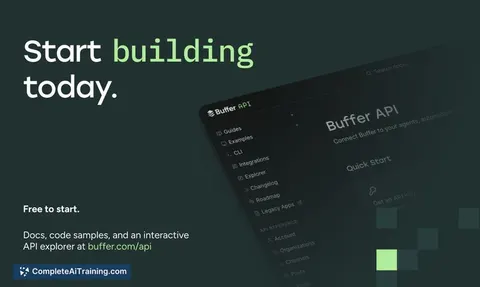
About Buffer API
Buffer API is a single GraphQL endpoint for publishing, scheduling, and managing content across multiple social platforms. It bundles an MCP server, a CLI, pre-built automation templates, and an interactive API explorer to help teams integrate social publishing into existing workflows.
Review
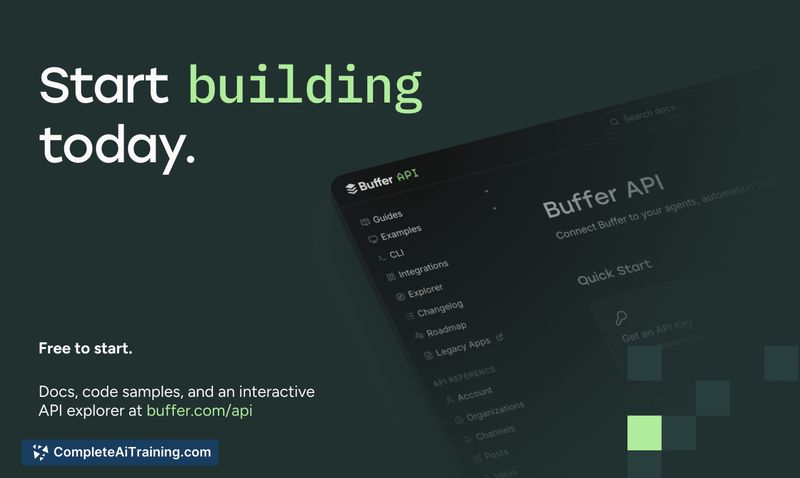

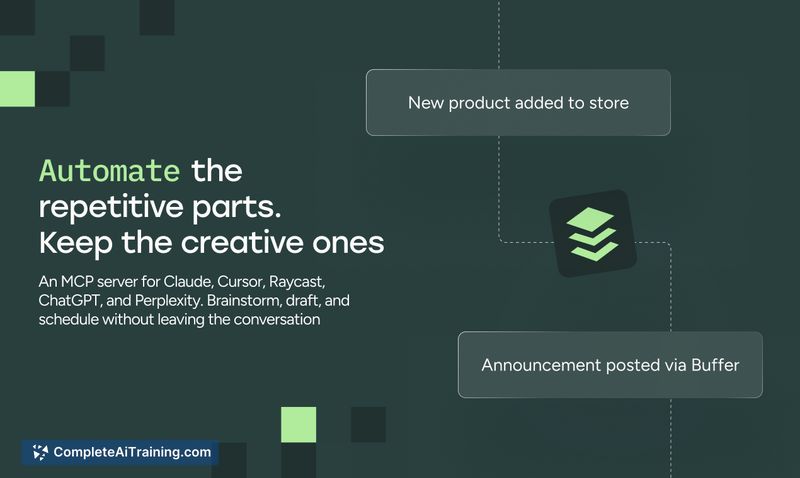
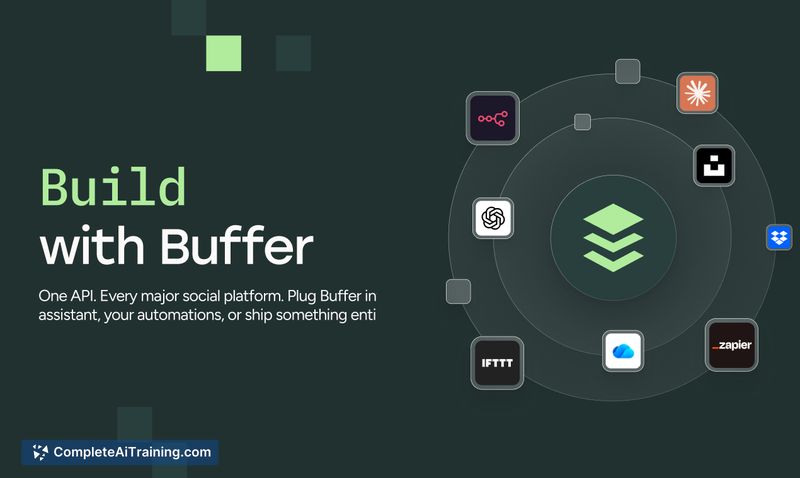
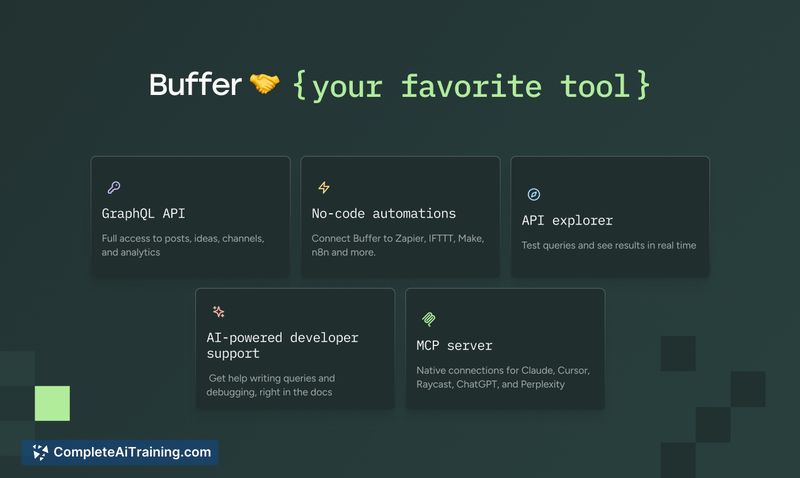
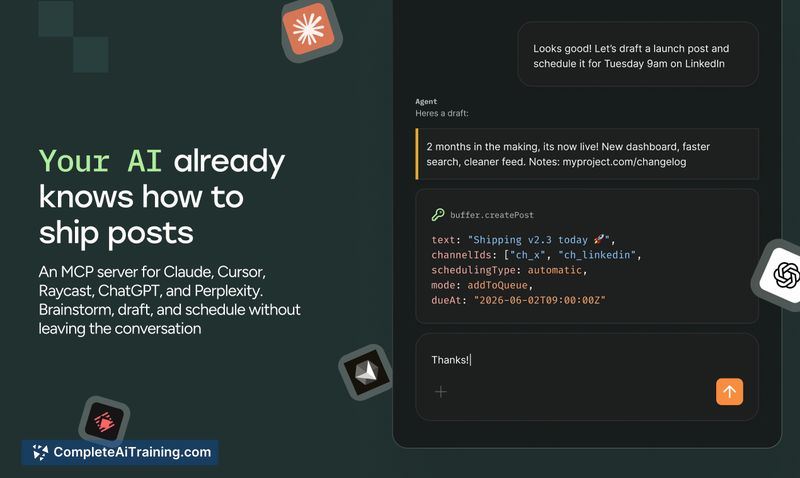
The Buffer API delivers a unified data model that hides much of the platform-specific complexity behind a common schema and metadata layer. That approach lets teams and builders connect AI assistants, no-code automation, or custom stacks to a single endpoint rather than juggling each network's API.
Key Features
- Unified GraphQL API covering publishing, scheduling, and channel/organization management across supported social networks.
- Per-platform metadata and validation so you can send a simple "works-everywhere" payload or add network-specific fields when needed.
- MCP server, CLI, and interactive API explorer to streamline development, testing, and automation workflows.
- Pre-built workflow templates and managed OAuth with integrations for no-code tools such as Zapier and n8n.
- Rate-limit handling and routing centralized at the Buffer layer, with availability on every plan including a free tier.
Pricing and Value
Buffer API is available on every Buffer plan, including a free option, and standard account limits follow the published pricing at buffer.com/pricing. For integrations or independent software vendors that exceed standard limits, there are options to discuss custom tiers. Documentation and developer resources are available at developers.buffer.com, which makes prototyping and evaluation straightforward.
Pros
- One integration point for multiple social platforms reduces development overhead and maintenance.
- Unified schema plus metadata lets you balance simplicity and per-network optimization without separate APIs.
- Built-in tooling (MCP, CLI, explorer, templates) speeds up prototyping and automation with AI or no-code tools.
- Managed OAuth and centralized rate-limit handling simplify authentication and traffic control.
- Available on a free tier, which lowers the barrier for experimentation and small projects.
Cons
- Platform-specific features and newest network changes may take time to appear in the unified model.
- Teams unfamiliar with GraphQL or the metadata approach will face a learning curve.
- High-volume or multi-tenant products may need a custom plan to avoid hitting aggregated limits.
Buffer API is well suited for developers, product teams, and agencies that want to add scheduling and distribution without maintaining separate integrations for each network. It fits particularly well for teams building automation with AI or no-code tools, while very high-volume services or those needing immediate access to every platform's latest features should plan for custom tiers and extra validation work.
Jobs Buffer API suits
We checked Buffer API against 500+ jobs; these get the most out of it.
Alternatives to Buffer API
Other tools that do the same main job. Our AI compared Buffer API with similar tools and kept the ones you could use instead.