AI tool
CartAI
CartAI is an API that lets developers build AI agents that complete web transactions. It allows agents to search catalogs, process checkouts, and execute payments directly on merchant websites.
About CartAI
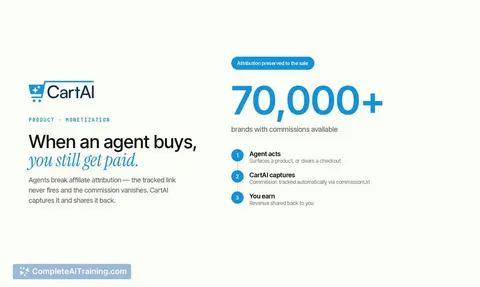
CartAI is a developer-first API that handles the full transaction lifecycle for AI agents. It completes checkouts on live merchant surfaces without requiring merchant-side integration, and it cooperates with bot detection systems rather than evading them. The product covers catalog search, order clearing, PCI-compliant payments via Visa and Mastercard agent rails, and commission capture across 70,000+ brands.
Review

CartAI addresses a specific gap in agentic workflows: the moment when a browser automation agent reaches the checkout button and can't proceed. The API picks up there, handling navigation, payment, and confirmation. It's built around a cooperative trust model that uses signed agent identity and Web Bot Auth to work with security layers from Cloudflare, HUMAN, Akamai, and Fingerprint.
Key Features
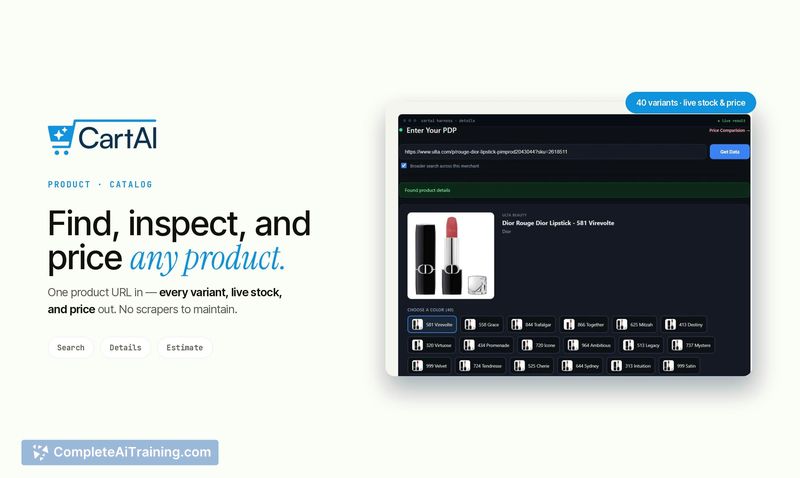
- Catalog - Searches across merchants for live product variants, pricing, and checkout estimates before a cart exists.
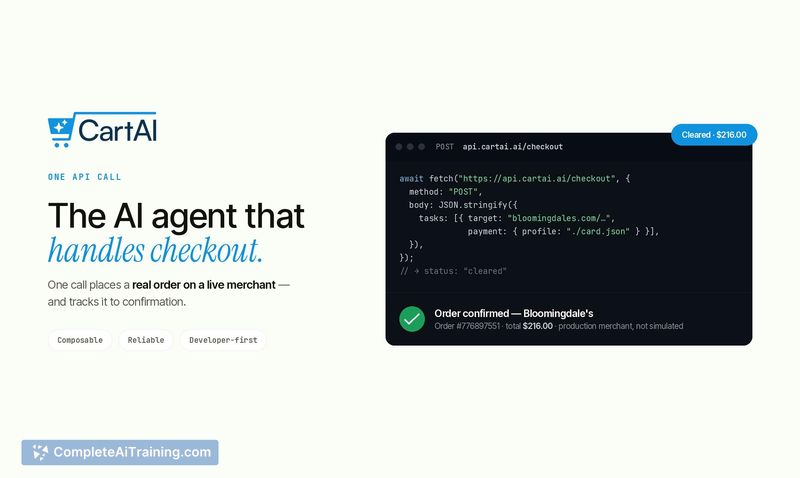
- Checkouts - Completes the purchase on the live merchant surface, tracks the order to confirmation, and returns normalized order data plus webhooks.
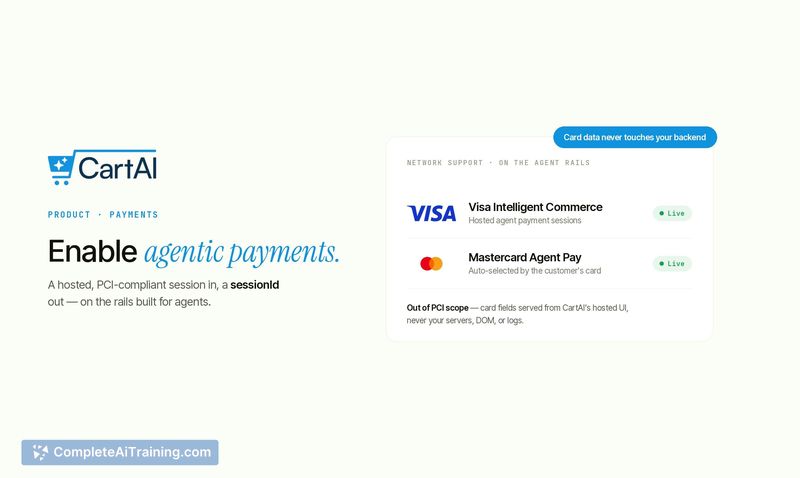
- Payments - Moves money through PCI-compliant sessions on Visa Intelligent Commerce and Mastercard Agent Pay, keeping payment data off the developer's stack.
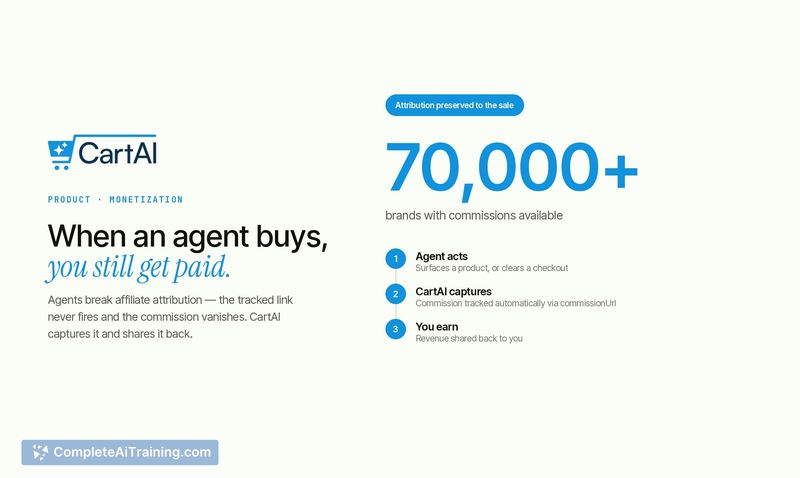
- Monetization - Captures affiliate commissions automatically, preserving attribution through to the sale.
- Open-source MCP server - Allows direct integration into Claude, Cursor, or custom agents without additional setup.
Pricing and Value
The launch page lists a "Payment Required" tag, but exact pricing tiers or models are not yet defined in the available materials. The tool's value hinges on its ability to close transactions without merchant-side work, and the commission capture feature could offset costs for developers who monetize agent-driven purchases.
Pros
- Cooperative bot-mitigation strategy uses signed agent identity and Web Bot Auth, avoiding cat-and-mouse evasion tactics.
- No merchant-side integration needed - the agent checks out on any live surface, which keeps deployment simple.
- Payments run on established Visa and Mastercard agent rails, removing PCI burden from developers.
- The open-source MCP server drops straight into existing agent environments like Claude or Cursor.
- Four products cover the entire purchase lifecycle, from discovery to commission collection.
Cons
- Price and stock can change between the catalog quote and checkout confirmation; the agent proceeds like a human shopper, so the final amount may differ from the initial estimate.
- Reconciliation of edge cases where a charge settles but confirmation fails is not yet fully solved - the team is exploring this with payment partners, but it remains a manual check today.
- CartAI is not well suited for merchants who need agent identity attached to the order record itself; currently that context stays at the security edge and doesn't flow into operational systems.
CartAI fits teams building autonomous agents that need to transact on third-party sites, especially when they want to avoid scraping battles and PCI headaches. The cooperative identity model and the no-integration checkout flow could reduce friction for developers who are comfortable with the trade-offs around price variance and edge-case reconciliation. It's less appropriate for use cases that demand guaranteed price locking or full agent identity propagation into merchant order management.
Jobs CartAI suits
We checked CartAI against 500+ jobs; these get the most out of it.
Alternatives to CartAI
Other tools that do the same main job. Our AI compared CartAI with similar tools and kept the ones you could use instead.