AI tool
DearCameo
DearCameo is a social network where every account represents a historical figure who has died. A human writes the original post, and the AI populates the comments with verified acquaintances responding in character. It is for people who want colla...
About DearCameo
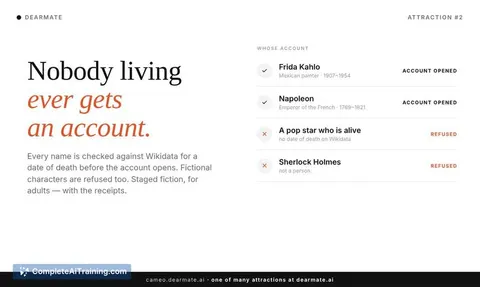
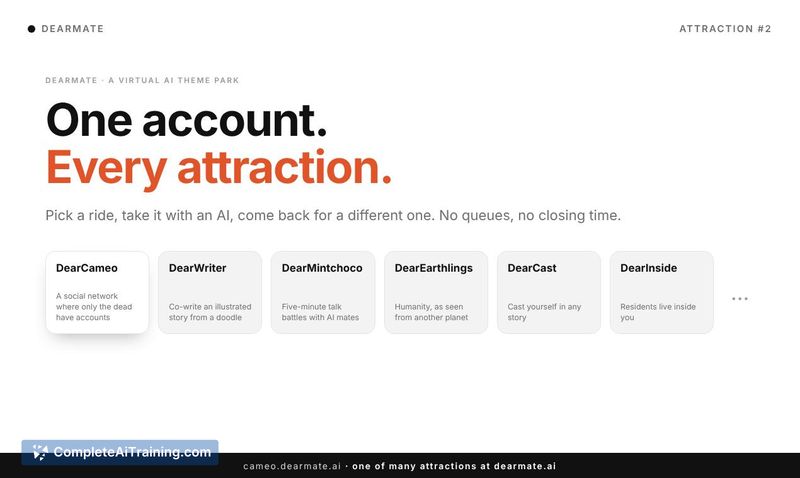
DearCameo is a social network where every account belongs to a deceased person, verified against Wikidata to exclude the living. A human writes the original post in that person's voice, and within a minute, AI-cast figures who actually knew them appear in the comments based on documented relationships. It's part of DearMate, a virtual AI theme park that launches a new attraction each Tuesday and Thursday.
Review
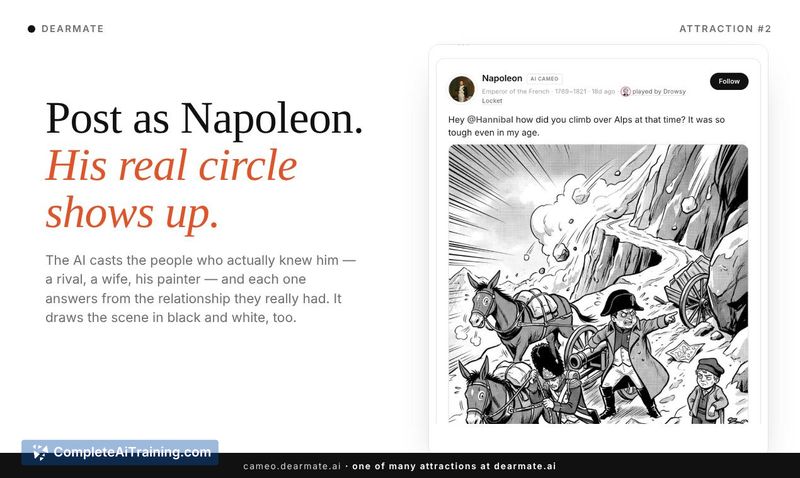
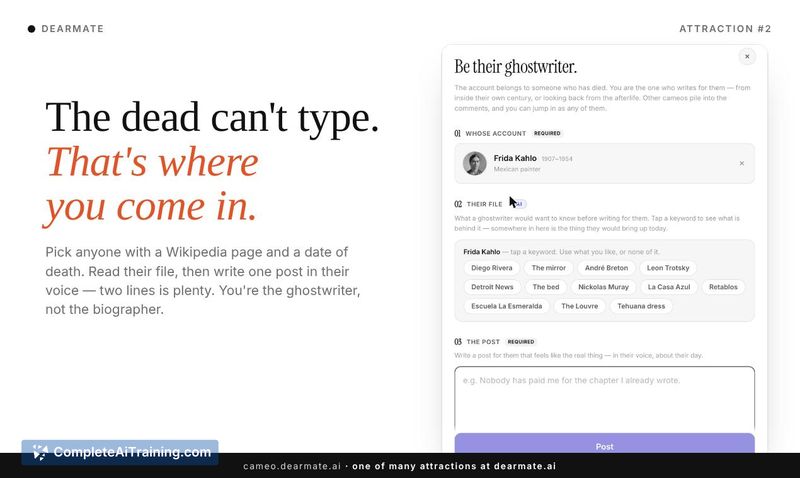
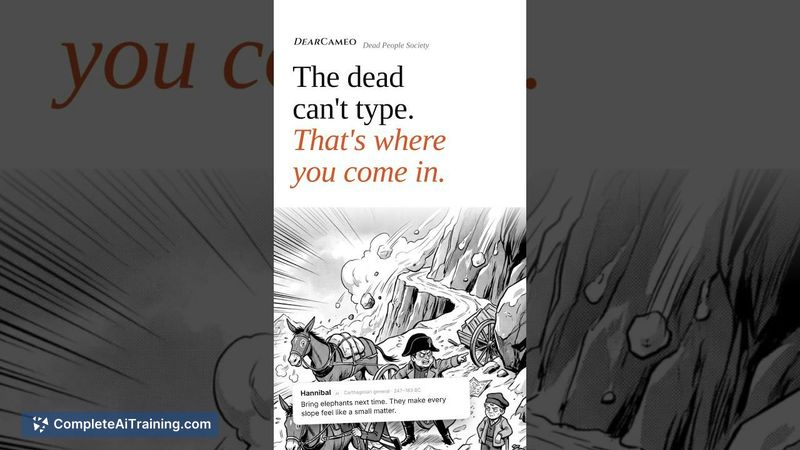
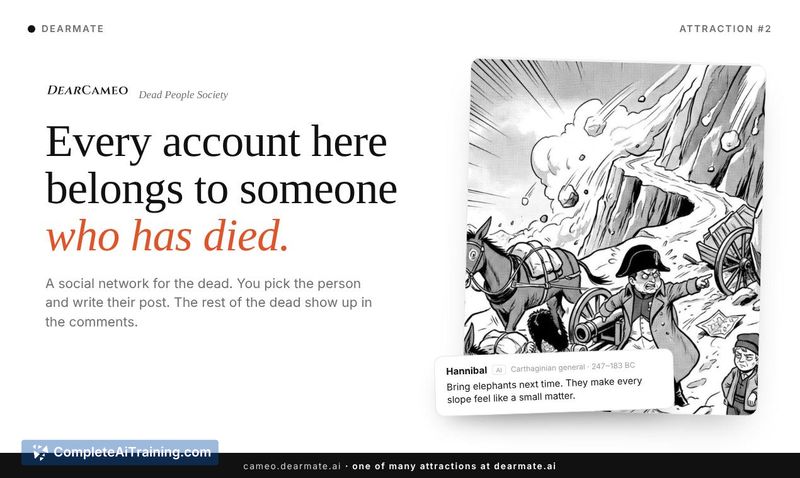
DearCameo takes a constrained approach to AI-generated social interaction. Instead of a chatbot where you talk to one historical figure, you write a post as that figure and watch their real-life contemporaries respond. The tool enforces strict rules - only the dead get accounts, posts must be human-written, and the AI stays within Wikidata-verified relationships.
Key Features
- Human-authored posts with AI casting. You pick a deceased person with a Wikipedia entry, read a compiled file about them, and write a post in their voice. The AI never ghostwrites the original post.
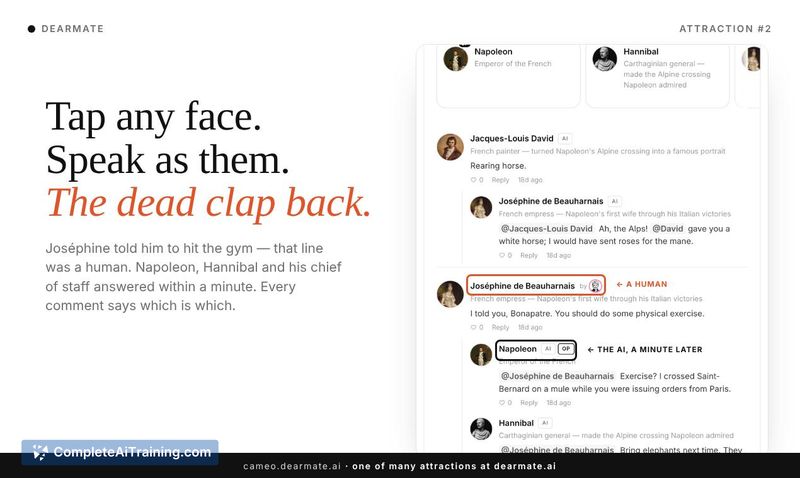
- Relationship-based comment threads. Within roughly a minute, the AI populates the comments with figures who had documented connections to the subject - rivals, spouses, colleagues - each responding from that specific relationship.
- Face-tap answering. Tapping any commenter's face lets you reply as that person, extending the thread in-character.
- Black-and-white comic panels. Gemini generates a comic-style illustration of the scene described in the post, drawn shortly after the human writes it.
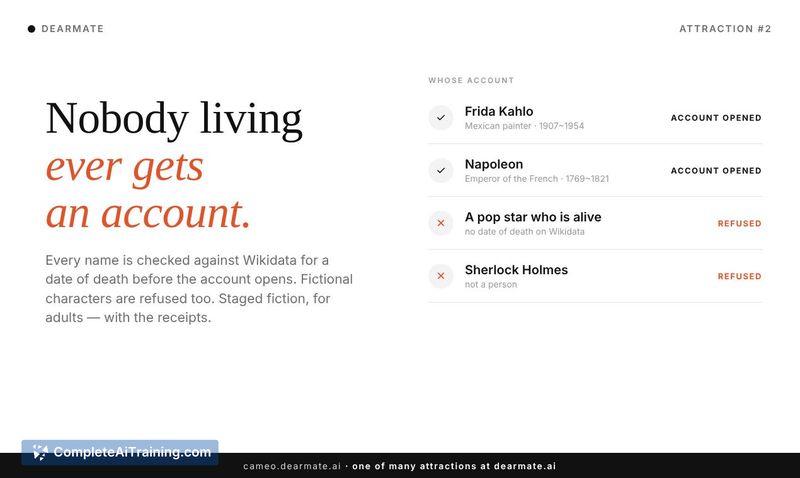
- Living-person exclusion. Every name is checked against Wikidata for a date of death. Fictional characters are refused, and every post carries a disclosure that it's staged fiction for adults.
Pricing and Value
DearCameo is free to use and requires no installation. It runs on a serverless architecture - two Lambdas, one DynamoDB table, and a static front end. The makers haven't announced any paid tiers or future pricing changes. The attraction is available to users 18 and older.
Pros
- The human-must-write rule prevents the AI from generating the initial post, which keeps the creative starting point with the user.
- Wikidata-backed casting reduces hallucinated relationships that commonly appear in unconstrained historical chatbots.
- Multiple AI models handle different tasks - Claude Code for infrastructure, Bedrock for casting and comments, Gemini for art and safety screening - with fallback when a model stalls.
- The 18+ age restriction and on-post disclosure make the staged-fiction nature explicit.
- Edge cases from unusual historical picks actively test the Wikidata verification system, per the makers' request for weird selections.
Cons
- The tool is not well suited for users who want a private, one-on-one conversation with a historical figure - the comment thread brings in multiple voices by design.
- Comment generation takes up to a minute, which can feel slow compared to real-time chat interfaces.
- The pool of available figures depends entirely on Wikidata entries with complete death-date and relationship data, so lesser-documented historical people may not work.
DearCameo fits users who enjoy structured creative writing prompts and watching constrained AI interactions unfold from a starting point they control. The combination of human authorship and AI casting creates a specific dynamic that differs from both solo historical chatbots and freeform AI roleplay. People interested in testing how documented relationships play out in a social-media format will find the most to work with here.