AI tool
Dreamscale Labs
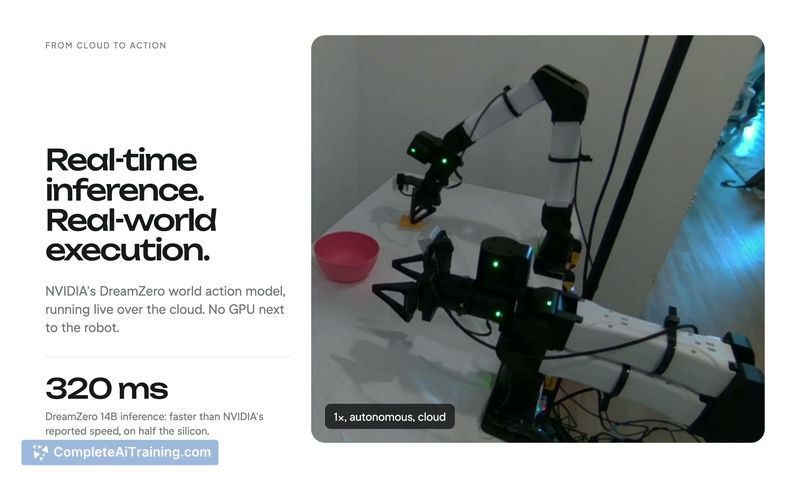
Dreamscale Labs provides a cloud inference API for running robot AI models with real-time latency. It lets deployment and research teams test the latest physical AI models without needing to quantize them for small on-board GPUs.

About Dreamscale Labs
Dreamscale Labs is a cloud inference platform built specifically for robotics. It serves frontier physical AI models-including Vision-Language-Action models (VLAs) and World Action Models (WAMs)-with sub-100ms end-to-end latency. The platform lets users run large state-of-the-art models on demand, without needing to purchase or manage local GPU hardware.
Review
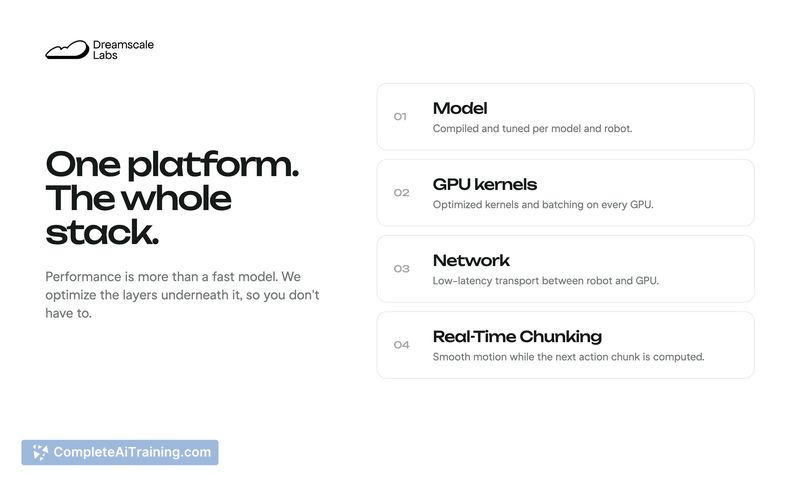
Dreamscale Labs tackles a concrete bottleneck in physical AI: the mismatch between growing model sizes and the limited compute available on robot hardware. Instead of quantizing and distilling models to fit on small on-board GPUs-a process the team says degrades quality-this API streams inference from the cloud. The service is new and currently in its launch phase, so practical deployment data is still limited.
Key Features
- Cloud inference for physical AI models, including VLAs and WAMs, with sub-100ms end-to-end latency.
- On-demand access to large models without local GPU provisioning or weight loading per model.
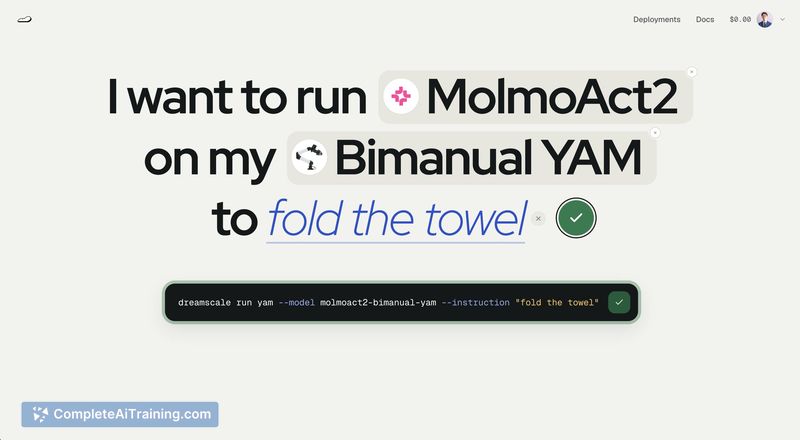
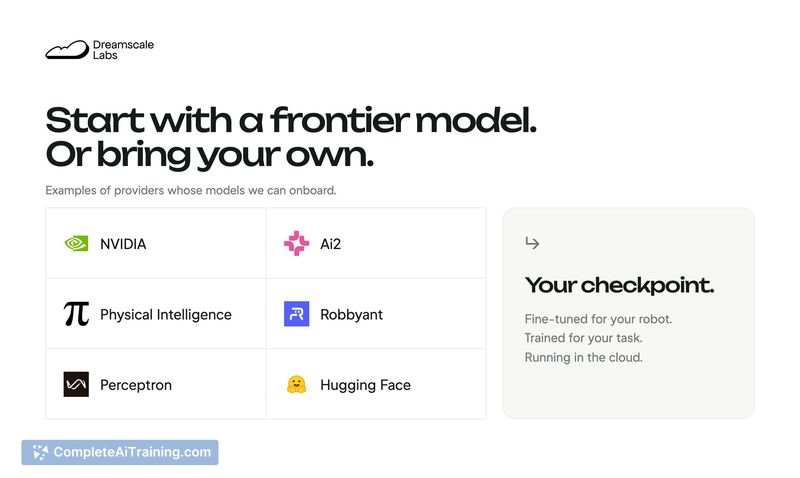
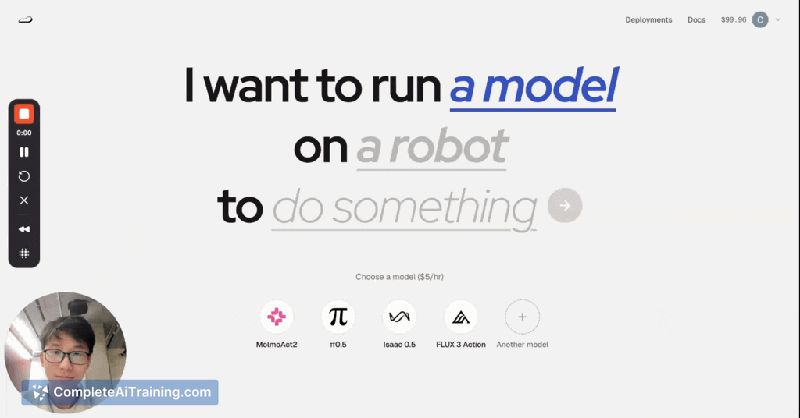
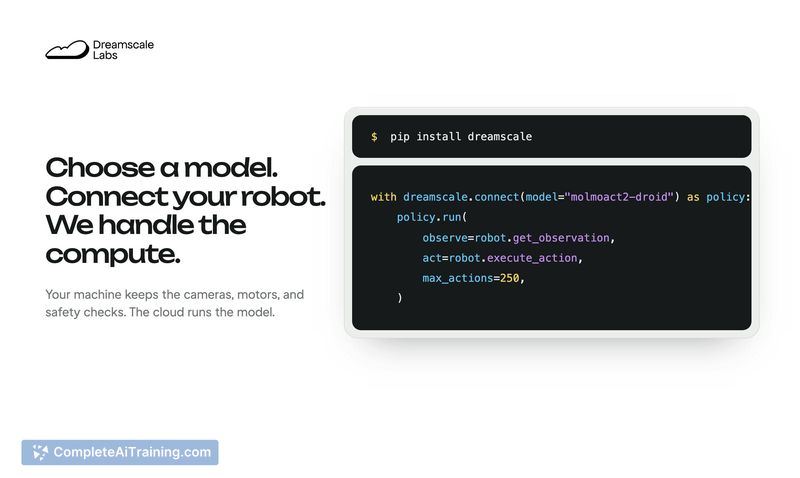
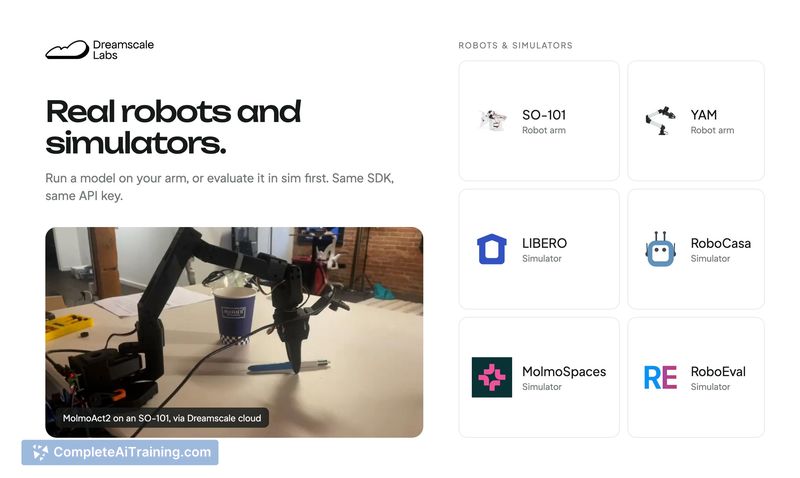
- Workflow that consists of choosing a model, selecting a target robot, and sending an instruction.
- Flat hourly-based pricing for inference usage.
Pricing and Value
The platform uses a flat hourly-based pricing model. Specific rates per model or compute tier have not been published yet. The core cost argument is that running inference on demand avoids the upfront expense of GPU hardware and the engineering time spent quantizing models for embedded deployment.
Pros
- Removes the need to quantize and distill large models, preserving model quality.
- Eliminates per-model inference server setup; users select a model and start running it.
- Sub-100ms latency targets real-time robotics control loops.
- Hourly pricing sidesteps large upfront GPU investments.
Cons
- Dependence on a stable network connection makes the platform unsuitable for environments with unreliable connectivity.
- As an early launch, the model catalog size and long-term reliability are not yet established.
- Not well suited for teams that require fully air-gapped, on-premise inference for security or regulatory reasons.
This platform fits robotics teams and researchers who want to experiment with the latest physical AI models without committing to local GPU infrastructure. It's also relevant for evaluation workflows where testing multiple large models quickly matters more than running a single optimized on-device model. Teams operating robots in connectivity-constrained settings or with strict on-premise requirements will find the cloud-dependent architecture a limitation.