AI tool
ej
ej is a compact decision model that classifies text inputs into predefined categories. It is built for developers who want to inspect a small model's accuracy limits and tradeoffs directly.

About ej
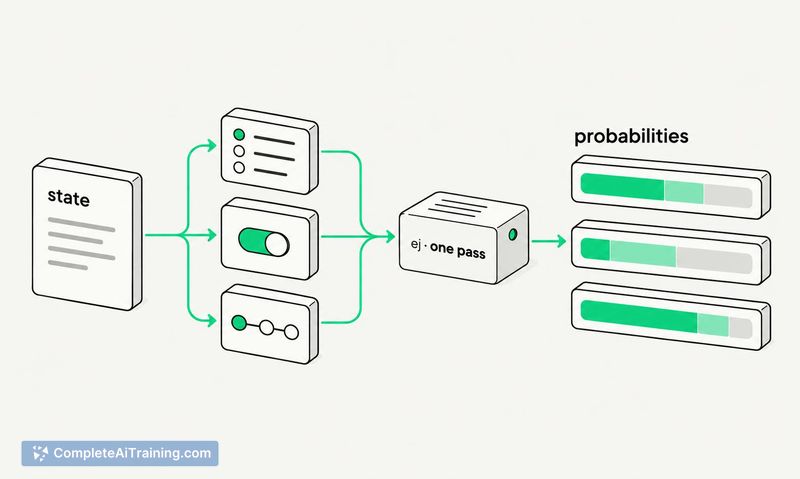
ej is a small, local AI model-11.4 MB-designed for typed decision tasks. Given a state and a set of decision questions with runtime-defined options, it returns a probability distribution for each question in a single pass. It handles choice, yes/no, and ordered score decisions, runs on CPU without token generation, and ships as a single packed model file.
Review



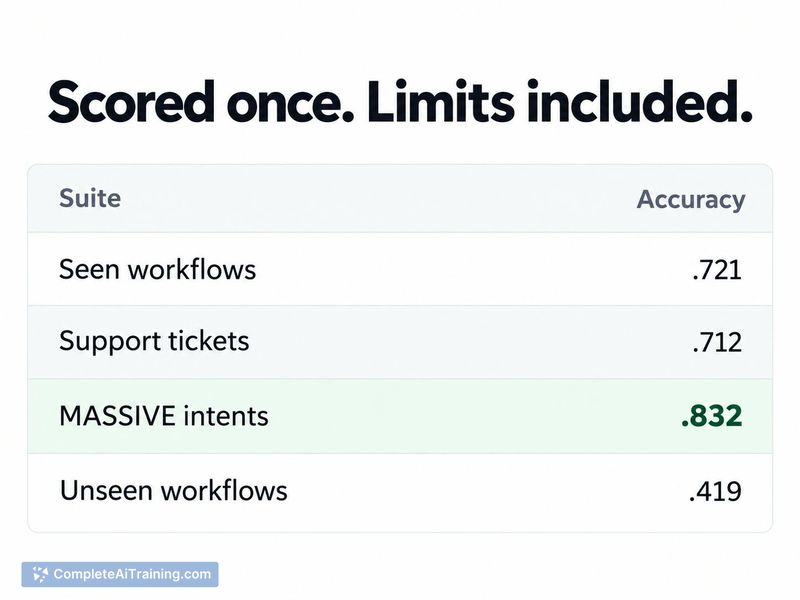
ej targets a specific problem: making structured decisions from text without the overhead of large language models. The creator is upfront about its tradeoffs, publishing accuracy numbers and benchmark contamination checks rather than smoothing over limitations. The result is a focused tool that works within its defined scope and leaves its weaknesses visible for inspection.
Key Features
- Single-pass probability distribution output for multiple decision questions simultaneously
- Supports three decision types: choice selection, yes/no classification, and ordered scoring
- Runs entirely on CPU with deterministic inference and offline loading
- Ships as one 11,384,312-byte packed file with SHA-256 section checks and no pickle dependencies
- Includes training, evaluation, adaptation scripts, packed weights, and a benchmark harness in the repository
Pricing and Value
ej is open source and listed as free. The repository is available on GitHub under launch tags for Open Source and Artificial Intelligence. The model file and all associated tooling can be downloaded and used without payment. No enterprise tiers, usage limits, or paid features are mentioned in the available information.
Pros
- Extremely small footprint at 11.4 MB, making it practical for resource-constrained environments and edge deployment
- No GPU requirement-runs on CPU and avoids token generation latency entirely
- Transparent about accuracy limitations, with the creator citing 42% on unseen workflows rather than hiding behind selective metrics
- Deterministic output eliminates variance between runs for the same input
- Self-contained file format with integrity checks removes dependency headaches
Cons
- Accuracy drops significantly on workflows the model hasn't encountered during training, falling to roughly 42%
- Narrow problem scope means it doesn't handle general classification, text generation, or unstructured reasoning
- Not well suited for teams that need high reliability on novel or rapidly shifting decision patterns without retraining
ej fits scenarios where decisions follow predictable structures and the environment can't support larger models-embedded systems, offline tools, or pipelines that need fast CPU-bound classification with deterministic results. It's less appropriate when decision options change frequently at runtime or when accuracy on unfamiliar workflows is critical. The benchmark harness and packed format make it straightforward to test whether the 42% baseline on unseen data meets a given application's threshold before committing to integration.