AI tool
Euphony
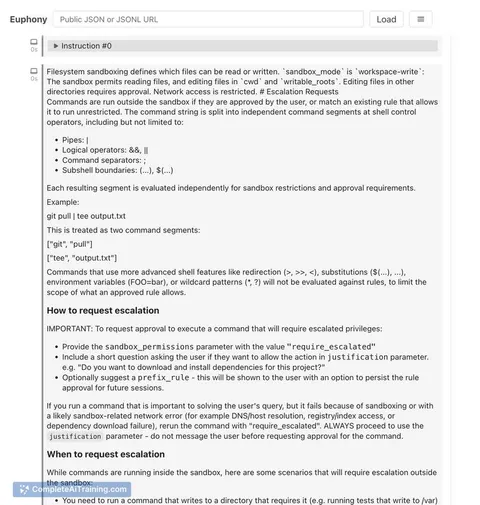
Euphony is an open-source tool that renders Harmony JSON/JSONL and Codex logs into interactive timelines. Load files or paste, filter with JMESPath, inspect metadata, edit in-browser, embed as a Web Component; client-side by default.
About Euphony
Euphony is a recently launched open-source browser tool that renders Harmony JSON/JSONL conversations and Codex CLI session logs as interactive, filterable timelines. It aims to make raw, nested conversation data readable and easier to inspect for engineers working with gpt-oss models and Codex outputs.
Review
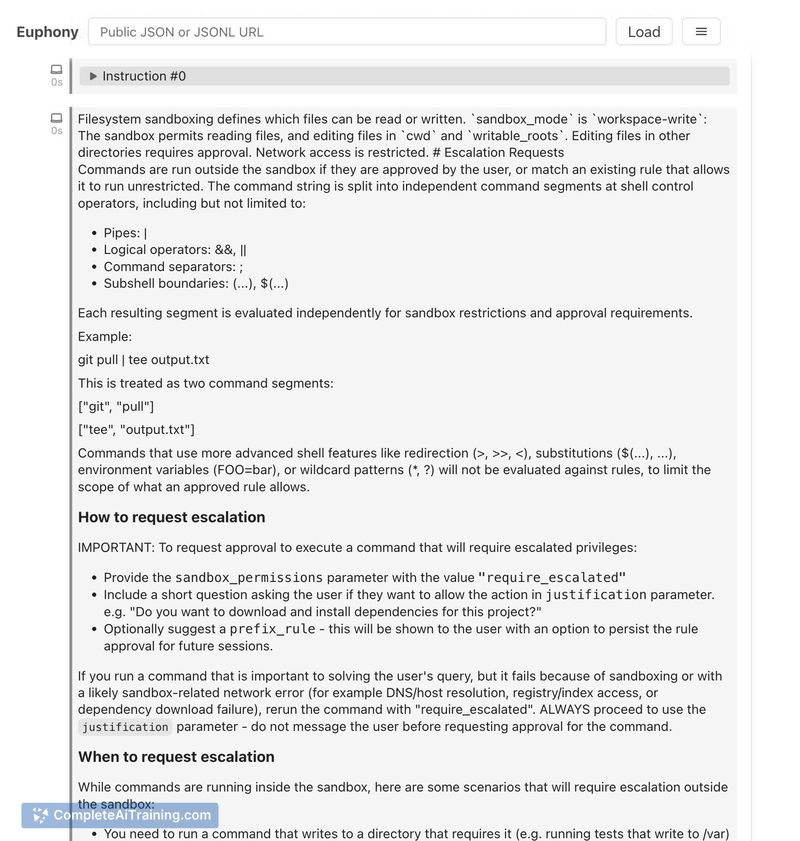
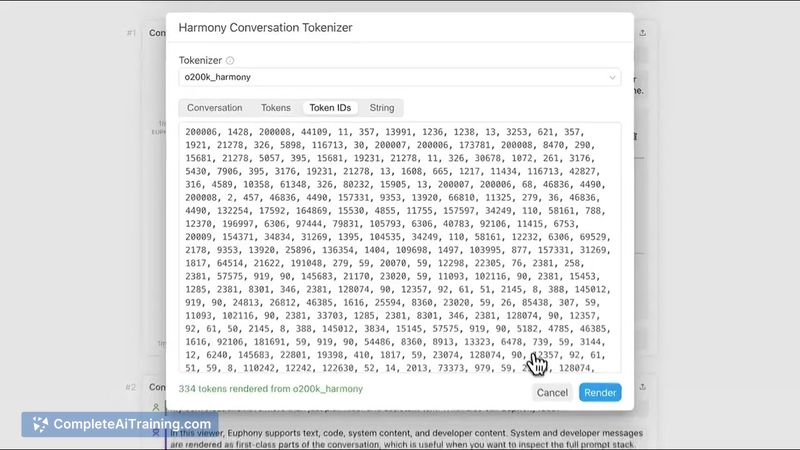
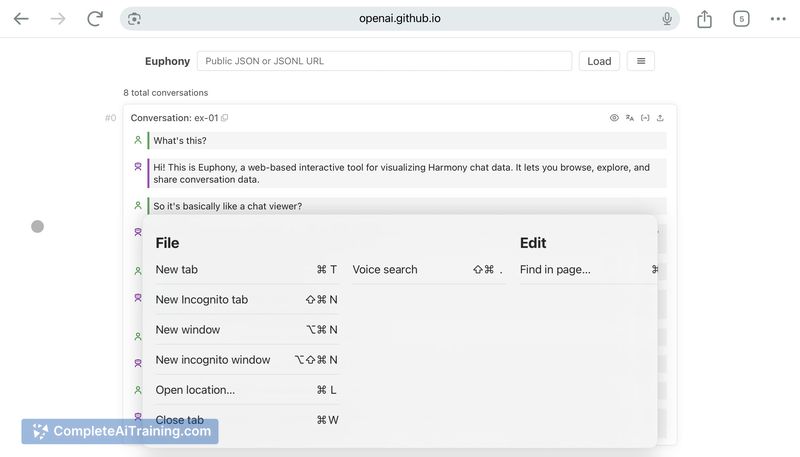
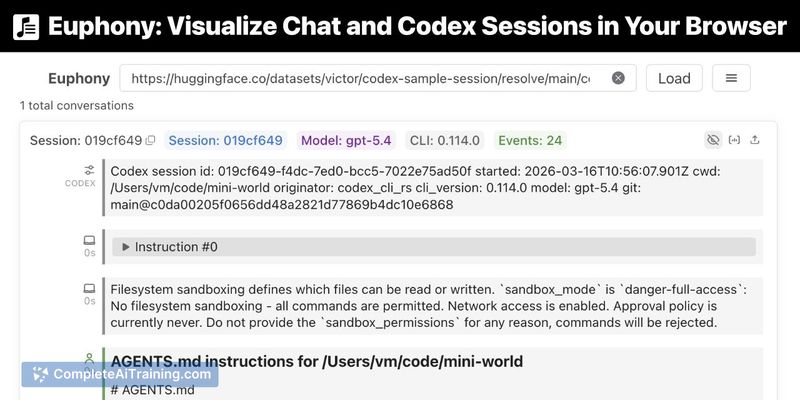
Euphony converts hard-to-read JSON/JSONL and session rollouts into a structured conversation viewer with filtering, metadata inspection, and editing capabilities. The tool processes data client-side by default, supports multiple input sources, and can be embedded into web projects via custom components.
Key Features
- Load data from clipboard, a local file, or a public HTTPS URL for quick inspection.
- JMESPath-based filtering by role, recipient, or content type to narrow down relevant messages.
- Metadata inspection panel for annotated datasets and per-message details.
- In-browser editing, focus mode, and grid view for different inspection workflows.
- Embeddable Web Components (Apache 2.0 license) and an optional backend that renders tokenization for Harmony-format conversations.
Pricing and Value
Euphony is open-source and offered under the Apache 2.0 license; the frontend runs locally in the browser at no cost. An optional FastAPI backend is available for additional tokenization features, which may require hosting or operational resources. For engineers debugging agent workflows or preparing datasets, Euphony can save time compared with reading raw logs or building a custom viewer.
Pros
- Transforms deeply nested Harmony/Codex logs into an easy-to-scan timeline format.
- Flexible input methods (clipboard, file, URL) make it simple to inspect sessions quickly.
- Filtering with JMESPath and a metadata panel supports focused debugging and dataset review.
- Embeddable components let teams integrate a ready-made viewer into web apps instead of reinventing one.
- Default client-side processing keeps data local to the browser for privacy-conscious workflows.
Cons
- Primarily targeted at Harmony-format and Codex CLI logs; less useful for other log formats without conversion.
- Effective use may require familiarity with JMESPath and the structure of Harmony JSONL files.
- The optional backend for tokenization requires additional setup and hosting, which adds complexity for some users.
Overall, Euphony is best suited for AI engineers and teams working with gpt-oss models, Codex CLI sessions, or Harmony-format datasets who need a quick, embeddable way to inspect and filter conversation logs. It is especially helpful when raw JSONL outputs are large or deeply nested and a readable, interactive presentation speeds up debugging and review.
Jobs Euphony suits
We checked Euphony against 500+ jobs; these get the most out of it.